





Enter your VAT number here and click Verify:
Your details have been verified. VAT number registered to:
,
.
Your order will now be zero rated for VAT purposes. We reserve the right to verify these details after your order request has been made and reinstate VAT if required.
Your VAT details were not recognised or were invalid. Your VAT number must be matched to your Billing Country as specified above. This is currently specified as . You do not need to enter the country code part of your VAT number as this has already been selected in your billing address details above.
The VAT number checking service is currently offline. Please supply your VAT details within the comments or special instructions field below and we will apply a VAT discount after placing your order request.

Forge

Forge for Porsche
Forge Motorsport parts for Porsche models from Design911.
A Quick Look at Forge
Forge Motorsport was founded in 1996 with the simple ideals of innovation, clever design, and manufacturing to the highest quality. It evolved from the original Forge Engineering which was created in 1983 to provide innovations and solutions to a variety of industries.With the mission and vision established and understood company wide, the design and manufacturing process is driven by a highly skilled and passionate team, who are motivated to produce a range of aftermarket Porsche tuning products that are World class.
Choosing the Right Fit for Your Porsche
Where Forge is listed for Porsche, use the supplied model coverage and OE references to confirm suitability. Check details that commonly affect fitment such as model year, side/position, and connector type where relevant.
- Typical reasons to choose Forge include preventing split hoses, curing boost leaks, and improving consistency on tuned or hard-driven Porsche engines.
- Common real-world symptoms on turbo and boost systems are boost leaks, split or ballooning hoses, oily residue at joints, inconsistent power delivery, and hissing under load.
- Expect issues to show up as “turbo lag” or loss of response; pressure-testing the system helps distinguish leaks from failing turbos.
- Practical ownership tip: pressure-test the intake/boost system after installation and re-torque clamps once the car has been through a few heat cycles.
- When upgrading boost-related parts, new or uprated clamps are often recommended to maintain a reliable seal under higher load.
Browse by Category
If you already know the area you are working on, start with the category and then filter by Porsche model. Where real-world symptoms and typical reasons to replace are provided, use them to keep the wording grounded.
Engine Rebuild Parts — Engine rebuild parts are typically renewed during a planned overhaul or when tests show internal wear such as low compression, heavy oil use, persistent leaks, abnormal noises, or contamination in the oil. On Porsche engines, many owners replace chains, guides, bearings, seals, gaskets, and hard-to-reach fasteners while the engine is apart to avoid repeat strip-downs and improve long-term reliability.
- Before committing to a rebuild, carry out compression and leak-down tests, borescope inspection, and oil/filter analysis so you understand whether a full or partial rebuild is justified.
- When the engine is out, consider replacing “while you’re in there” items such as timing components, critical seals, and wear parts that are difficult to access later.
Turbo Chargers / Intercoolers & Parts — Turbochargers, intercoolers, and associated pipework are replaced when there is loss of boost, slow spool, smoke, oil contamination in the intake, or confirmed boost leaks. For Porsche turbo models, keeping charge temperatures under control and the system leak-free is crucial for consistent performance and reliability, and many owners upgrade to improve cooling, reduce heat soak, and support safe higher boost.
- If you suspect a failing turbo, pressure-test for boost leaks first, as leaks can feel very similar and are often cheaper to fix.
- When fitting a replacement turbo, it is often wise to renew oil feed/return lines and gaskets, and ensure both intake and exhaust paths are clean of debris.
Engine Tuning — Engine tuning parts for Porsche are used to improve drivability, throttle response, fuel economy, or to support hardware changes such as intake, exhaust, or forced-induction upgrades. Owners typically tune once the engine is known to be healthy, using calibration to remove flat spots, refine cold and hot running, and make the most of any performance hardware.
- Before tuning, confirm good compression, stable fueling, healthy sensors, and the absence of boost or vacuum leaks, as calibration cannot compensate for underlying mechanical faults.
- After changes to hardware or mapping, monitor data such as knock activity, air–fuel ratios, and temperatures to ensure the engine remains within safe limits.
Diverter Valves — Diverter valves on turbocharged Porsches are replaced or upgraded when they leak, stick, or struggle to hold boost, leading to hesitation, flutter, and underboost faults. Stronger, faster-acting valves are a common upgrade on tuned cars, helping maintain boost between gear changes and protecting the turbo from surge.
- Loss of boost, fluttering noises, or boost deviation fault codes can all point toward a tired diverter valve, especially on remapped cars running higher-than-stock pressure.
- For remapped or higher-boost setups, upgrading the diverter valve is often recommended to maintain reliable boost control.
Turbo Chargers — Turbochargers on Porsche engines are renewed or rebuilt when there is excessive shaft play, oil seal failure, persistent smoke, or when performance upgrades demand higher airflow. Looking after oil quality and heat management is central to turbo life, and many owners refresh related components such as oil lines at the same time as fitting a new or rebuilt unit.
- When deciding between rebuild and replacement, the condition of the housings and the availability of correct components will usually determine the best route.
- Alongside the turbo itself, check for causes of failure such as restricted oil supply, overspeed, or foreign object damage so that the new unit is not exposed to the same problem.
Explore Forge at Design911
View the current Forge range for Porsche at Design911, then filter by model and category to narrow down to the right parts.


- Porsche 993 (911) TURBO 1994-96
- Porsche 993 (911) GT2 1994-97
- Porsche 993 (911) TURBO S 1994-97
- Porsche 996 TURBO 2000-05
- Porsche 996 GT2 2001-05
Fits:
Porsche 993 Turbo
Porsche 996 Turbo
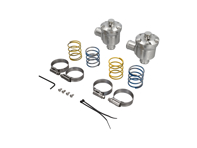
One of the most important upgrades for the Porsche Turbo engines is to replace the factory Bosch diverter valves. The factory valves are prone to leaking pressure under increased boost when the car has an upgraded ECU flash. As well, the factory Bosch valves will taper boost off with the diaphragm design even at stock boost levels. To help keep the boost pressure constant all the way to redline, upgrading the stock diverter valves to the DesignTek Racing Diverter Valve Kit will improve your cars overall performance.
These valves are CNC machined 6061 aluminum which have been precision engineered to fit with the stock or aftermarket F-Hose and intake return hoses. The internal construction of the valve uses a machined piston with proper o-rings to ensure a smooth motion that is air tight to prevent any boost leaks. The spring has been engineered to hold moderate to aggressive boost increases on the 996TT and Cayenne vehicles. If needed, the top of the valve unscrews allowing you to re-greased and service the valve. As tested, these valves are a great upgrade for stock K16 or K24 cars and have even been used in our 700HP turbo kits.
Related reference numbers
Related, superseded, cross reference or alternative numbers for comparison.
3603500005
The product you are viewing cross references to these numbers
- Porsche 993 (911) TURBO 1994-96
- Porsche 993 (911) GT2 1994-97
- Porsche 993 (911) TURBO S 1994-97

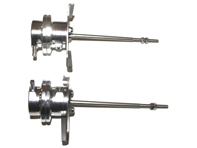
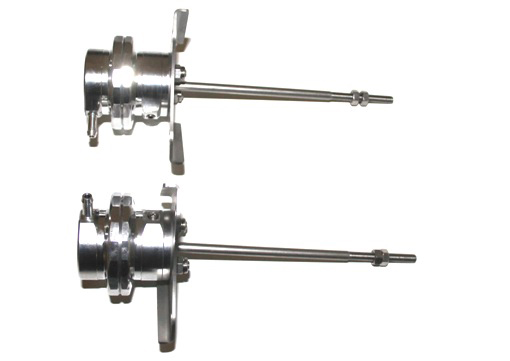
This item comes with stock springs 5 psi (spool up) - 10 psi (running pressure) Green Springs product code FMAS049G. Additional springs are required for tuning to custom boost levels.
Fits:
Porsche 993 Turbo
Related reference numbers
Related, superseded, cross reference or alternative numbers for comparison.
FMAC993
The product you are viewing cross references to these numbers


- Porsche 993 (911) TURBO 1994-96
- Porsche 996 TURBO 2000-05
- Porsche 996 GT2 2001-05
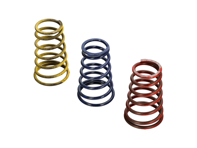
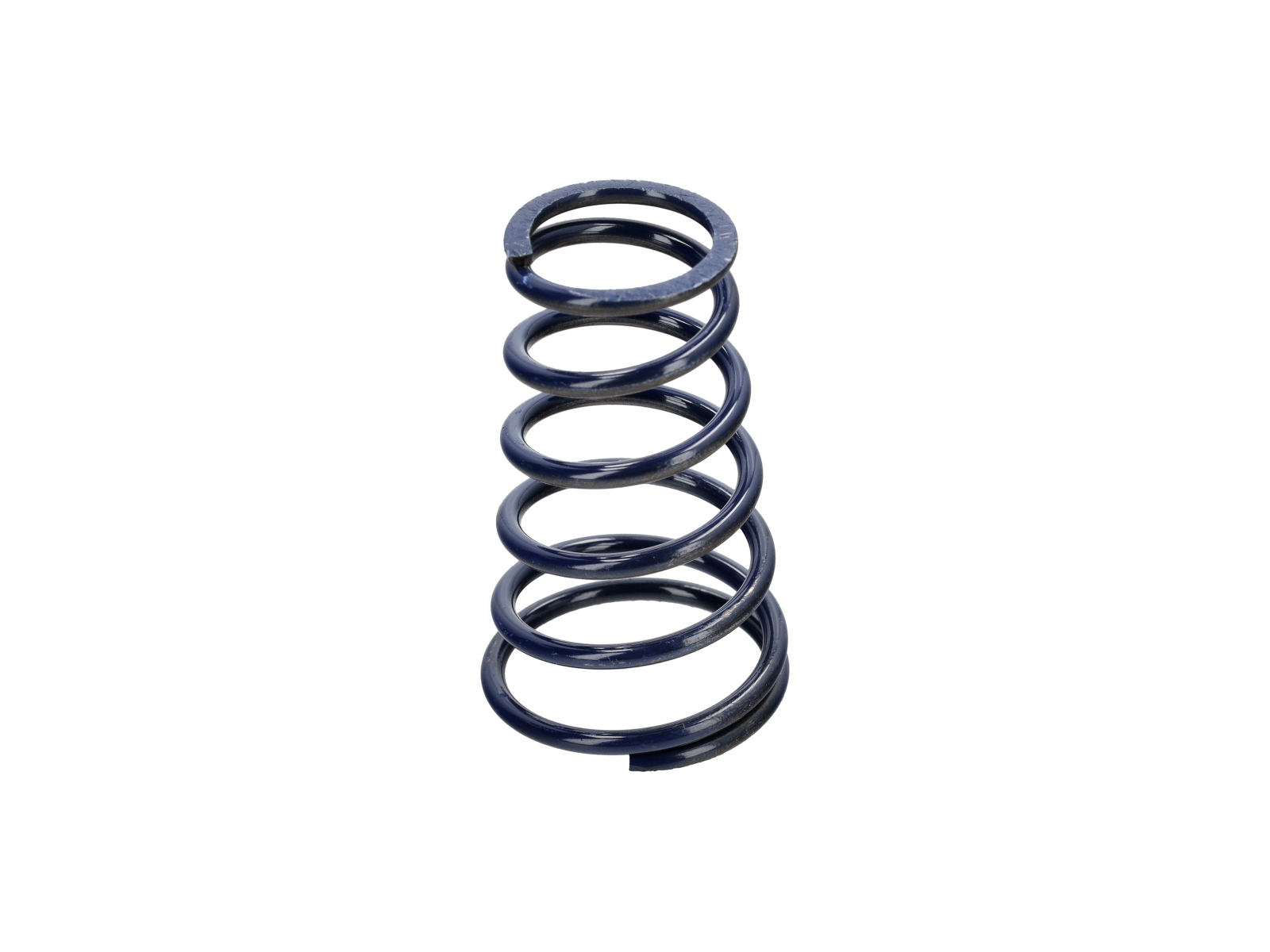
Blue springs - 1.2 Bar = 14 - 18Psi
Red springs - 1.4 Bar = 17.5 - 20Psi
Please note you would need to buy a pair as they are sold as EACH
The Replacement Actuators Part No. 99612300010 are assembled with Green springs - Standard Psi suitable for at or slightly above factory boost levels.
Additional springs are required for tuning to custom boost levels.
Fit:
Porsche 996 Turbo
Porsche 996 GT2
Porsche 993 Turbo
Related reference numbers
Related, superseded, cross reference or alternative numbers for comparison.
FMAS049
The product you are viewing cross references to these numbers


- Porsche 996 TURBO 2000-05
- Porsche 996 GT2 2001-05
These replacement actuators utilise the latest piston design to irradicate the failures often associated with diaphragm actuators and are supplied complete with brackets ready to install.
Please Note
This product is assembled with Green springs - Standard Psi suitable for at or slightly above factory boost levels.
Additional springs are required for tuning to custom boost levels.
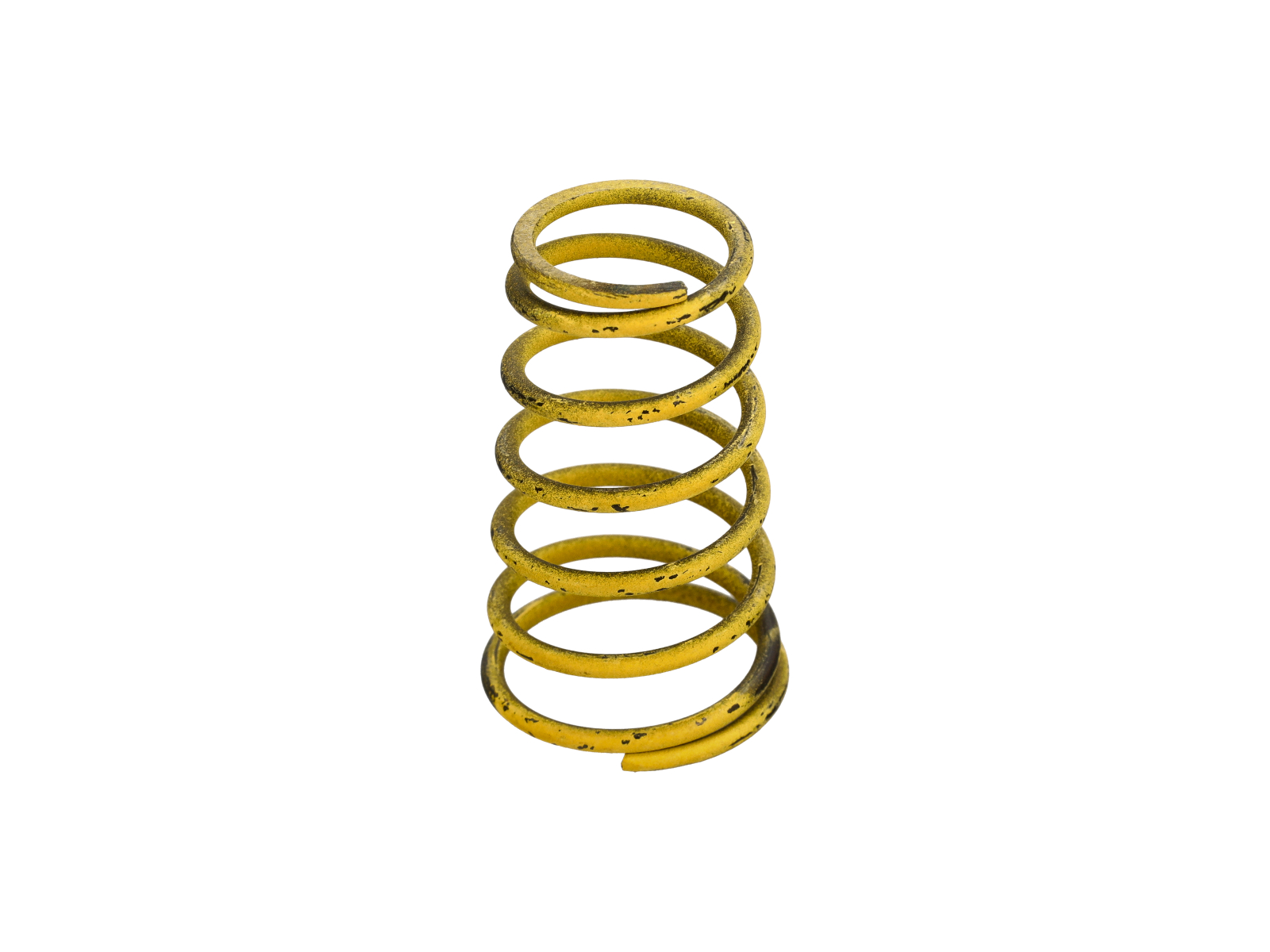
Yellow springs - 1 Bar = 9 - 15Psi
Blue springs - 1.2 Bar = 14 - 18Psi
Red springs - 1.4 Bar = 17.5 - 20Psi
Fit:
Porsche 996 Turbo
Porsche 996 GT2
Related reference numbers
Related, superseded, cross reference or alternative numbers for comparison.
99612300010
The product you are viewing cross references to these numbers

- Porsche 997 MKII Turbo 2010-13
- Porsche 991.1 Turbo 3.8L (520bhp) 2014-16
- Porsche 991.1 Turbo S 3.8L (560Bhp) 2014-16
- Porsche 991.2 Carrera 2 3.0L (370 Bhp) 2016-19
- Porsche 991.2 Carrera 2S / GTS 3.0L (420/450 Bhp) 2016-19
- Porsche 991.2 Carrera 4 3.0L (370 Bhp) 2016-19
- Porsche 991.2 Carrera 4S / GTS 3.0L (420/450 Bhp) 2016-19
- Porsche 991.2 Cabriolet 2 3.0L (370 Bhp) 2016-19
- Porsche 991.2 Cabriolet 2S / GTS 3.0L (420/450 Bhp) 2016-19
- Porsche 991.2 Cabriolet 4 3.0L (370 Bhp) 2016-19
- Porsche 991.2 Cabriolet 4S / GTS 3.0L (420/450 Bhp) 2016-19
- Porsche 991.2 Targa 4 3.0L (370 Bhp) 2016-19
- Porsche 991.2 Targa 4S / GTS 3.0L (420/450 Bhp) 2016-19
- Porsche 991.2 Turbo Coupe 3.8L (540 Bhp) 2016-19
- Porsche 991.2 Turbo S Coupe 3.8L (580 Bhp) 2016-19
- Porsche 991.2 Turbo Cabriolet 3.8L (540 Bhp) 2016-19
- Porsche 991.2 Turbo S Cabriolet 3.8L (580 Bhp) 2016-19
- Porsche 955 Cayenne Turbo 4.5L 2003-06
- Porsche 955 Cayenne Turbo S 4.5L 2006>>
- Porsche 957 Cayenne Turbo / Turbo S 4.8L 2007-10
- Porsche 958 Cayenne Turbo V8 4.8L Petrol 500HP 2010-17
- Porsche 958 Cayenne Turbo S V8 4.8L Petrol 550HP 2010-17
- Porsche 95B.1 Macan S Petrol 3.0L V6 340Bhp 2014-18
- Porsche 95B.1 Macan GTS Petrol 3.0L V6 360Bhp 2014-18
- Porsche 95B.1 Macan Turbo 3.6L V6 400Bhp 2014-18
Fits:
Porsche Cayenne Turbo MKI / MKII / MKIII
Porsche Macan 95B.1 3.0L / 3.6L
Porsche 997.2 Turbo 2010-2013 (3.8L engines)
Porsche 991 Turbo 2014-2020
Porsche 991.2 2017-2019
Replacement for original Porsche part No. 95511071000, 95511071001, 9A111033770,
Download the detailed installation instructions.
One of the most important upgrades for the Porsche Turbo engines is to replace the factory Bosch diverter valves. The factory valves are prone to leaking pressure under increased boost when the car has an upgraded ECU flash. As well, the factory Bosch valves will taper boost off with the diaphragm design even at stock boost levels. To help keep the boost pressure constant all the way to redline, upgrading the stock diverter valves to the DesignTek Racing Diverter Valve Kit will improve your cars overall performance.
These valves are CNC machined 6061 aluminum which have been precision engineered to fit with the stock or aftermarket F-Hose and intake return hoses. The internal construction of the valve uses a machined piston with proper o-rings to ensure a smooth motion that is air tight to prevent any boost leaks. The spring has been engineered to hold moderate to aggressive boost increases on the 996TT and Cayenne vehicles. The valves feature a 90 degree removable swivel connection for easy fitting with the factory vacuum hose. If needed, the top of the valve unscrews allowing you to re-greased and service the valve. As tested, these valves are a great upgrade for stock K16 or K24 cars and have even been used in our 700HP turbo kits.
Related reference numbers
Related, superseded, cross reference or alternative numbers for comparison.
3603500003
The product you are viewing cross references to these numbers


- Porsche 997 MK1 TURBO 2007-09
- Porsche 997 MK1 GT2 2007-09
Fits:
Porsche 997 Turbo
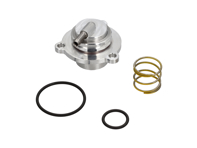
The 997TT Boost Recirculation Valve is a direct replacement for the OEM unit and features an improved and more efficient design. Our BRV is CNC machined from aircraft grade 6061-T6 aluminium, hard anodized and utilizes military spec Viton O-rings. Our CAD designed BRV employs the same operating principal from our 996TT piston diverter valve which has been successfully operating for nearly 8 years.
Combining our successful design principles, stringent theoretical computer and real world testing, the 997TT BRV eliminates issues of boost leaks and diaphragm sticking and deterioration that is consistent with the OEM valve in higher than stock horsepower applications.
Direct replacement for the OEM unit
-Features an improved and more efficient design.
-CNC machined from aircraft grade 6061-T6 aluminium, hard anodized and utilizes military spec Viton O-rings.