
Your Vehicle
Porsche // Panamera 971 MK2 (2021-2023) // 971.2 Panamera Turbo S 4.0L V8 2021-23



Enter your VAT number here and click Verify:
Your details have been verified. VAT number registered to:
,
.
Your order will now be zero rated for VAT purposes. We reserve the right to verify these details after your order request has been made and reinstate VAT if required.
Your VAT details were not recognised or were invalid. Your VAT number must be matched to your Billing Country as specified above. This is currently specified as . You do not need to enter the country code part of your VAT number as this has already been selected in your billing address details above.
The VAT number checking service is currently offline. Please supply your VAT details within the comments or special instructions field below and we will apply a VAT discount after placing your order request.

- Porsche Boxster 987 2.7L 2005-08/08
- Porsche Boxster 987 S 3.2/3.4L 2005-08/08
- Porsche Boxster 987 MKII 2.9L 2009-12
- Porsche 997 MK1 Carrera 2 3.6L 2005-08
- Porsche 997 MK1 Carrera 2S 3.8L 2005-08
- Porsche 997 MK1 Carrera 4 3.6L 2005-08
- Porsche 997 MK1 Carrera 4S 3.8L 2005-08
- Porsche Cayman 2.7L 987C 2006-08
- Porsche Cayman S 3.4L 987C 2005-08
- Porsche Cayman 2.9L 987C MKII 2009-12
- Porsche 955 Cayenne S 4.5L V8 2003-06
- Porsche 955 Cayenne Turbo 4.5L 2003-06
- Porsche 955 Cayenne Turbo S 4.5L 2006>>
- Porsche 958 Cayenne V6 3.6L Petrol (300Hp) 2010-17
- Porsche 970.2 Panamera S V6 Turbo 3.0L 2WD (420Hp) 2014-16
- Porsche 970.2 Panamera S V6 Turbo 3.0L 2WD Executive 2014-16
- Porsche 970.2 Panamera 4S V6 Turbo 3.0L 4WD (420Hp) 2014-16
- Porsche 970.2 Panamera 4S V6 Turbo 3.0L 4WD Executive 2014-16
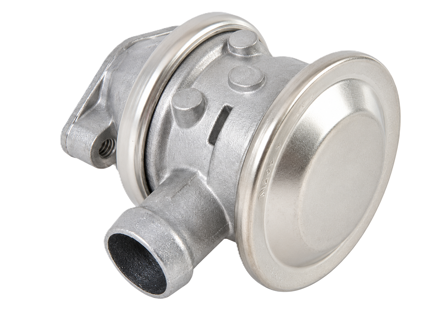
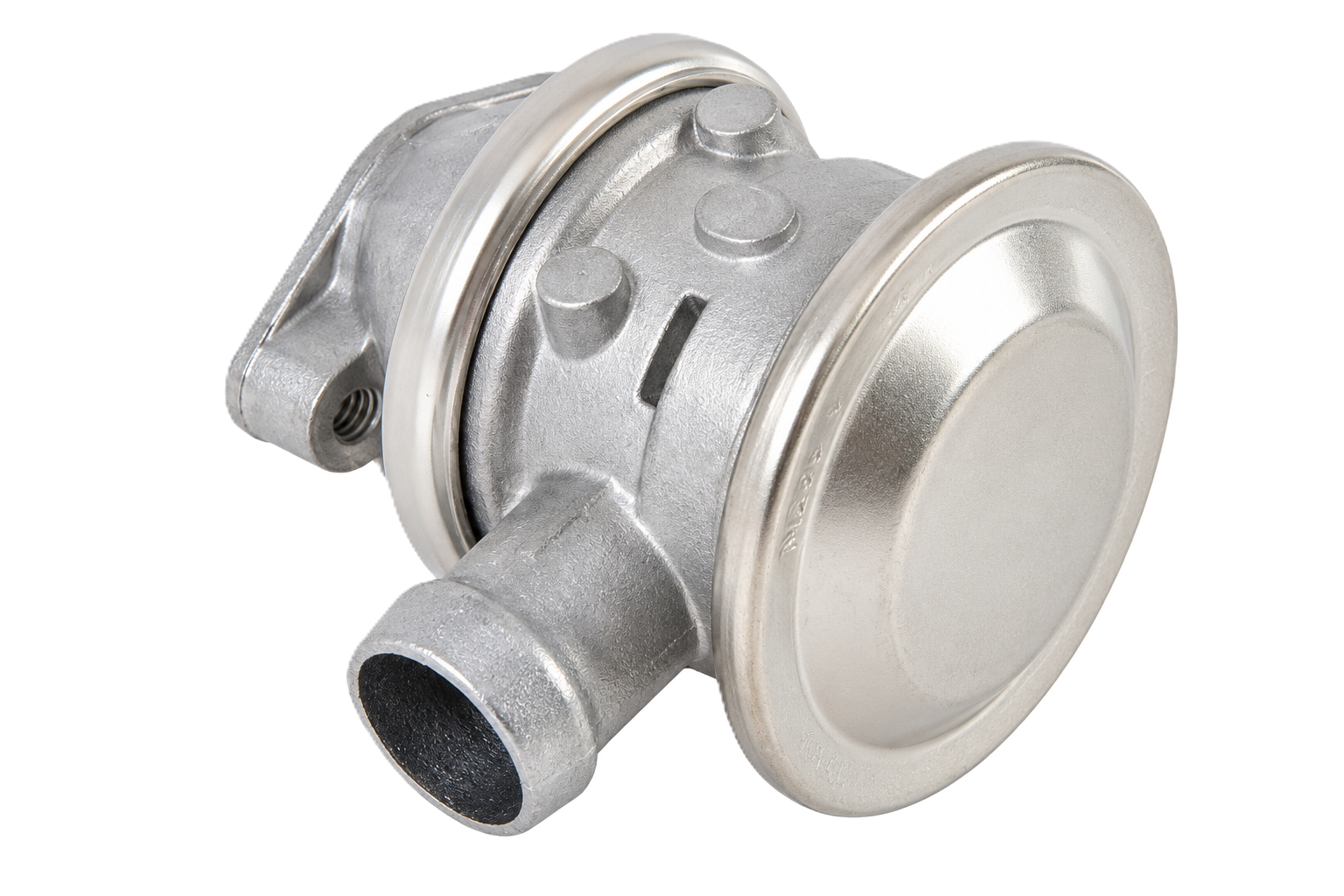
The Genuine Porsche Secondary Air Injection Valve (Part Number: 94811320351) is an original equipment emissions control component designed for selected Porsche Cayenne, 911 Carrera, Boxster, Cayman and Panamera models equipped with a secondary air injection system.
Sold Each.
Fits:
- Porsche Boxster 987 2.7L 2005-08/08
- Porsche Boxster 987 S 3.2/3.4L 2005-08/08
- Porsche Boxster 987 MKII 2.9L 2009-12
- Porsche 997 MK1 Carrera 2 3.6L 2005-08
- Porsche 997 MK1 Carrera 2S 3.8L 2005-08
- Porsche 997 MK1 Carrera 4 3.6L 2005-08
- Porsche 997 MK1 Carrera 4S 3.8L 2005-08
- Porsche Cayman 2.7L 987C 2006-08
- Porsche Cayman S 3.4L 987C 2005-08
- Porsche Cayman 2.9L 987C MKII 2009-12
- Porsche 955 Cayenne S 4.5L V8 2003-06
- Porsche 955 Cayenne Turbo 4.5L 2003-06
- Porsche 955 Cayenne Turbo S 4.5L 2006>>
- Porsche 958 Cayenne V6 3.6L Petrol (300Hp) 2010-17
- Porsche 970.2 Panamera S V6 Turbo 3.0L 2WD (420Hp) 2014-16
- Porsche 970.2 Panamera S V6 Turbo 3.0L 2WD Executive 2014-16
- Porsche 970.2 Panamera 4S V6 Turbo 3.0L 4WD (420Hp) 2014-16
- Porsche 970.2 Panamera 4S V6 Turbo 3.0L 4WD Executive 2014-16
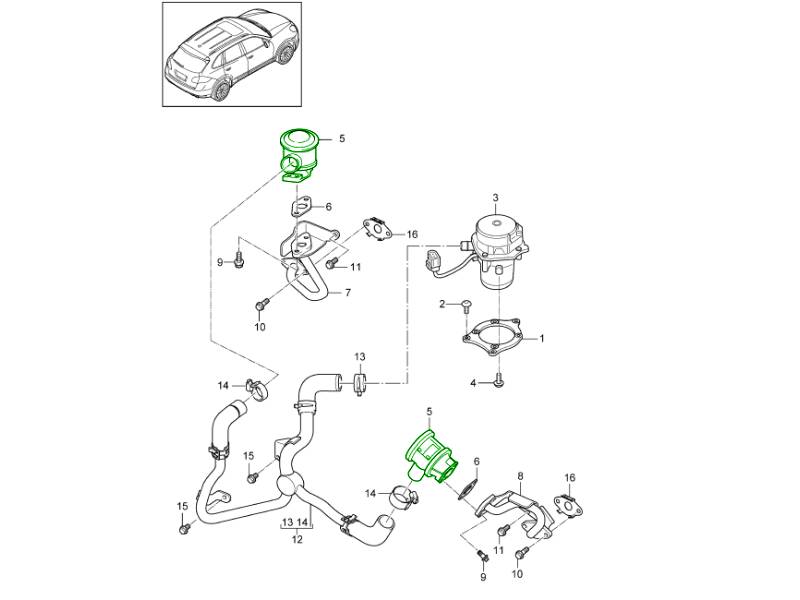
Diagram Ref No 5
Manufactured to Porsche's original equipment specifications, this valve forms part of the engine's secondary air injection system, which helps reduce harmful exhaust emissions during the initial warm-up period following a cold start.
The secondary air injection system supplies fresh air into the exhaust passages when the engine is cold. This additional oxygen helps promote the oxidation of unburnt hydrocarbons and carbon monoxide in the exhaust gases, supporting faster catalytic converter warm-up and improved emissions performance.
The valve controls the passage of this secondary air into the exhaust system and helps prevent hot exhaust gases from flowing backwards towards the secondary air pump and associated pipework.
During normal operation, the valve works alongside the secondary air pump, air hoses, control components and engine management system to deliver fresh air when required.
Over time, the original valve may deteriorate due to repeated exposure to heat, moisture, exhaust deposits and carbon contamination. Internal sticking, damaged sealing surfaces or corrosion can prevent the valve from opening or closing correctly.
A faulty valve may reduce secondary air flow, cause excessive exhaust emissions during cold starts or trigger an engine management warning light.
Replacing a worn or defective secondary air injection valve with a Genuine Porsche component helps restore the intended operation of the emissions control system, maintain proper exhaust gas isolation and protect associated secondary air injection components.
Ideal for emissions system repairs, secondary air injection fault diagnosis and Porsche engine maintenance, this Genuine Porsche replacement provides the correct original equipment specification for compatible vehicles.
What This Product Does:
The secondary air injection valve is a component of the engine's exhaust emissions control system.
Its primary function is to allow fresh air supplied by the secondary air pump to enter the exhaust system during the appropriate operating conditions.
When a petrol engine is first started from cold, the catalytic converters have not yet reached their most effective operating temperature. During this period, exhaust emissions can be higher than when the engine is fully warmed up.
The secondary air injection system introduces fresh air into the exhaust passages to help oxidise remaining hydrocarbons and carbon monoxide, supporting emissions reduction during the warm-up phase.
The valve also acts as a barrier against reverse exhaust gas flow, helping protect the secondary air pump and connected hoses.
Its main functions include:
- Controlling secondary air flow: Provides the intended air passage between the secondary air pump and exhaust system.
- Reducing cold-start emissions: Supports the oxidation of unburnt hydrocarbons and carbon monoxide during engine warm-up.
- Supporting catalytic converter warm-up: Helps establish the exhaust conditions needed for effective catalytic converter operation.
- Preventing exhaust gas backflow: Helps stop hot exhaust gases from travelling towards the secondary air pump.
- Protecting secondary air components: Reduces exposure of the pump and connected hoses to exhaust heat and contamination.
- Maintaining emissions system functionality: Supports the secondary air injection system's intended operating sequence.
- Supporting engine management monitoring: Helps maintain the airflow conditions expected during secondary air injection diagnostic checks.
- Preserving factory emissions control: Maintains the system specified by Porsche for the applicable engine.
The secondary air injection valve is not an exhaust gas recirculation (EGR) valve, an engine intake valve or a turbocharger control valve. Its purpose is to manage fresh-air delivery into the exhaust emissions system.
Symptoms Of Wear Or Failure:
The secondary air injection valve is exposed to substantial temperature changes, moisture and exhaust-related contamination.
Repeated cold-start operation and ageing may eventually affect its internal mechanism or sealing surfaces.
Common symptoms of a worn or faulty secondary air injection valve include:
- Check engine warning light: A malfunctioning valve may cause the engine management system to register a secondary air injection fault.
- Secondary air injection fault codes: Diagnostic trouble codes such as P0410, P0411 or related system-specific codes may be recorded when expected airflow is not detected.
- Increased cold-start emissions: A valve that fails to open may prevent the correct volume of fresh air from reaching the exhaust system.
- Failed emissions test: A defective secondary air system may contribute to emissions-related test failures, depending on the vehicle and test conditions.
- Valve stuck closed: Carbon deposits or internal mechanical damage may restrict secondary air flow.
- Valve stuck open or leaking: A damaged valve may allow exhaust gases to flow backwards into the secondary air circuit.
- Unusual air pump noises: Exhaust backflow or moisture contamination may contribute to deterioration of the secondary air pump.
- Carbon contamination: Heavy deposits inside the valve may interfere with correct operation.
- Corrosion or internal sticking: Moisture and heat exposure may cause the valve mechanism to seize.
- Damaged valve sealing surfaces: Wear or contamination may prevent the valve from sealing correctly.
- Air leakage around connections: Damaged gaskets or loose connections may reduce secondary air system efficiency.
- Repeated secondary air pump failures: Persistent pump damage may justify checking whether a leaking valve is allowing exhaust gases or condensate into the pump circuit.
- Inconsistent secondary air operation: The system may not achieve the expected airflow during engine management tests.
Why Replacement Matters:
Replacing a defective secondary air injection valve is important for maintaining the original emissions control system and protecting associated components.
A valve that remains closed may prevent fresh air from entering the exhaust passages during cold starts, reducing the effectiveness of the secondary air injection system.
A valve that fails to seal correctly may allow hot exhaust gases or contamination to travel backwards towards the secondary air pump.
If this condition continues, the pump, hoses and connecting components may be exposed to unnecessary heat and contamination.
Installing a Genuine Porsche replacement Secondary Air Injection Valve helps to:
- Restore secondary air flow: Re-establish the intended passage of fresh air into the exhaust system.
- Support reduced cold-start emissions: Help the emissions control system operate as designed.
- Maintain catalytic converter warm-up performance: Support the original cold-start emissions strategy.
- Prevent exhaust gas backflow: Restore the valve's intended reverse-flow protection.
- Protect the secondary air pump: Help prevent hot exhaust gases and contamination from reaching pump components.
- Address emissions-related warning lights: Resolve diagnostic faults where a defective valve has been confirmed as the cause.
- Maintain emissions system reliability: Replace sticking, leaking or damaged valve components.
- Prevent further contamination: Reduce unwanted exhaust deposits entering the secondary air circuit.
- Restore factory system operation: Maintain Porsche's original emissions control arrangement.
- Support successful emissions compliance: Help the vehicle meet its applicable emissions requirements when the rest of the system is functioning correctly.
- Reduce the risk of repeated repairs: Address a defective valve that may contribute to secondary air pump damage.
- Maintain Genuine Porsche quality: Use an original equipment component specified for compatible engines.
Replacement is particularly recommended when inspection confirms that the valve is stuck, blocked, leaking or unable to prevent exhaust gas backflow.
When replacing the valve, the secondary air pump, associated pipework and gasket should also be inspected to identify any underlying causes of failure.
Related reference numbers
Related, superseded, cross reference or alternative numbers for comparison.
94811320351
The product you are viewing cross references to these numbers