




Enter your VAT number here and click Verify:
Your details have been verified. VAT number registered to:
,
.
Your order will now be zero rated for VAT purposes. We reserve the right to verify these details after your order request has been made and reinstate VAT if required.
Your VAT details were not recognised or were invalid. Your VAT number must be matched to your Billing Country as specified above. This is currently specified as . You do not need to enter the country code part of your VAT number as this has already been selected in your billing address details above.
The VAT number checking service is currently offline. Please supply your VAT details within the comments or special instructions field below and we will apply a VAT discount after placing your order request.

Camshafts


- Porsche 911 1965-1968 2.0L / 912 SWB (F)
- Porsche 356 1950-55
- Porsche 356A 1955-59
- Porsche 356B 1959-63
- Porsche 356C 1963-65
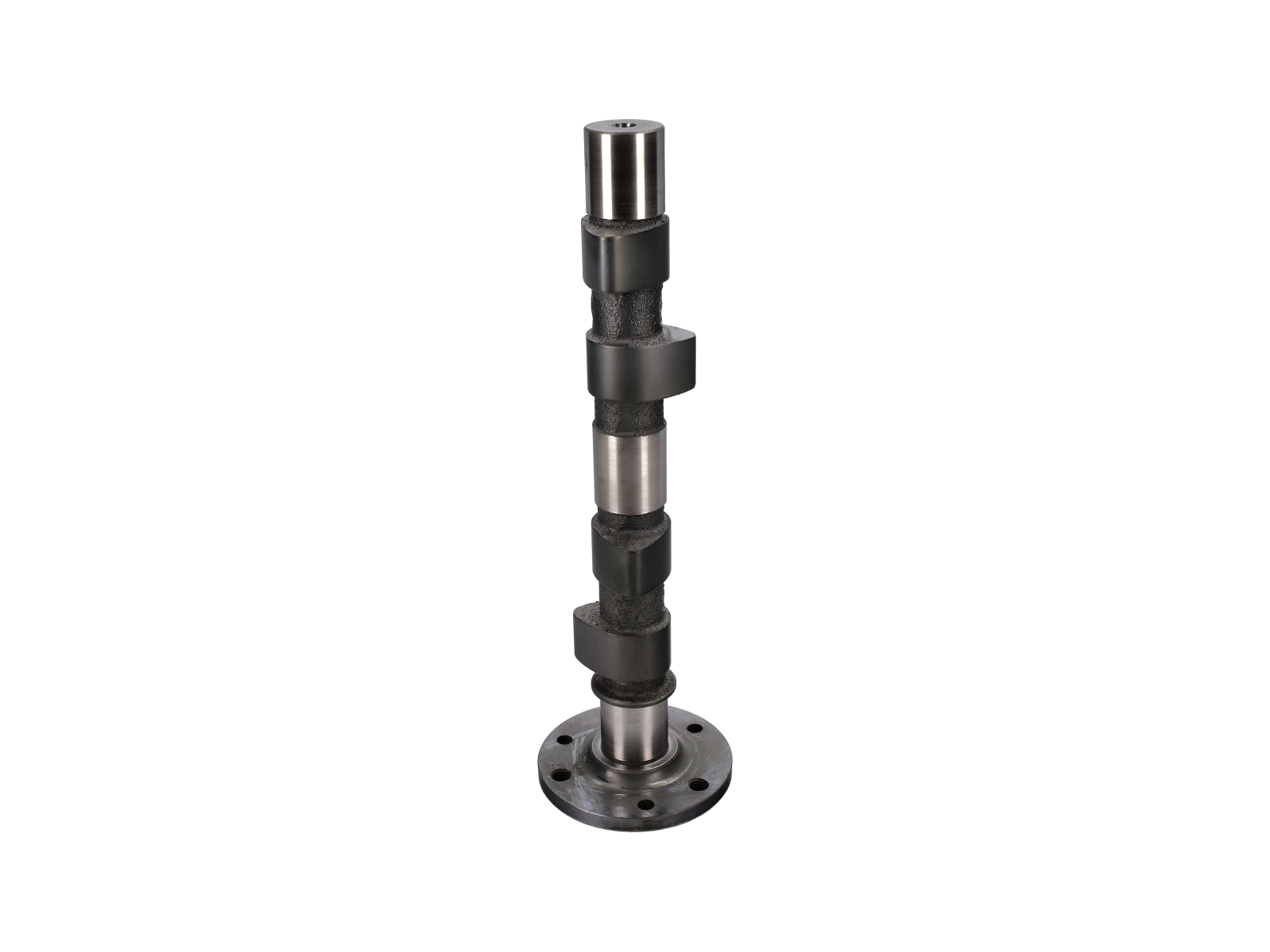
Restore or upgrade valve-train operation with this OE Match Camshaft, available under references WC-05-572, WC-05-112, WC-05-582, WC-05-012, WC-05-022, and WC-05-222. The camshaft is one of the engine's most important valve-train components, controlling when and how far the intake and exhaust valves open during each combustion cycle.
Please Note New cams should be installed using new lifters and proper assembly lube, or Severe damage may occur.
Fits:
Porsche 356 / 912
Sizes:
#1187 .393/.341L x 249/249D W/1.3 Rockers
#86 .423/.358L x 273/273D W/1.3 Rockers
#86-5 .420/.358L x 281/281D W/1.3 Rockers
#622 .435/.368L x 296/296D W/1.3 Rockers
#86a .435/.369L x 290/290D, Solid Lifters, Performance Street Cam
#86b .500/425L x 290/290D W/1.3 Rockers
As the camshaft rotates, its precisely shaped lobes act on the lifters or followers, transferring movement through the valve train to operate the intake and exhaust valves. The profile of each cam lobe determines critical characteristics including valve lift, duration, and timing, which influence cylinder filling, exhaust gas evacuation, engine response, torque delivery, and overall performance.
What This Product Does:
- Controls the opening and closing of the engine's intake and exhaust valves.
- Determines valve timing relative to crankshaft position.
- Controls valve lift through the shape and height of the cam lobes.
- Determines how long the valves remain open through camshaft duration.
- Works with lifters or cam followers to operate the valve train.
- Helps control how efficiently the cylinders fill with the air/fuel mixture.
- Supports efficient evacuation of exhaust gases.
- Influences engine torque, power delivery, throttle response, and operating characteristics.
- Maintains coordinated valve operation throughout the engine cycle.
- Replaces a worn, damaged, or unsuitable existing camshaft.
- Provides options for compatible standard, rebuilt, or performance-oriented engine configurations.
Symptoms Of Wear Or Failure:
- Ticking, tapping, or abnormal valve-train noise.
- Reduced engine power or acceleration.
- Rough or inconsistent engine operation.
- Difficulty maintaining correct valve clearances.
- Repeated changes in valve adjustment.
- Reduced valve lift.
- Uneven engine performance between cylinders.
- Misfires or poor combustion.
- Excessive wear or flattening of individual cam lobes.
- Pitting, scoring, or surface damage on camshaft lobes.
- Abnormal wear on the lifters or cam followers.
- Metallic particles in the engine oil.
- Visible camshaft damage discovered during an engine rebuild.
- The camshaft directly controls the movement of the engine's valves, making its condition fundamental to compression, combustion, and engine performance. If a camshaft lobe becomes worn or flattened, the corresponding valve may no longer open to the intended height or remain open for the correct duration.
- Reduced valve lift can restrict the amount of air and fuel entering the cylinder or prevent exhaust gases from leaving efficiently. This may lead to reduced power, poor throttle response, rough running, and inefficient combustion.
- Camshaft and lifter condition are also closely related. A damaged camshaft lobe can rapidly wear the corresponding lifter, while an unsuitable or damaged lifter can accelerate camshaft wear. Metal produced by this wear can circulate through the engine lubrication system and potentially damage other internal components.
- Correct camshaft selection is particularly important with performance-oriented profiles. Changes in lift, duration, and timing can affect valve-to-piston clearance, valve-spring requirements, rocker geometry, compression characteristics, idle quality, torque delivery, and usable engine-speed range. The complete engine combination must therefore be considered rather than selecting a camshaft solely by reference or appearance.
Related reference numbers
Related, superseded, cross reference or alternative numbers for comparison.
WC-05
The product you are viewing cross references to these numbers
Precision-Engineered Camshafts – Performance, Reliability, and Power for Porsche Engines
Camshafts are the heartbeat of any Porsche engine, controlling the timing and lift of the intake and exhaust valves to ensure precise combustion and efficient power delivery. A well-tuned camshaft defines how your engine breathes, responds, and performs — whether it’s a daily-driven 911 or a track-focused GT model.
At Design911, we supply a complete range of high-quality and performance-grade camshafts engineered to meet or exceed manufacturer specifications. Each camshaft is precision-machined for exact tolerances, ensuring smooth valve operation, consistent timing, and optimal performance across all driving conditions.
What Do Camshafts Do?
Camshafts regulate how air and fuel enter and exit the combustion chamber. By controlling valve timing, lift, and duration, they play a crucial role in engine power and efficiency.
Core Functions:
- Control
valve timing for optimal engine breathing.
- Determine
power characteristics, from low-end torque to high-rpm performance.
- Synchronise
intake and exhaust cycles for smoother operation.
- Enhance efficiency, combustion stability, and throttle response.
High-performance camshafts are often tuned to deliver sharper throttle response, higher power output, and improved torque delivery for modified or rebuilt engines.
Why Do Camshafts Fail?
Even with Porsche’s engineering excellence, camshafts are
subject to wear over time. Common causes of camshaft failure include:
- Oil
starvation leading to friction and surface wear.
- Excessive
heat or poor lubrication degrading cam lobes.
- Improper
timing belt/chain tension causing misalignment or damage.
- Mechanical
fatigue due to extended mileage or racing conditions.
- Contaminated oil introducing abrasive particles into the valvetrain.
A worn or damaged camshaft can cause loss of power, misfires, rough idle, and reduced engine efficiency — making timely replacement essential to restore peak performance.
Why Replace with Performance-Grade Camshafts?
Replacing worn components with precision-engineered camshafts restores engine reliability and maximises output. Upgraded camshafts can also provide noticeable gains in horsepower and responsiveness.
Key Benefits:
- Restores
valve timing accuracy and smooth engine operation.
- Increases
power and torque, especially in performance-tuned engines.
- Improves
fuel combustion efficiency for cleaner running.
- Ensures
long-term reliability with precision-machined surfaces and premium
materials.
- Perfect fitment with no modification required on compatible Porsche engines.
Whether maintaining a classic flat-six or upgrading a modern turbocharged engine, these camshafts are designed to deliver manufacturer-level precision with motorsport-grade durability.
Highlights:
- Precision-engineered
camshafts for Porsche models old and new.
- Enhanced
performance and reliability, meeting manufacturer standards.
- Motorsport-grade
construction ensures durability under extreme loads.
- Improved
airflow and combustion efficiency for optimal power delivery.
- Ideal for restorations, rebuilds, and performance tuning projects.
- Designed for seamless compatibility with Porsche flat-six, turbo, and hybrid engines.
-
 Intermediate shaft (IMS)
-
Oil System Parts
-
Fuel System Parts
-
Gaskets & Sets
-
Belts / Tensioners / Rollers
-
Chains & Tensioners
-
Timing covers and gaskets
-
Engine Bearings / Shells
-
Engine Valves / Guides / Springs
-
Rocker Arms & Tappets
-
Engine Bolts / Studs
-
Engine Mounts
-
Piston Rings
-
Engine Cylinders / Liners / Pistons
-
Connecting Rod
-
Cylinder Head / Camshaft Carrier
-
Camshaft covers / Gaskets
-
Camshaft gears / sprockets and fixings
-
Crankcase Parts
-
Crankshaft & Parts
-
Engine Tinware
-
Air Intake & Injection
-
Carburetors & Parts
-
Specialist Tools