


Enter your VAT number here and click Verify:
Your details have been verified. VAT number registered to:
,
.
Your order will now be zero rated for VAT purposes. We reserve the right to verify these details after your order request has been made and reinstate VAT if required.
Your VAT details were not recognised or were invalid. Your VAT number must be matched to your Billing Country as specified above. This is currently specified as . You do not need to enter the country code part of your VAT number as this has already been selected in your billing address details above.
The VAT number checking service is currently offline. Please supply your VAT details within the comments or special instructions field below and we will apply a VAT discount after placing your order request.

Catalyst / Bypass

- Porsche 964 (911) TURBO 3.3L 1991-93
- Porsche 964 (911) TURBO 3.6L 1991-93
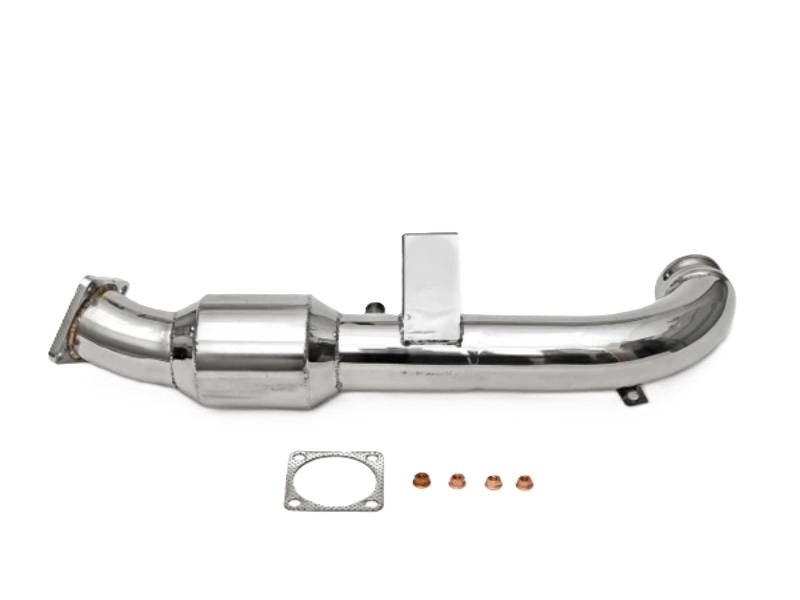
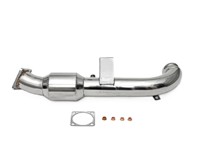
The Fabspeed HJS High-Flow Sport Catalytic Converter is a performance exhaust upgrade for the Porsche 964 Turbo, C2 Turbo designed to replace an ageing, restrictive or previously removed original catalytic converter.
Fits:
- Porsche 964 (911) TURBO 3.3L 1990-94
- Porsche 964 (911) TURBO 3.6L 1990-94
At the heart of the system is a 200-cell HJS high-flow catalytic converter, engineered to reduce exhaust emissions while providing substantially less restriction than older factory catalyst technology. The system is manufactured using 14–16 gauge CNC mandrel-bent T304L stainless steel, providing a durable, corrosion-resistant exhaust path designed for improved gas flow.
By reducing exhaust restriction after the turbocharger, the sport catalyst can help the turbocharged flat-six breathe more efficiently, supporting improved throttle response and performance while retaining catalytic exhaust-gas treatment.
What This Product Does:
- Replaces the original catalytic converter section.
- Converts harmful exhaust pollutants before gases leave the exhaust system.
- Provides significantly greater exhaust flow than an ageing or restrictive factory catalyst.
- Reduces exhaust backpressure after the turbocharger.
- Helps improve throttle response.
- Can support improved turbo response and engine performance.
- Provides a performance-oriented alternative to an original 1990s catalytic converter.
- Restores catalytic-converter functionality on vehicles where the original catalyst has previously been removed.
- Uses a high-flow 200-cell HJS catalyst rather than a conventional dense factory-style catalyst.
- Uses stainless-steel construction for corrosion resistance and durability.
- Retains catalytic treatment while offering flow characteristics closer to a less restrictive exhaust system.
Fabspeed states that its HJS high-flow catalysts can flow at more than 90% of the rate of a straight pipe in applicable installations while still providing catalytic exhaust-gas treatment.
Symptoms Of Wear Or Failure:
An original catalytic converter can deteriorate internally after decades of heat cycles, vibration and exposure to exhaust gases.
Possible symptoms include:
- Noticeable loss of engine power.
- Poor throttle response.
- Sluggish turbo response.
- Engine feeling restricted at higher RPM.
- Difficulty achieving full boost or performance.
- Excessive exhaust backpressure.
- Increased exhaust temperatures.
- Rattling noises from inside the catalytic converter.
- Metallic noises caused by a loose or broken catalyst core.
- Strong or unusual exhaust smells.
- Failed emissions testing.
- Increased exhaust emissions.
- Catalyst housing becoming excessively hot.
- Reduced fuel economy.
- Engine running poorly under load.
- Visible corrosion or damage to the original converter.
- Exhaust leaks around the converter or flanges.
A partially blocked catalyst may allow the engine to run reasonably well at low speed but restrict exhaust flow increasingly as engine speed and load rise.
Why Replacement Matters:
The catalytic converter sits directly in the exhaust path, so its internal condition has a major influence on both emissions performance and exhaust flow.
As the catalyst ages, the internal substrate can deteriorate, melt, become contaminated or break apart. A damaged catalyst may become increasingly restrictive, creating excessive exhaust backpressure.
On a turbocharged engine, restriction after the turbocharger is particularly undesirable because the turbocharger must push exhaust gases through the converter.
Replacing a worn or restrictive converter can help restore:
- Proper exhaust flow.
- Turbocharger response.
- Throttle response.
- Engine performance.
- Exhaust-gas treatment.
- Correct operating temperatures.
- Reliable exhaust-system operation.
NOTE: In the United Kingdom, sports catalytic converters and bypass pipes do not have type approval and are not legally permitted for use on vehicles manufactured after 1st March 2001. They are not MOT compliant and cannot be used on public roads. These components are intended solely for race and track use.
For vehicles manufactured before 1st March 2001, a non-type approved sports catalytic converter may be fitted, provided it offers comparable performance to the original and the vehicle continues to meet the applicable emissions standards for its age. The vehicle must still pass an MOT test.
If you are located outside the UK, please check your local laws and regulations to ensure compliance.
Related reference numbers
Related, superseded, cross reference or alternative numbers for comparison.
FSPOR964TSC
The product you are viewing cross references to these numbers

- Porsche 964 (911) TURBO 3.3L 1991-93
- Porsche 964 (911) TURBO 3.6L 1991-93
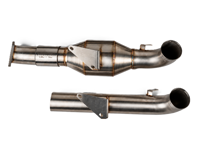
The Fabspeed Porsche C2 Turbo / 965 / 964 Turbo Muffler Bypass IMSA Zork Tube is a competition-inspired performance exhaust upgrade designed for Porsche 911 Turbo models manufactured between 1990 and 1994.
Fits:
- Porsche 964 (911) TURBO 3.3L 1990-94
- Porsche 964 (911) TURBO 3.6L 1990-94
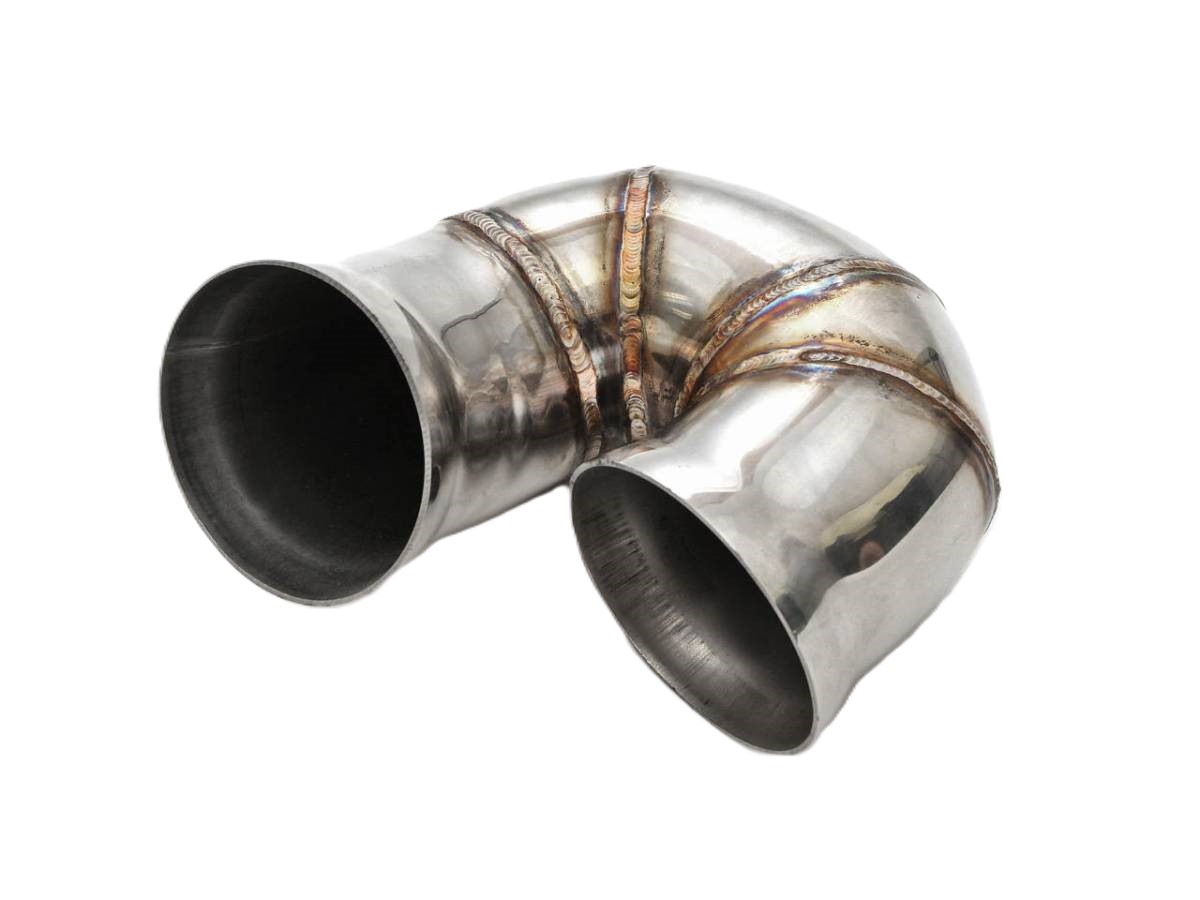
Developed by Fabspeed Motorsport, this high-flow exhaust component recreates the distinctive short exhaust outlet design associated with the legendary Porsche 934 IMSA and Le Mans racing cars of the late 1970s.
The IMSA Zork Tube replaces the original restrictive rear exhaust arrangement with a short, large-diameter outlet that directs exhaust gases away from the turbocharger with minimal downstream restriction.
Its design is intended to deliver maximum exhaust sound, improved turbocharger response and a dramatic motorsport-inspired driving experience.
Manufactured with 3.0-inch (76 mm) exhaust tubing, the Fabspeed Zork Tube features an integrated angle-cut outlet that can be adjusted to achieve the correct position beneath the rear bumper.
By reducing exhaust restrictions after the turbocharger, this system is designed to improve exhaust gas evacuation and allow the turbocharger to respond more freely.
Fabspeed advertises performance gains of up to 46 wheel horsepower and 65 lb-ft of torque, based on its published testing. Actual results depend on engine condition, vehicle specification, existing modifications and operating conditions.
One of the most distinctive features of this product is its sound. The Zork Tube creates an exceptionally loud, aggressive exhaust character, with pronounced turbocharger whistle, spool-up sounds, crackles, pops and exhaust burbles.
Unlike a conventional sports muffler, the IMSA Zork Tube prioritises exhaust flow and sound over noise reduction.
The direct-fit design uses four mounting nuts at the turbocharger connection and an adjustable slip-joint outlet, allowing straightforward installation on a compatible exhaust configuration.
The Fabspeed IMSA Zork Tube is ideally suited to Porsche 964 Turbo and 965 owners preparing vehicles for track days, motorsport events or dedicated competition use.
What This Product Does:
The Fabspeed IMSA Zork Tube provides a short, high-flow exhaust route from the turbocharger towards the rear of the vehicle.
Instead of passing exhaust gases through the standard rear muffler arrangement, the Zork Tube allows them to exit through a substantially less restrictive pipe.
Its key functions and benefits include:
- Reduced Exhaust Backpressure: Provides a freer-flowing outlet after the turbocharger.
- Improved Exhaust Gas Flow: Uses 3.0-inch (76 mm) tubing to support efficient exhaust evacuation.
- Enhanced Turbocharger Response: Reduced downstream restriction may help the turbocharger build boost more readily.
- Increased Performance Potential: Fabspeed advertises gains of up to 46 wheel horsepower and 65 lb-ft of torque.
- Aggressive Race-Inspired Sound: Produces an extremely loud exhaust note inspired by historic Porsche competition cars.
- Pronounced Turbo Whistle: Makes turbocharger spool-up and operating sounds considerably more noticeable.
- Exhaust Crackles and Pops: Allows more combustion-related exhaust sounds to be heard.
- Direct Exhaust Routing: Minimises the complexity and length of the downstream exhaust path.
- Reduced Exhaust System Weight: Eliminates heavier original exhaust components where replaced by the tube, although Fabspeed does not publish a confirmed weight-saving figure for this product.
- Adjustable Outlet Position: Features an angle-cut outlet with a slip-joint adjustment.
- Motorsport Appearance: Recreates the distinctive short exhaust arrangement associated with Porsche 934 IMSA race cars.
- Straightforward Installation: Designed to attach directly to the compatible turbocharger outlet arrangement.
- Reversible Modification: Allows original components to be retained and refitted when required.
Symptoms Of Wear Or Failure:
The Fabspeed IMSA Zork Tube is primarily a performance and motorsport upgrade, rather than a routine replacement for a worn exhaust component.
However, owners may consider replacing or refurbishing their original exhaust system when it shows signs of damage or deterioration.
- Older mufflers and exhaust pipes can develop corrosion following prolonged exposure to moisture, road salt and repeated temperature changes.
- Severe corrosion may weaken the exhaust housing, joints and mounting points.
- Cracked pipework, failed gaskets or damaged connections can allow exhaust gases to escape before reaching the intended outlet.
- Symptoms may include blowing noises, increased exhaust volume and visible soot around leaking joints.
- Internal baffles or other components inside an ageing muffler may become loose or damaged.
- This can produce metallic rattling, unusual vibrations or changes in exhaust sound.
- Damaged or obstructed exhaust components may restrict gas flow, increasing exhaust backpressure.
- Severe restriction can affect engine output and turbocharger operating conditions.
- A severely restricted exhaust system may contribute to slower boost response or reduced engine performance.
- However, these symptoms can also result from turbocharger wear, boost leaks, wastegate faults or other engine problems.
- Corroded fasteners, fractured brackets or deteriorated supports may allow unwanted exhaust movement.
- This can produce rattling, vibration or contact with surrounding bodywork.
- Impact damage, crushed sections or deformed pipework can compromise the structural condition of the original exhaust.
- Loose connections or failed supports may allow the exhaust system to move beyond its intended position.
- A leaking exhaust may allow fumes to escape near the engine compartment or vehicle body.
- Exhaust leaks should be investigated promptly because exhaust gases can contain dangerous carbon monoxide.
- Corrosion or deformation around flange connections may prevent the exhaust from sealing correctly.
Why Replacement / Upgrading Matters:
- Upgrading to the Fabspeed IMSA Zork Tube offers a distinctive motorsport-focused exhaust configuration for Porsche 964 Turbo and 965 models.
- The original Porsche exhaust system was engineered to balance performance, exhaust noise, emissions control and normal road usability.
- For dedicated competition vehicles, a shorter and less restrictive exhaust outlet may provide benefits where motorsport regulations permit its use.
NOTE: In the United Kingdom, sports catalytic converters and bypass pipes do not have type approval and are not legally permitted for use on vehicles manufactured after 1st March 2001. They are not MOT compliant and cannot be used on public roads. These components are intended solely for race and track use.
For vehicles manufactured before 1st March 2001, a non-type approved sports catalytic converter may be fitted, provided it offers comparable performance to the original and the vehicle continues to meet the applicable emissions standards for its age. The vehicle must still pass an MOT test.
If you are located outside the UK, please check your local laws and regulations to ensure compliance.
Related reference numbers
Related, superseded, cross reference or alternative numbers for comparison.
FSPOR964TZMB
The product you are viewing cross references to these numbers
- Porsche 964 (911) TURBO 3.3L 1991-93
- Porsche 964 (911) TURBO 3.6L 1991-93
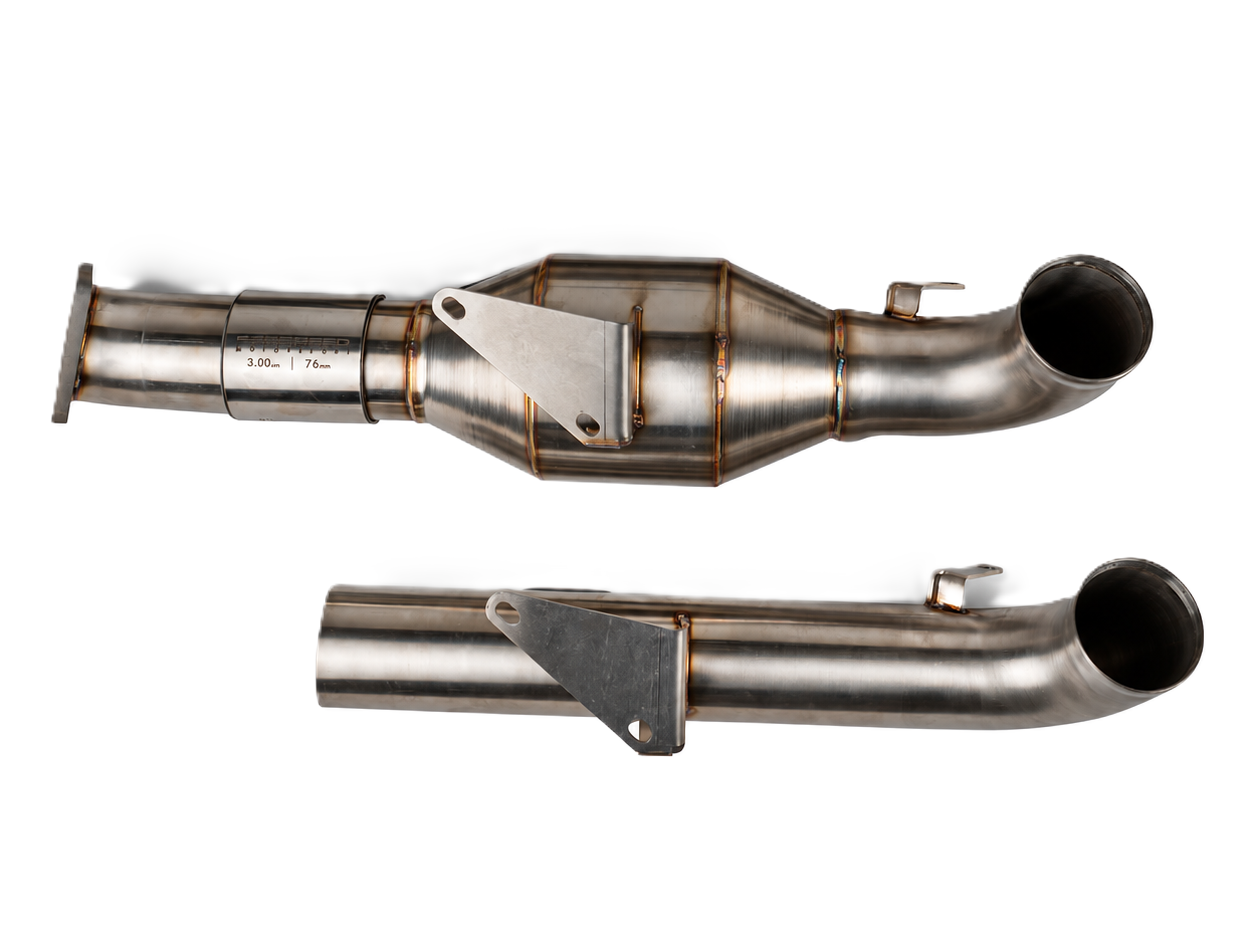
The Fabspeed RENNKRAFT Sport Cat and Competition Link Pipe system is a performance exhaust upgrade designed for the Porsche 964 Turbo. It replaces the restrictive original catalytic converter section with Fabspeed's interchangeable RENNKRAFT system, allowing the exhaust configuration to be changed between an HJS 200-cell high-flow sport catalytic converter and a straight-through competition link pipe.
Fits:
- Porsche 964 (911) TURBO 3.3L 1990-94
- Porsche 964 (911) TURBO 3.6L 1990-94
The sport catalyst configuration is designed to improve exhaust flow while retaining catalytic exhaust-gas treatment, while the competition link pipe provides the least restrictive exhaust path for appropriate track and competition use.
The system retains the original Porsche rear mufflers, allowing the vehicle to preserve a largely factory rear appearance while benefiting from reduced exhaust restriction, a stronger exhaust character and more noticeable turbocharger sound.
Constructed from 3-inch, 14–16 gauge T304L stainless-steel tubing, the system uses CNC mandrel bends to maintain a smooth internal exhaust path and provide durability under the high temperatures generated by the turbocharged flat-six engine.
What This Product Does:
- Replaces the restrictive original catalytic-converter section.
- Provides interchangeable sport-cat and competition-pipe configurations.
- Uses a high-flow HJS 200-cell catalytic converter in the catted configuration.
- Reduces exhaust restriction after the turbocharger.
- Helps improve exhaust-gas flow.
- Can help reduce turbo lag.
- Supports improved turbocharger response.
- Produces a more pronounced exhaust note.
- Increases audible turbo whistle.
- Retains the original Porsche rear mufflers.
- Allows the vehicle to maintain a relatively factory-looking rear exhaust installation.
- Provides a straight-through competition configuration for suitable track applications.
- Uses stainless-steel construction for long-term corrosion resistance.
- Provides a direct replacement for the factory catalytic-converter section.
Fabspeed states that the HJS 200-cell catalyst flows approximately 93% as much as a straight pipe, providing a balance between catalytic treatment and performance-oriented exhaust flow.
Symptoms Of Wear Or Failure:
A Porsche 964 Turbo's original catalytic converter can deteriorate after decades of heat cycles, vibration and exposure to high exhaust temperatures.
Possible signs of deterioration or restriction include:
- Reduced engine power.
- Sluggish acceleration.
- Slow turbo response.
- Increased turbo lag.
- Engine feeling restricted at higher RPM.
- Poor performance under heavy load.
- Excessive exhaust backpressure.
- Increased exhaust-gas temperatures.
- Unusual heat around the catalytic converter.
- Rattling from inside the converter.
- Metallic noises caused by a loose catalyst substrate.
- Strong or unusual exhaust smells.
- Failed emissions testing.
- Increased exhaust emissions.
- Visible corrosion or damage to the converter housing.
- Exhaust leaks around flanges or joints.
A partially blocked catalyst may allow relatively normal operation at low engine speeds but increasingly restrict exhaust flow as engine speed and load increase.
Why Replacement Matters:
The catalytic converter sits directly downstream within the turbocharged exhaust system, meaning its ability to flow exhaust gases can have a significant influence on engine and turbocharger performance.
As an old catalyst deteriorates, its internal substrate can:
- Break apart.
- Become contaminated.
- Melt or deform.
- Collapse internally.
- Become increasingly restrictive.
A restricted catalyst creates additional pressure after the turbocharger, making it more difficult for exhaust gases to leave the turbine efficiently.
Replacing an ageing or restrictive factory catalyst with a correctly designed high-flow system can help restore:
- Efficient exhaust flow.
- Turbocharger response.
- Throttle response.
- High-RPM performance.
- Correct exhaust-system operation.
- More consistent engine performance.
- A stronger performance exhaust character.
NOTE: In the United Kingdom, sports catalytic converters and bypass pipes do not have type approval and are not legally permitted for use on vehicles manufactured after 1st March 2001. They are not MOT compliant and cannot be used on public roads. These components are intended solely for race and track use.
For vehicles manufactured before 1st March 2001, a non-type approved sports catalytic converter may be fitted, provided it offers comparable performance to the original and the vehicle continues to meet the applicable emissions standards for its age. The vehicle must still pass an MOT test.
If you are located outside the UK, please check your local laws and regulations to ensure compliance.
Related reference numbers
Related, superseded, cross reference or alternative numbers for comparison.
FSPOR964TSCCB
The product you are viewing cross references to these numbers
- Porsche 964 (911) TURBO 3.3L 1991-93
- Porsche 964 (911) TURBO 3.6L 1991-93
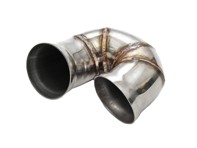
The Fabspeed Porsche 964 Turbo / 965 / C2 Turbo Secondary Muffler Bypass Pipe is a performance exhaust upgrade designed to replace the factory secondary rear muffler with a freer-flowing stainless-steel pipe.
Fits:
- Porsche 964 (911) TURBO 3.3L 1990-94
- Porsche 964 (911) TURBO 3.6L 1990-94
Designed for both 3.3L and 3.6L Porsche 964 Turbo / 965 models, the bypass pipe reduces restriction in the rear exhaust system while retaining the vehicle's catalytic converter. This provides improved exhaust flow, sharper throttle response, reduced rear-end weight and a more pronounced turbocharged flat-six exhaust note.
Manufactured from 14–16 gauge CNC mandrel-bent T304L stainless steel, the pipe is a direct replacement for the original Porsche secondary muffler.
Fabspeed lists 12 HP and 10 lb-ft for this product and states that removing the factory secondary muffler saves approximately 25 lb / 11.4 kg from the rear of the vehicle. Performance figures are manufacturer-reported and actual results will vary according to vehicle specification, condition and testing environment.
What This Product Does:
The secondary muffler is positioned downstream of the catalytic converter and is primarily responsible for reducing exhaust noise before gases exit through the rear exhaust tip.
While effective at controlling sound, the internal chambers and passages of a conventional muffler can also create resistance to exhaust flow.
The Fabspeed Secondary Muffler Bypass Pipe removes this muffler and replaces it with a freer-flowing pipe.
The upgrade is designed to provide:
- Improved exhaust-gas flow
- Reduced rear exhaust restriction
- Improved throttle response
- Increased performance potential
- Reduced rear-end weight
- Stronger turbocharged flat-six exhaust sound
- More pronounced turbo whistle
- More direct exhaust path
Improved Exhaust Flow:
Replacing the factory secondary muffler removes internal chambers and sound-control structures from this section of the exhaust.
The resulting straighter exhaust route is designed to reduce restriction.
Potential benefits include:
- Faster exhaust-gas evacuation
- Reduced backpressure
- Improved turbo exhaust flow
- Sharper throttle response
- Improved performance throughout the RPM range
The exact difference will depend on the condition and specification of the complete engine and exhaust system.
Enhanced Turbocharged Flat-Six Sound:
Removing the secondary muffler allows considerably more of the 964 Turbo's natural exhaust character to be heard.
The result is a deeper and more pronounced turbocharged flat-six sound, accompanied by increased turbo whistle.
Drivers can expect:
- Deeper exhaust tone
- Increased exhaust presence
- Stronger sound under acceleration
- More noticeable turbo whistle
- More pronounced flat-six character
- Sportier overall exhaust note
The final sound will depend on the rest of the exhaust system fitted to the vehicle.
Why Upgrading Matters:
The original secondary muffler does not need to have failed before this component is installed.
This product is primarily a performance, sound and weight-reduction upgrade.
Reasons for upgrading include:
- Removes the restrictive factory secondary muffler
- Improves exhaust flow
- Improves throttle response potential
- Manufacturer-listed 12 HP / 10 lb-ft
- Approx. 25 lb / 11.4 kg rear weight saving
- Stronger turbocharged flat-six sound
- More noticeable turbo whistle
- Retains the catalytic converter
- T304L stainless-steel construction
- CNC mandrel-bent tubing
- Direct replacement for the factory secondary muffler
- Suitable for both 3.3L and 3.6L 964 Turbo applications
NOTE: In the United Kingdom, sports catalytic converters and bypass pipes do not have type approval and are not legally permitted for use on vehicles manufactured after 1st March 2001. They are not MOT compliant and cannot be used on public roads. These components are intended solely for race and track use.
For vehicles manufactured before 1st March 2001, a non-type approved sports catalytic converter may be fitted, provided it offers comparable performance to the original and the vehicle continues to meet the applicable emissions standards for its age. The vehicle must still pass an MOT test.
If you are located outside the UK, please check your local laws and regulations to ensure compliance.
Related reference numbers
Related, superseded, cross reference or alternative numbers for comparison.
FSPOR964TSMB
The product you are viewing cross references to these numbers

- Porsche 964 (911) TURBO 3.3L 1991-93
- Porsche 964 (911) TURBO 3.6L 1991-93
The Fabspeed Porsche 964 Turbo / 965 / C2 Turbo Cat Bypass Pipe is a high-performance stainless steel exhaust component developed for Porsche 911 Turbo models manufactured between 1990 and 1994.
Fits:
- Porsche 964 (911) TURBO 3.3L 1991-93
- Porsche 964 (911) TURBO 3.6L 1991-93
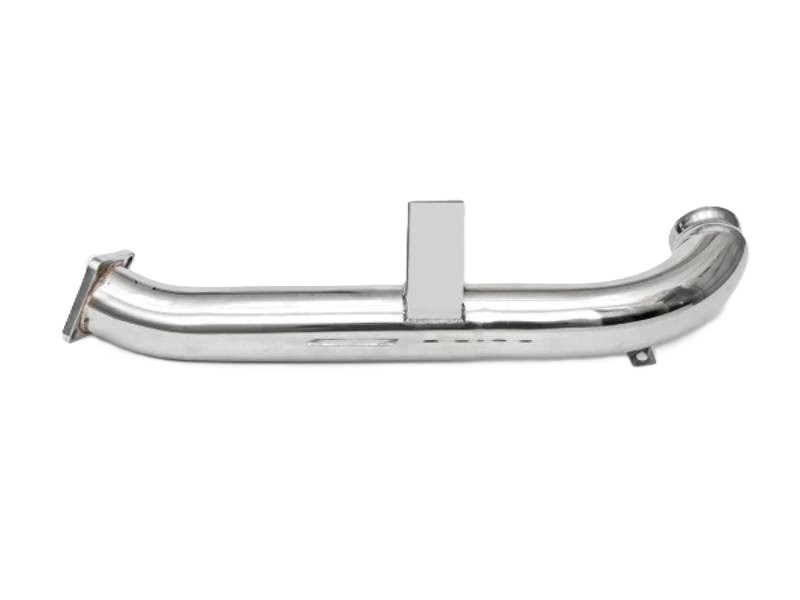
Designed by Fabspeed Motorsport, this competition exhaust pipe replaces the original Porsche catalytic converter with a freer-flowing exhaust connection between the K27 turbocharger and the factory secondary muffler.
Manufactured from premium 14–16 gauge T304L stainless steel, the bypass pipe features CNC mandrel-bent tubing and a 3.0-inch (76 mm) diameter to support efficient exhaust gas flow.
Its design incorporates a four-bolt flange connection and follows the concept of Porsche's original racing exhaust components.
By replacing the restrictive factory catalytic converter, the Fabspeed bypass pipe is designed to reduce exhaust backpressure downstream of the turbocharger, improve exhaust gas flow and enhance the distinctive sound of the turbocharged air-cooled flat-six engine.
The freer-flowing arrangement allows more of the turbocharger's characteristic whistle and spool-up sound to be heard, creating a more pronounced sports car exhaust character.
Fabspeed describes the system as producing an engaging exhaust note without becoming excessively loud when used with the compatible original rear muffler arrangement.
The bypass pipe is designed as a direct bolt-on replacement, allowing the original catalytic converter to be retained separately and refitted when required.
Its stainless steel construction provides resistance to corrosion and thermal deterioration, making it suitable for demanding competition environments.
The product is intended for owners of Porsche 964 Turbo and 965 vehicles seeking a dedicated competition exhaust configuration rather than a standard road-going catalytic converter replacement.
Important: This product removes the factory catalytic converter and is intended exclusively for closed-course motorsport and off-road applications where permitted. It must not be used on public roads.
What This Product Does:
The Fabspeed Cat Bypass Pipe replaces the factory catalytic converter with a straight-through, high-flow exhaust section.
Its primary function is to reduce exhaust restriction after the turbocharger, supporting freer exhaust gas movement towards the remaining exhaust system.
Its main functions and benefits include:
- Improved Exhaust Gas Flow: Replaces the factory catalytic converter with a less restrictive exhaust passage.
- Reduced Exhaust Backpressure: Helps reduce resistance to exhaust gases downstream of the turbocharger.
- Enhanced Turbocharger Sound: Makes turbo spool-up and whistle more noticeable.
- Improved Performance Potential: Reduced exhaust restriction may support improved power delivery under suitable operating conditions.
- Throttle Response Potential: A less restrictive exhaust arrangement may influence turbocharger response, although results depend on the engine and overall configuration.
- Sportier Exhaust Character: Produces a more pronounced turbocharged flat-six exhaust sound.
- Large-Diameter Tubing: Features 3.0-inch (76 mm) exhaust tubing.
- Smooth Exhaust Routing: CNC mandrel-bent construction helps maintain consistent tube geometry through bends.
- Durable Construction: T304L stainless steel provides corrosion resistance and suitability for high exhaust temperatures.
- Competition-Oriented Design: Based on the concept of Porsche factory racing exhaust components.
- Direct Bolt-On Fitment: Uses the original-style mounting arrangement without requiring permanent modification to the vehicle.
- Reversible Installation: Allows the original catalytic converter to be reinstalled when returning the vehicle to its road-approved configuration.
Symptoms Of Wear Or Failure:
The Fabspeed Cat Bypass Pipe is primarily a competition performance upgrade, not a standard maintenance replacement.
However, deterioration of the original catalytic converter or surrounding exhaust components may prompt owners to inspect or repair the existing system.
Common symptoms of catalytic converter or exhaust system problems include:
1. Reduced Engine Performance
A damaged or restricted catalytic converter may create excessive exhaust backpressure, potentially reducing engine performance.
Possible signs include sluggish acceleration, reduced power under load and difficulty maintaining normal performance at higher engine speeds.
2. Restricted Exhaust Flow
A physically damaged or obstructed catalytic converter may prevent exhaust gases from passing through the system normally.
In severe cases, this can affect the performance of a turbocharged engine.
3. Metallic Rattling from the Exhaust
An ageing catalytic converter may develop damaged or loose internal components.
These can produce rattling or metallic noises, particularly during acceleration or changes in engine speed.
4. Visible Corrosion
Older exhaust components may develop rust or corrosion due to moisture, road salt and repeated heating and cooling.
Severe deterioration can weaken pipework, joints and mounting points.
5. Exhaust Leaks
Cracked components, deteriorated gaskets or damaged flange connections may allow exhaust gases to escape.
Symptoms can include unusual blowing noises, increased exhaust volume and escaping fumes.
6. Unusual Exhaust Smells
Changes in exhaust odour may indicate catalytic converter deterioration, an exhaust leak or an underlying engine combustion problem.
The cause should be diagnosed before replacing components.
7. Excessive Exhaust Heat
An internally restricted catalytic converter can contribute to abnormal temperature conditions within the exhaust system.
Severe overheating may damage surrounding components and should be investigated promptly.
8. Damaged Mounting Connections
Corroded fasteners, damaged flanges or deteriorated exhaust mountings may compromise the security of the original catalytic converter.
9. Poor Turbocharger Response
Excessive exhaust restriction can affect turbocharger operating conditions.
However, reduced boost response may also be caused by turbocharger wear, boost leaks, wastegate faults or fuel and ignition problems.
10. Visible Impact Damage
Ground clearance issues, road debris or previous accidents may damage the original catalytic converter or adjacent exhaust pipework.
Why Replacement / Upgrading Matters:
- Maintaining a correctly functioning exhaust system is important for engine performance, turbocharger operation, structural integrity and vehicle safety.
- On the Porsche 964 Turbo and 965, exhaust gases pass through the turbocharger before flowing into the downstream exhaust system.
- The factory catalytic converter reduces harmful exhaust emissions while also forming part of the original exhaust routing.
- In competition applications, a catalytic converter bypass may be used to reduce downstream exhaust restriction where permitted by motorsport regulations.
NOTE: In the United Kingdom, sports catalytic converters and bypass pipes do not have type approval and are not legally permitted for use on vehicles manufactured after 1st March 2001. They are not MOT compliant and cannot be used on public roads. These components are intended solely for race and track use.
For vehicles manufactured before 1st March 2001, a non-type approved sports catalytic converter may be fitted, provided it offers comparable performance to the original and the vehicle continues to meet the applicable emissions standards for its age. The vehicle must still pass an MOT test.
If you are located outside the UK, please check your local laws and regulations to ensure compliance.
Related reference numbers
Related, superseded, cross reference or alternative numbers for comparison.
FSPOR964TCB
The product you are viewing cross references to these numbers


- Porsche 911 1975-1977 3.0L Turbo (930)
- Porsche 911 1978-1989 3.3L Turbo (930)
- Porsche 964 (911) TURBO 3.3L 1991-93
Fits:
Porsche 930 3.0L Turbo 1975-77
Porsche 930 3.3L Turbo 1978-89
Porsche 964 Turbo 3.3L-3.6L 06/1991-07/1993
Please note:
This part will fit most of cars straight away but some may require alteration.
Porsche made a few different versions of the pipe over the years which all had a slightly different shape. (although Porsche used one number)
If this pipe is out you would need to loosen all the bolts on the exhaust system (Including the turbo) and mount the pipe into place afterwards.
Related reference numbers
Related, superseded, cross reference or alternative numbers for comparison.
93011100304
The product you are viewing cross references to these numbers

- Porsche 911 1975-1977 3.0L Turbo (930)
- Porsche 911 1978-1989 3.3L Turbo (930)
- Porsche 964 (911) TURBO 3.3L 1991-93
Fits:
Porsche 930 3.0L Turbo 1975-77
Porsche 930 3.3L Turbo 1978-89
Porsche 964 Turbo 3.3L-3.6L 06/1991-07/1993
Please note:
This part will fit most of cars straight away but some may require alteration.
Porsche made a few different versions of the pipe over the years which all had a slightly different shape. (although Porsche used one number)
If this pipe is out you would need to loosen all the bolts on the exhaust system (Including the turbo) and mount the pipe into place afterwards.
Related reference numbers
Related, superseded, cross reference or alternative numbers for comparison.
93011100304SS
The product you are viewing cross references to these numbers


- Porsche 964 (911) C2 1989-93
- Porsche 964 (911) C4 1989-93
- Porsche 964 (911) RS 3.6L 1991-93
- Porsche 964 (911) RS 3.8L 1991-93
- Porsche 964 (911) TURBO 3.3L 1991-93
- Porsche 964 (911) TURBO 3.6L 1991-93
- Porsche 993 (911) C2 1994-97
- Porsche 993 (911) C4 1994-97
- Porsche 993 (911) RS 1994-97
- Porsche 993 (911) C2S 1994-97
- Porsche 993 (911) C4S 1994-97
- Porsche 993 (911) TURBO 1994-96
- Porsche 993 (911) GT2 1994-97
- Porsche 993 (911) TURBO S 1994-97
- Porsche 996 C2 3.4L 1997-08/01
- Porsche 996 C4 3.4L 1997-08/01
- Porsche 996 C2 3.6L 09/01-2005
- Porsche 996 C4 3.6L 09/01-2005
- Porsche 996 C4S 3.6L 09/01-2005
- Porsche 996 TURBO 2000-05
- Porsche 996 GT2 2001-05
- Porsche 996 GT3 MKI 1999-02
- Porsche 996 GT3 MKII 2003>>
- Porsche 996 GT3 RS 2003-04
- Porsche 997 MK1 Carrera 2 3.6L 2005-08
- Porsche 997 MK1 Carrera 2S 3.8L 2005-08
- Porsche 997 MK1 Carrera 4 3.6L 2005-08
- Porsche 997 MK1 Carrera 4S 3.8L 2005-08
- Porsche 997 MK1 TURBO 2007-09
- Porsche 997 MK1 GT3 / GT3 RS 2007-09
- Porsche 997 MK1 GT2 2007-09
- Porsche 997 MKII Carrera C2 3.6L 2009-12
- Porsche 997 MKII Carrera C4 3.6L 2009-12
- Porsche 997 MKII Carrera C2S 3.8L 2009-12
- Porsche 997 MKII Carrera C4S 3.8L 2009-12
- Porsche 997 MKII GT3 / GT3 RS 2010-11
- Porsche 997 MKII Turbo 2010-13
- Porsche 997 MKII GT2 RS 2011-13
- Porsche 991.1 Carrera C2 3.4L (350 Bhp) 2012-16
- Porsche 991.1 Carrera C2S / GTS 3.8L (400/430 Bhp) 2012-16
- Porsche 991.1 Carrera C4 3.4L (350 Bhp) 2012-16
- Porsche 991.1 Carrera C4S / GTS 3.8L (400/430 Bhp) 2012-16
- Porsche 991.1 Turbo 3.8L (520 Bhp) 2014-16
- Porsche 991.1 Turbo S 3.8L (560 Bhp) 2014-16
- Porsche 991.1 R 4.0L (500 Bhp) 2016
- Porsche 991.1 GT3 3.8L (475 Bhp) 2014-16
- Porsche 991.1 GT3 RS 4.0L (500 Bhp) 2015-16
- Porsche 991.2 Carrera 2 3.0L (370 Bhp) 2016-19
- Porsche 991.2 Carrera 2S / GTS 3.0L (420/450 Bhp) 2016-19
- Porsche 991.2 Carrera 4 3.0L (370 Bhp) 2016-19
- Porsche 991.2 Carrera 4S / GTS 3.0L (420/450 Bhp) 2016-19
- Porsche 991.2 Cabriolet 2 3.0L (370 Bhp) 2016-19
- Porsche 991.2 Cabriolet 2S / GTS 3.0L (420/450 Bhp) 2016-19
- Porsche 991.2 Cabriolet 4 3.0L (370 Bhp) 2016-19
- Porsche 991.2 Cabriolet 4S / GTS 3.0L (420/450 Bhp) 2016-19
- Porsche 991.2 Targa 4 3.0L (370 Bhp) 2016-19
- Porsche 991.2 Targa 4S / GTS 3.0L (420/450 Bhp) 2016-19
- Porsche 991.2 Turbo Coupe 3.8L (540 Bhp) 2016-19
- Porsche 991.2 Turbo S Coupe 3.8L (580 Bhp) 2016-19
- Porsche 991.2 Turbo Cabriolet 3.8L (540 Bhp) 2016-19
- Porsche 991.2 Turbo S Cabriolet 3.8L (580 Bhp) 2016-19
- Porsche 991.2 Speedster 4.0L (510Bhp) 2019
- Porsche 991.2 GT3 4.0L (500 Bhp) / GT3 RS 4.0L (520 Bhp) 2017-19
- Porsche 991.2 GT2 RS 3.8L PDK (700 bhp) 2018-19
- Porsche 992.1 Carrera 2 3.0L 2019-24
- Porsche 992.1 Carrera 4 3.0L 2019-24
- Porsche 992.1 Carrera 2 Cabriolet 3.0L 2019-24
- Porsche 992.1 Carrera 4 Cabriolet 3.0L 2019-24
- Porsche 992.1 Carrera 2S / GTS 3.0L 2019-24
- Porsche 992.1 Carrera 4S / GTS 3.0L 2019-24
- Porsche 992.1 Carrera 2S / GTS Cabriolet 3.0L 2019-24
- Porsche 992.1 Carrera 4S / GTS Cabriolet 3.0L 2019-24
- Porsche 992.1 Targa 4 3.0L 2020-24
- Porsche 992.1 Targa 4S / GTS 3.0L 2020-24
- Porsche 992.1 Speedster 4.0L 2019-24
- Porsche 992.1 Turbo 3.8L 2020-24
- Porsche 992.1 Turbo S 3.8L 2020-24
- Porsche 992.1 Turbo Cabriolet 3.8L 2020-24
- Porsche 992.1 Turbo S Cabriolet 3.8L 2020-24
- Porsche 992.1 GT3 4.0L / 992 S/T 4.0L 2021-24
- Porsche Cayman 2.7L 987C 2006-08
- Porsche Cayman S 3.4L 987C 2005-08
- Porsche Cayman 2.9L 987C MKII 2009-12
- Porsche Cayman S / R 3.4L 987C MKII 2009-12
- Porsche Cayman 2.7L 981 2013-16
- Porsche Cayman S / GTS 3.4L 981 2013-16
- Porsche Cayman GT4 3.8L 2015-16
- Porsche Cayman 718 2.0L Manual (300 Bhp)
- Porsche Cayman 718 2.0L PDK (300 Bhp)
- Porsche Cayman S 718 2.5L Manual (350 Bhp)
- Porsche Cayman S 718 2.5L PDK (350 Bhp)
- Porsche Cayman T 718 2.0L Manual (300 Bhp)
- Porsche Cayman T 718 2.0L PDK (300 Bhp)
- Porsche Cayman GTS 718 2.5L Manual (365 Bhp)
- Porsche Cayman GTS 718 2.5L PDK (365 Bhp)
- Porsche Cayman GTS 718 4.0L Manual (400 Bhp)
- Porsche Cayman GTS 718 4.0L PDK (400 Bhp)
- Porsche Cayman GT4 718 4.0L / GT4 RS 718 4.0L
In case you need to relocate your existing lambda probe because it's not in the right location. Welding and cutting specialist required.
Fits:
Many Porsche vehicles. Universal kit.
Related reference numbers
Related, superseded, cross reference or alternative numbers for comparison.
100390100392
The product you are viewing cross references to these numbers

- Porsche 964 (911) TURBO 3.3L 1991-93
- Porsche 964 (911) TURBO 3.6L 1991-93
Fits:
Porsche 964 Turbo (965) 1991-92
Porsche 964 Turbo (965) 1993-94
Kit Contents:
Fabspeed’s high-flow sport headers are designed to retain full cabin heat functionality while unlocking noticeable performance gains. Thanks to a shorter exhaust gas path and smooth mandrel bends, these headers dramatically improve exhaust flow - boosting power, sharpening throttle response, and reducing turbo lag, with boost onset up to 1500 RPM earlier than stock. They also deliver a mild increase in volume, a more pronounced turbo spool sound, and a deeper, more aggressive exhaust tone.
- Constructed from 14-16ga CNC mandrel-bent T304L stainless steel with high velocity F1-style merge collectors for optimum exhaust flow.
- This system will include a drip accumulator with double swivels and Aeroquip lines with adaptors, plus graphite steel layered gasket for a leak proof seal.
- 7/8"custom braided oil lines with correct 30mm radius Porsche style ball end with OEM fittings will be included to replace the stock oil lines.
- Retains the stock cabin cockpit heat functionality.
- Simple DIY (Do-It-Yourself) bolt-on installation, no cutting or welding required.
- Backed by Fabspeed's Lifetime Warranty.
Fabspeed's Maxflo dual outlet muffler delivers a deep, aggressive exhaust note along with a significantly enhanced turbo spool sound—bringing out the true character of your 964 Turbo.
- Includes Fabspeed's Deluxe Outlet Tips; polished angle-cut ovals.
- Maxflo Mufflers are radius stress relieved, hydro-formed cases that are pulse TIG welded with 2000 degree ceramic fiber and stainless steel wool packing.
- Constructed from high-quality 14-16 gauge C.N.C. mandrel-bent T304L stainless steel for optimum flow and maximum durability.
- Complete 3.0" tubing for maximum flow.
- Includes 4.5" wastegate tip and all required hardware.
- Simple DIY (Do-It-Yourself) bolt-on installation, no cutting or welding required.
- Backed by Fabspeed's Lifetime Warranty.
Fabspeed’s high-performance intake system replaces the outdated, heavy steel factory airbox found on 930 and 964 Turbo (965) models - a design originally from the 1970s and '80s that traps heat like a Dutch oven and severely limits airflow. This factory setup bakes the intake air, reducing performance and efficiency. In contrast, Fabspeed’s Cold Air Intake is engineered to reduce weight and deliver significantly cooler, denser air directly to the engine - resulting in dyno-proven horsepower and torque gains.
- Saves maintenance time, and weighs much less, for better handling and cooler engine temperatures.- Increases horsepower and torque by +17.5 HP and +26 ft-lbs.
- Significant weight savings along with finally an uncluttered CLEAN to BE SEEN awesome engine bay.
- Cleans up engine bay for easier access for maintenance and car shows!
- Allows fitment of larger intercoolers versus banging into the steel heavy airbox.
- Supports up to 550+ horsepower.
- VIDEO- installation instructions and photos online. Super simple engineered system.
- Used and installed by a WHOs WHO of Porsche Turbo engine builders Worldwide!
- CAD Designed and DYNO developed 100% Guaranteed to be the very best air intake for your 964 Turbo!
- Backed by Fabspeed's Lifetime Warranty.
FITMENT NOTE: After the initial heat cycle, be sure to retighten all exhaust bolts to OEM torque specs to ensure a proper, lasting seal.
NOTE: This system replaces the factory catalytic converter with a high-flow setup and is not MOT compliant, meaning it is intended for race and track use only and must not be used on public roads. If you are located outside the UK, please check your local laws and regulations to ensure compliance before installation.
Related reference numbers
Related, superseded, cross reference or alternative numbers for comparison.
FSPOR964TSPKG
The product you are viewing cross references to these numbers


Exhaust Catalytic Converters & Bypass Pipes – Performance, Efficiency & Flow Control
The catalytic converter plays a crucial role in your Porsche’s exhaust system, reducing harmful emissions while maintaining optimal exhaust flow. Positioned between the exhaust manifold and silencer, it converts toxic gases such as carbon monoxide, hydrocarbons, and nitrogen oxides into less harmful emissions before they exit the tailpipe.
At Design911, we offer a complete range of catalytic converters and bypass pipes for Porsche vehicles. Our manufacturer-quality converters ensure reliable emission control and long-term performance, while our bypass options are designed for track or performance use, optimising exhaust flow for maximum power and throttle response.
Whether you’re maintaining your Porsche to meet emissions standards or upgrading for improved exhaust performance, our selection includes both direct-fit converters and performance bypass kits built from high-grade stainless steel for strength, corrosion resistance, and durability.
What Do Catalytic Converters & Bypass Pipes Do?
A catalytic converter uses a fine mesh of precious metals to trigger chemical reactions that break down pollutants. The bypass alternative eliminates restriction in the exhaust flow, improving performance in non-emissions-controlled environments such as track driving.
Core Functions:
- Converts
toxic exhaust gases into environmentally friendly emissions.
- Maintains
exhaust back pressure for engine efficiency.
- Reduces harmful NOx, CO, and HC emissions.
- Supports smoother engine performance and throttle control.
- Bypass versions enhance exhaust flow and improve power output for track cars.
Upgrading to a performance-grade system ensures your Porsche continues to meet emission requirements — or achieves greater flow and responsiveness for motorsport applications.
Why Do Catalytic Converters Fail?
Catalytic converters are exposed to extreme heat, unburnt fuel, and contaminants — all of which can degrade their performance over time.
Common Causes of Failure Include:
- Carbon
or oil buildup blocking the internal honeycomb.
- Thermal
damage from overheating or rich fuel mixtures.
- Physical
damage from road debris or misfiring engines.
- Corrosion
due to moisture and exhaust condensation.
- Age-related wear reducing catalytic efficiency.
A failing converter can cause reduced engine power, poor
fuel economy, rattling sounds, or a check-engine light. Replacing it
restores emissions compliance, performance, and exhaust efficiency.
Why Replace or Upgrade
with Precision-Engineered Components?
Replacing a failing converter or upgrading to a bypass pipe ensures your Porsche maintains peak performance and reliability.
Key Benefits:
- Restores optimal emissions performance and efficiency.
- Improves exhaust flow and throttle response.
- Reduces engine stress and fuel consumption.
- Durable stainless-steel construction for longevity.
- Direct-fit
compatibility for Porsche 911, Cayman, Boxster, Panamera, Macan
and more.
- Performance bypass options available for track and tuning applications.
Whether you want emissions compliance or maximum flow for competition use, our parts deliver reliability, precision, and performance.
Highlights:
- Direct-fit catalytic converters and bypass pipes for Porsche models.
- Precision-engineered for optimal flow and reduced emissions.
- Built from heat-resistant stainless steel for durability.
- Bypass pipes for performance tuning and track applications.
- Restores power, efficiency, and exhaust sound balance.
- Available for classic and modern Porsche vehicles.
-
 Sport Silencers / Mufflers
-
Switchable Silencers / Mufflers
-
All Silencers / Mufflers
-
Manifold / Headers
-
Exhaust Tail Pipes
-
Heat Exchangers
-
Exhaust Cross over pipes
-
Exhaust Package
-
Exhaust Gaskets
-
Exhaust Nuts / Bolts / Studs
-
Exhaust heat shields
-
Brackets / Clamps / Straps
-
Sport Exhaust Vacuum Parts
-
Lambda Sensors / Probes
-
Lambda Sensor Extensions
-
Wastegate
-
Dansk Exhaust
-
Fabspeed Exhaust