


Enter your VAT number here and click Verify:
Your details have been verified. VAT number registered to:
,
.
Your order will now be zero rated for VAT purposes. We reserve the right to verify these details after your order request has been made and reinstate VAT if required.
Your VAT details were not recognised or were invalid. Your VAT number must be matched to your Billing Country as specified above. This is currently specified as . You do not need to enter the country code part of your VAT number as this has already been selected in your billing address details above.
The VAT number checking service is currently offline. Please supply your VAT details within the comments or special instructions field below and we will apply a VAT discount after placing your order request.
Porsche

Porsche for Porsche
Porsche genuine parts and lifestyle products for Porsche models from Design911
A Quick Look at Porsche
Porsche information on this page is based on details supplied by the manufacturer or distributor, plus any OE references provided with the parts.
Choosing the Right Fit for Your Porsche
Where Porsche is listed for Porsche, use the supplied model coverage and OE references to confirm suitability. Check details that commonly affect fitment such as model year, side/position, and connector type where relevant.
- Typical reasons people replace these parts include maintaining originality, keeping factory specification, and choosing the latest genuine revisions for peace of mind.
- Common real-world issues behind many Porsche repairs are age and mileage: oil leaks, cooling system fatigue, brake and suspension wear, corrosion and electrical faults from moisture or heat cycling.
- Before ordering, confirm part numbers against VIN or option/PR codes, especially for safety‑critical or complex components.
- When upgrading, decide whether you want pure originality or performance changes, as some aftermarket options may suit specific goals better than genuine.
- For bigger jobs, replace related seals, hardware and consumables at the same time to avoid repeat labour and compatibility issues.
- Where available, follow the manufacturer’s fitting and bedding‑in guidance to get the best performance and longevity.
Browse by Category
If you already know the area you are working on, start with the category and then filter by Porsche model. Where real-world symptoms and typical reasons to replace are provided, use them to keep the wording grounded.
Brakes — Brake components are renewed to restore stopping performance, address wear or upgrade a Porsche for fast road or track use. Common symptoms include: Common symptoms include vibration under braking, increased stopping distances, squealing, pulling to one side, warning lights and visible wear to discs and pads.
- Check whether the parts are OE-equivalent replacements or performance upgrades and match this to how the Porsche is used.
- Follow any recommended bedding-in procedure and consider replacing discs, pads, sensors and fitting hardware together where advised.
Clothing & Gifts — Porsche-themed clothing and gifts let owners and enthusiasts show their passion off the road, or make ideal presents for fans of the marque. Common symptoms include: Items may become worn, faded, damaged or go out of style, prompting replacement with newer designs.
- Review available size, colour and material details to help choose the right item and ensure it matches how it will be used.
- Check any care or washing guidance so garments and accessories keep their appearance for longer.
Lifestyle — To explore different Porsche-inspired lifestyle products or gift ideas. Common symptoms include: General wear from handling or display.
- Confirm whether items are official Porsche lifestyle products or from trusted partner brands where stated.
- Consider who the item is for and how it will be used day to day to select the most suitable style or product type.
Keyring — To choose a different design, material or model theme. Common symptoms include: Scratches, worn finishes or loose fittings.
- Keyrings make simple, practical Porsche-themed gifts and can be matched to specific models or heritage designs where available.
- If a keyring shows damage or looseness, replace it to avoid losing keys or further wear to finishes.
Size chart — The size chart acts as a practical reference tool for all apparel purchases. Common symptoms include:
Explore Porsche at Design911
View the current Porsche range for Porsche at Design911, then filter by model and category to narrow down to the right parts.
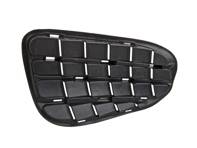
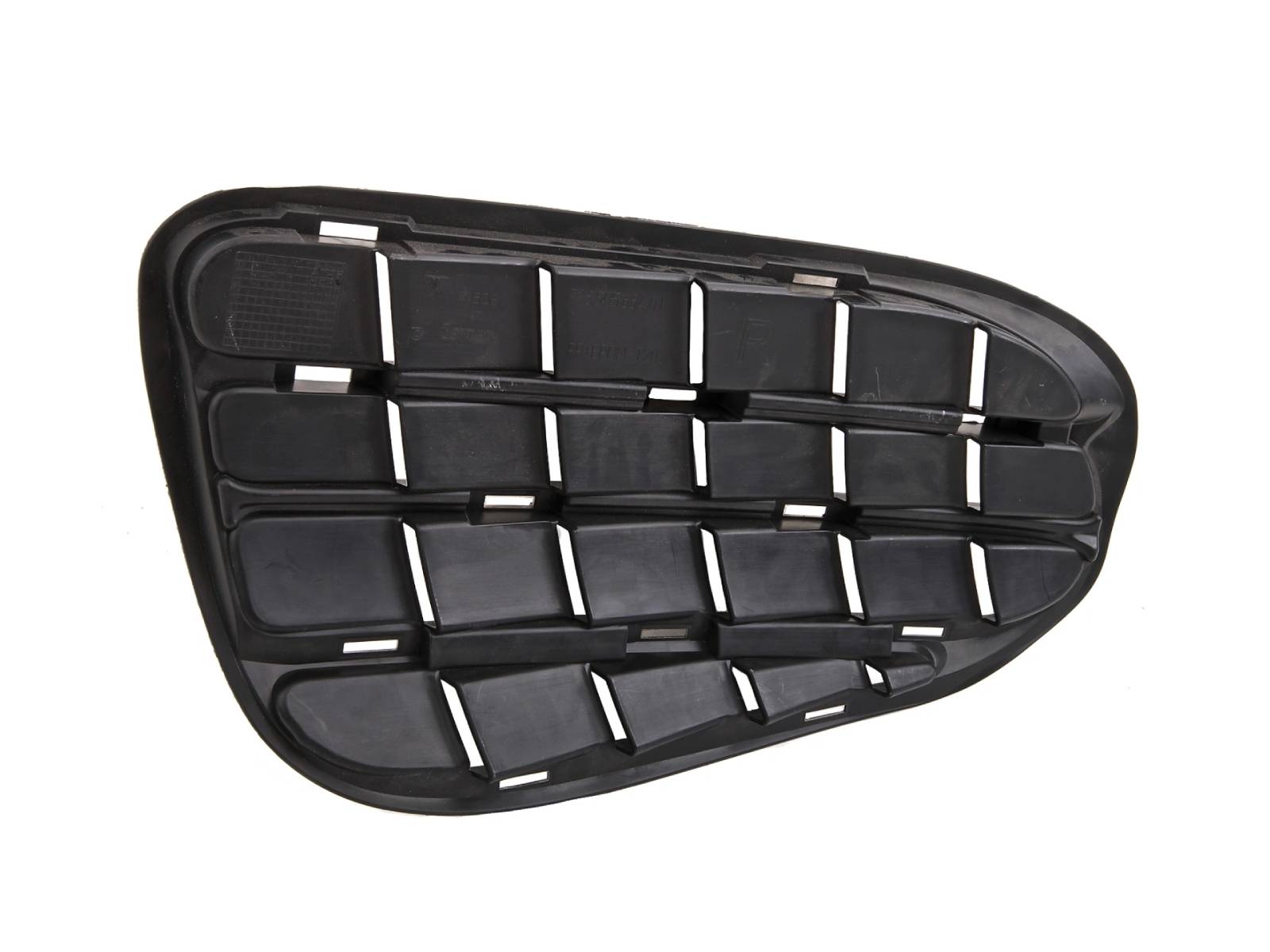
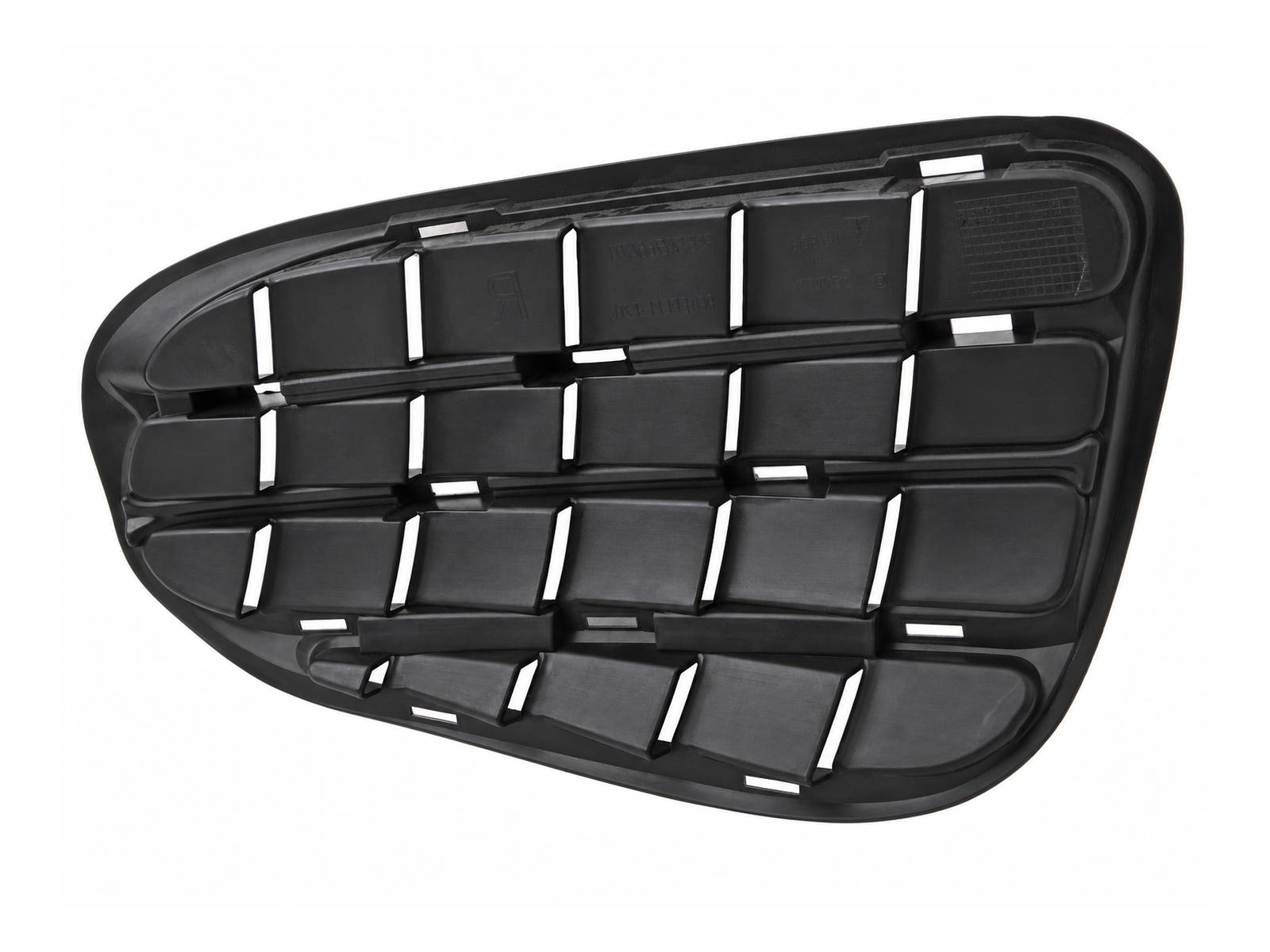
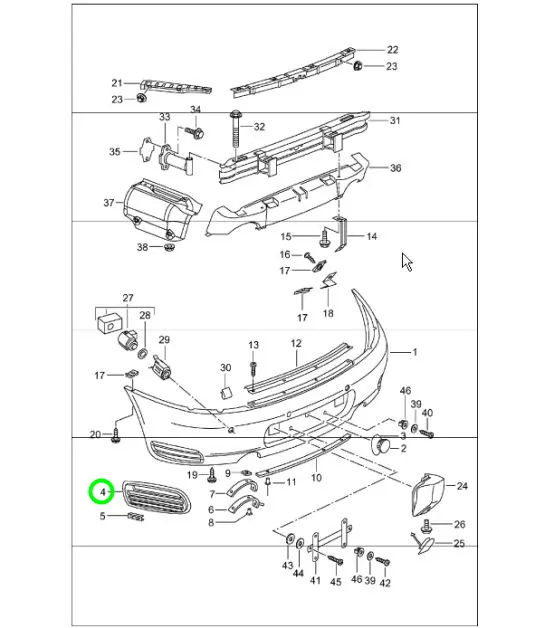
- Porsche 996 C4S 3.6L 09/01-2005
Rear Ventilation Grille, Satin Black This cooling-air grille is shaped for the original rear bumper.
Fits
- Porsche 996 C4S 3.6L 09/01-2005
What This Product Does
The grille fills the right-hand ventilation aperture in the rear bumper and permits cooling air to move through the opening. Its moulded form follows the surrounding bumper profile to maintain the original exterior finish.
Functions
- Fits the rear bumper ventilation opening
- Allows cooling airflow through the bumper assembly
- Finishes the edge of the rear air outlet
- Replaces a missing, cracked or poorly secured original grille
Technical Details
- Manufacturer: Porsche
- Part number: 9965056640101C /9965056640101C
- Component: ventilation grille / cooling-air grille
- Finish: satin black
- Diagram quantity: 1
Symptoms of Fault
- Cracked or distorted grille sections
- Broken mounting points or retaining tabs
- Loose or uneven fit within the bumper aperture
- Surface fading or deterioration caused by age and exposure
- A missing grille leaving the ventilation opening unfinished
Why Replacement Matters
Renewing a damaged or missing grille restores the intended finish around the rear bumper outlet and allows the part to sit securely against the adjoining trim. Using the correct right-hand component also preserves the original shape, position and satin-black specification of the C4S bumper assembly.
FAQs
- Which side does this grille fit?
It is the right-hand rear grille, marked /R in the exploded-parts information. - What finish is supplied?
The specified finish for part number 9965056640101C is satin black. - Are retaining clips included?
Clips, clamps and other fasteners appear as separate components in the rear bumper diagram. Check the existing fittings before installation. - How can compatibility be confirmed?
Compare part number 9965056640101C with the original component and confirm the vehicle model, production year and specification.
Related reference numbers
Related, superseded, cross reference or alternative numbers for comparison.
99650566
The product you are viewing cross references to these numbers
- Porsche 955 Cayenne 3.2L V6 2003-06
- Porsche 955 Cayenne S 4.5L V8 2003-06
- Porsche 955 Cayenne Turbo 4.5L 2003-06
- Porsche 955 Cayenne Turbo S 4.5L 2006>>
- Porsche 957 Cayenne 3.0L Diesel 2007-10
- Porsche 957 Cayenne 3.6L 2007-10
- Porsche 957 Cayenne S / GTS 4.8L 2007-10
- Porsche 957 Cayenne Turbo / Turbo S 4.8L 2007-10
Sold each
Fits:
- Porsche 955 Cayenne 3.2L V6 2003-06
- Porsche 955 Cayenne S 4.5L V8 2003-06
- Porsche 955 Cayenne Turbo 4.5L 2003-06
- Porsche 955 Cayenne Turbo S 4.5L 2006>>
- Porsche 957 Cayenne 3.0L Diesel 2007-10
- Porsche 957 Cayenne 3.6L 2007-10
- Porsche 957 Cayenne S / GTS 4.8L 2007-10
- Porsche 957 Cayenne Turbo / Turbo S 4.8L 2007-10
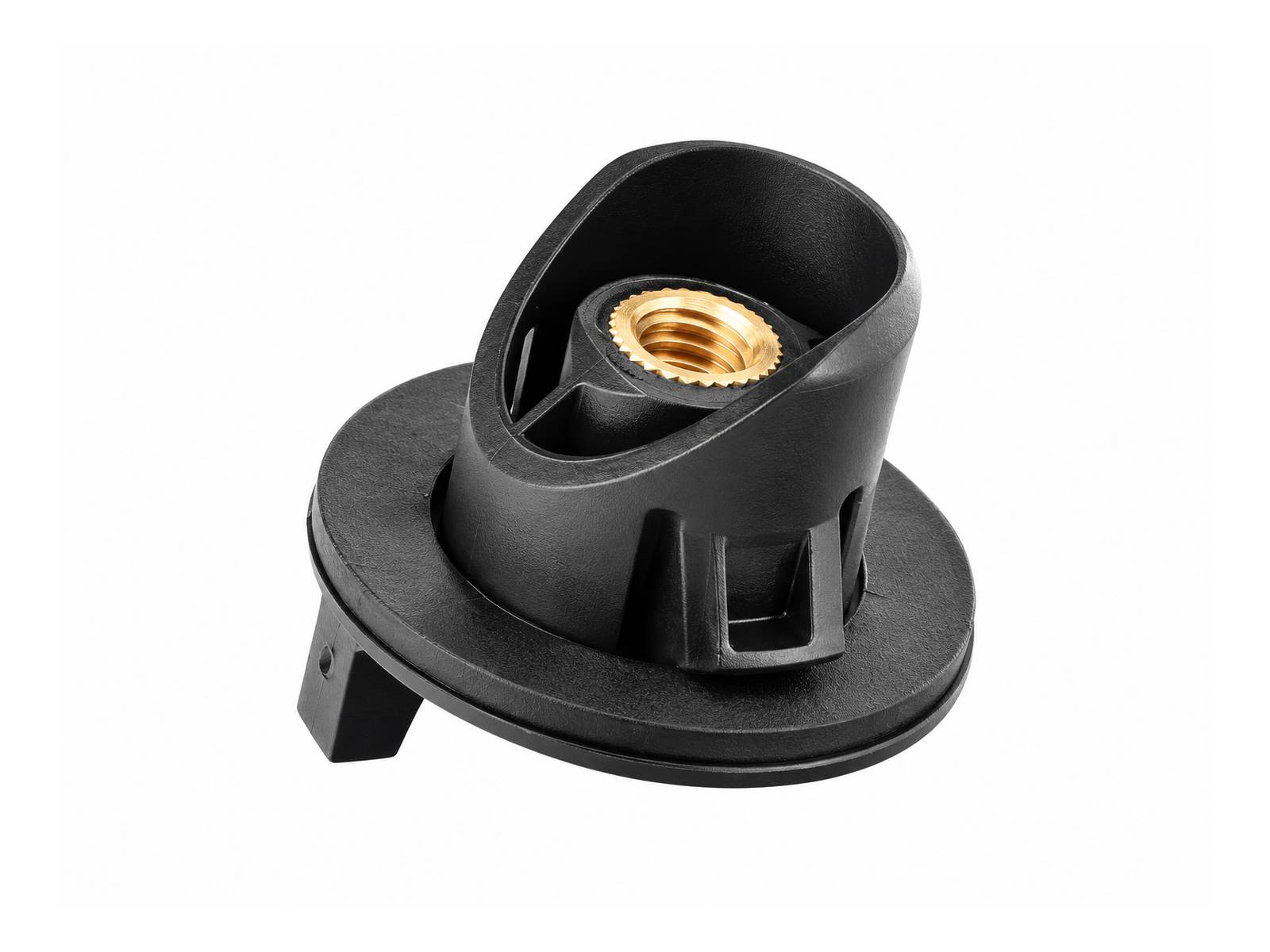
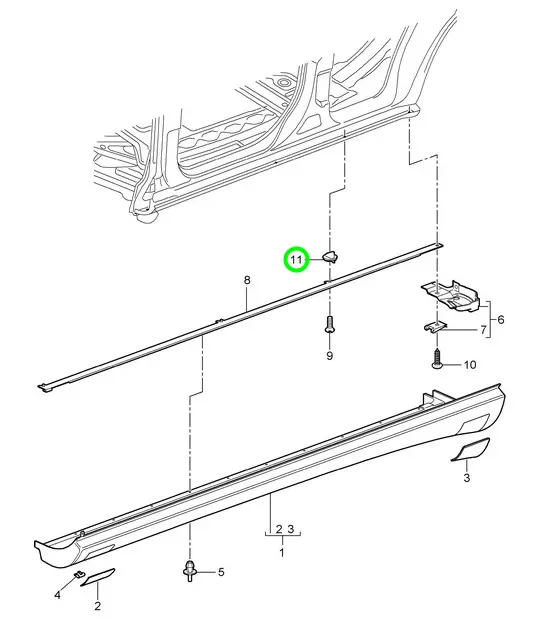
Diagram Ref No 11
This clip attaches the applicable sill cover or side member trim to the vehicle body.
Functions
- Secures the door sill cover
- Retains the side member trim
Technical Details
- Part number: 95555982100
- Door sill application: fixing clip for sill cover
- Sill application: retaining clip for side member trim
- PR codes: 2D1, 2D3 and 2D4
Why Replacement Matters
A damaged or missing fixing clip may prevent the relevant trim component from being secured correctly. Check fitment for your specific vehicle, model, year and equipment before ordering.
Related reference numbers
Related, superseded, cross reference or alternative numbers for comparison.
95555982100
The product you are viewing cross references to these numbers
- Porsche 991.1 Carrera C2 3.4L (350 Bhp) 2012-16
- Porsche 991.1 Carrera C2S / GTS 3.8L (400/430 Bhp) 2012-16
- Porsche 991.1 Carrera C4 3.4L (350 Bhp) 2012-16
- Porsche 991.1 Carrera C4S / GTS 3.8L (400/430 Bhp) 2012-16
- Porsche 991.1 Turbo 3.8L (520 Bhp) 2014-16
- Porsche 991.1 Turbo S 3.8L (560 Bhp) 2014-16
- Porsche 991.2 Carrera 2 3.0L (370 Bhp) 2016-19
- Porsche 991.2 Carrera 2S / GTS 3.0L (420/450 Bhp) 2016-19
- Porsche 991.2 Carrera 4 3.0L (370 Bhp) 2016-19
- Porsche 991.2 Carrera 4S / GTS 3.0L (420/450 Bhp) 2016-19
- Porsche 991.2 Cabriolet 2 3.0L (370 Bhp) 2016-19
- Porsche 991.2 Cabriolet 2S / GTS 3.0L (420/450 Bhp) 2016-19
- Porsche 991.2 Cabriolet 4 3.0L (370 Bhp) 2016-19
- Porsche 991.2 Cabriolet 4S / GTS 3.0L (420/450 Bhp) 2016-19
- Porsche 991.2 Targa 4 3.0L (370 Bhp) 2016-19
- Porsche 991.2 Targa 4S / GTS 3.0L (420/450 Bhp) 2016-19
- Porsche 991.2 Turbo Coupe 3.8L (540 Bhp) 2016-19
- Porsche 991.2 Turbo S Coupe 3.8L (580 Bhp) 2016-19
- Porsche 991.2 Turbo Cabriolet 3.8L (540 Bhp) 2016-19
- Porsche 991.2 Turbo S Cabriolet 3.8L (580 Bhp) 2016-19
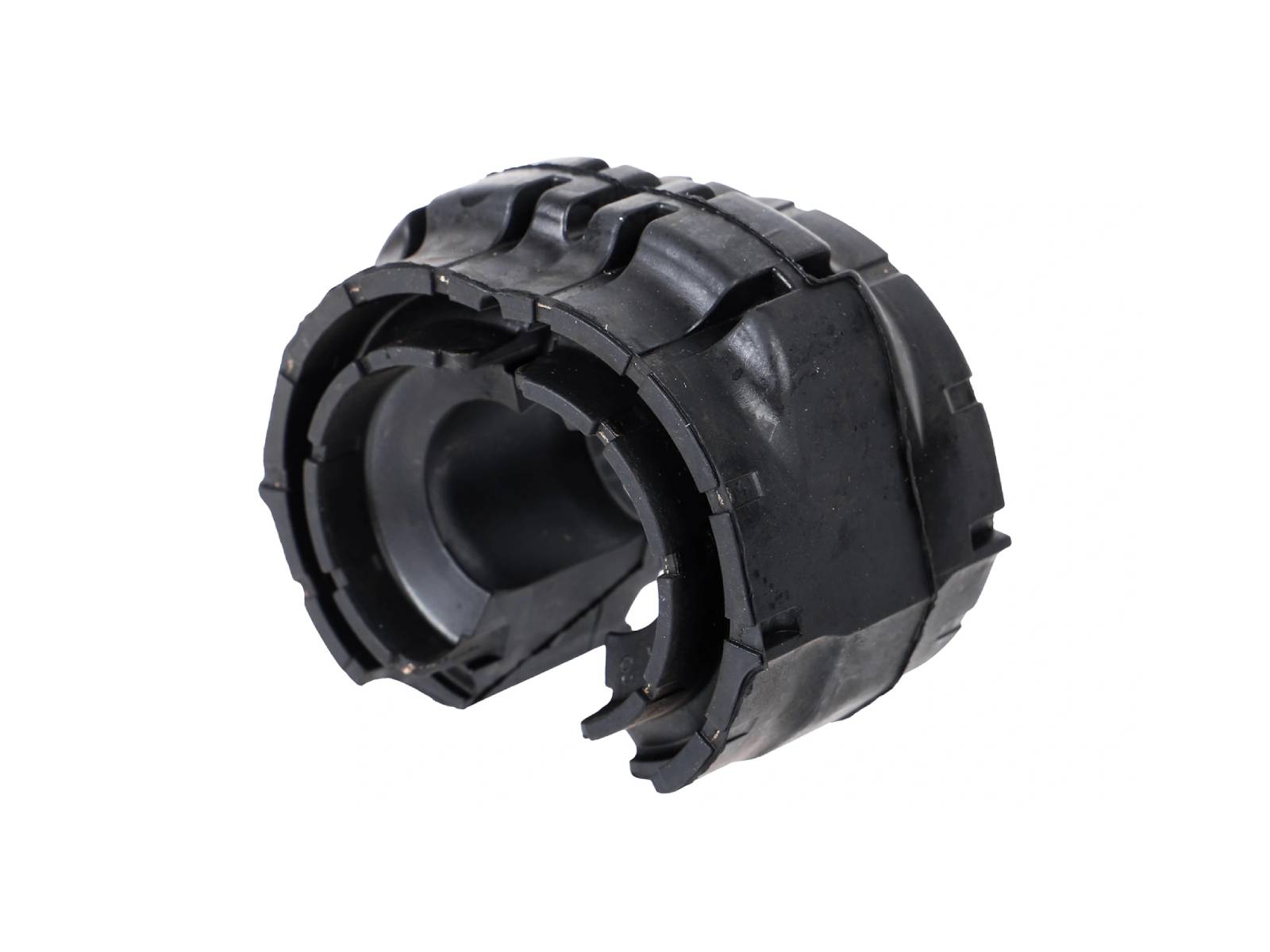
Anti-roll bar bush for cars with PDCC
Fits
- Porsche 991.1 Carrera C2 3.4L 2012–16
- Porsche 991.1 Carrera C2S / GTS 3.8L 2012–16
- Porsche 991.1 Carrera C4 3.4L 2012–16
- Porsche 991.1 Carrera C4S / GTS 3.8L 2012–16
- Porsche 991.1 Turbo 3.8L 2014–16
- Porsche 991.1 Turbo S 3.8L 2014–16
- Porsche 991.2 Carrera 2 / 2S / GTS 3.0L 2016–19
- Porsche 991.2 Carrera 4 / 4S / GTS 3.0L 2016–19
- Porsche 991.2 Carrera Cabriolet 2 / 2S / GTS 3.0L 2016–19
- Porsche 991.2 Carrera Cabriolet 4 / 4S / GTS 3.0L 2016–19
- Porsche 991.2 Targa 4 / 4S / GTS 3.0L 2016–19
- Porsche 991.2 Turbo / Turbo S Coupe 3.8L 2016–19
- Porsche 991.2 Turbo / Turbo S Cabriolet 3.8L 2016–19
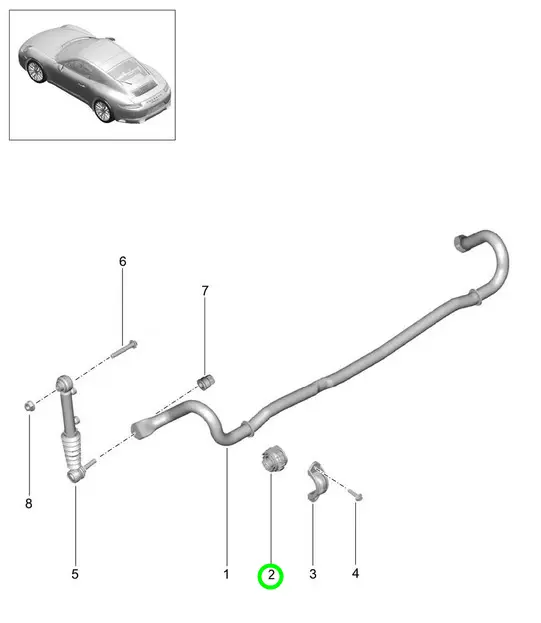
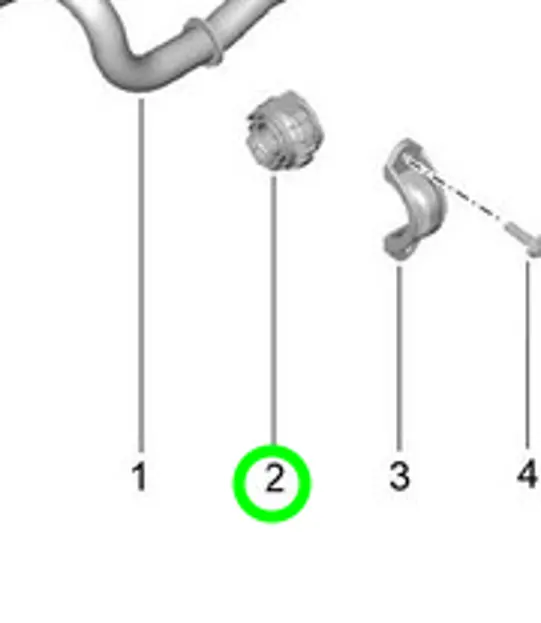
Diagram Ref No 2
What This Product Does
The bush provides a fixed mounting point for the stabiliser assembly. It locates the anti-roll bar mounting components against the chassis, allowing the bar to articulate with suspension movement while remaining correctly supported.
Functions
- Supports the stabiliser mounting assembly
- Retains the anti-roll bar mounting components in position
- Works with the associated clamp, bush and fixing hardware
- Helps prevent excess movement around the mounting point
Technical Details
- Genuine Porsche component
- Part number: 99133379702
- Exploded-diagram description: anti-roll bar bush
- Alternative description: mount for stabiliser
- Quantity recorded in each applicable assembly diagram: 2
- Applications include PDCC installations identified by PR:031 and PR:352 equipment codes
Symptoms of Fault
- Clunking or knocking near the anti-roll bar mounting
- Visible corrosion, cracks or deformation of the bracket
- Unwanted movement between the bar, bush and mounting
- Damaged, loose or seized fixing points
- Suspension noise when crossing bumps or uneven surfaces
Why Replacement Matters
A distorted, corroded or damaged bracket can allow the stabiliser mounting to move away from its intended location. Replacing the affected component restores the mounting arrangement and may address noise caused by movement within the assembly. The adjacent bush, clamp, bolts, nuts and mounting surfaces should be inspected during the repair, with worn or damaged supporting parts renewed as required.
FAQs
- How should suitability be confirmed?
Check the model, production year, VIN and fitted PR equipment codes. PDCC suspension components can vary according to the vehicle specification. - Should both mounting brackets be inspected?
Yes. The diagrams record two brackets within each applicable assembly, so the opposite mounting and its associated hardware should also be checked for wear or corrosion. - Can mounting noise come from another component?
Yes. Similar symptoms may be caused by a worn bush, clamp, anti-roll bar link or loose fixing, so inspection is recommended before parts are replaced.
Check fitment for your specific vehicle, including model, year and PR equipment codes, before ordering. VIN verification is recommended for PDCC suspension components.
Related reference numbers
Related, superseded, cross reference or alternative numbers for comparison.
99133379702
The product you are viewing cross references to these numbers
- Porsche Boxster 987 MKII 2.9L 2009-12
- Porsche Boxster S 987 MKII 3.4L 2009-12
- Porsche Cayman 2.9L 987C MKII 2009-12
- Porsche Cayman S / R 3.4L 987C MKII 2009-12
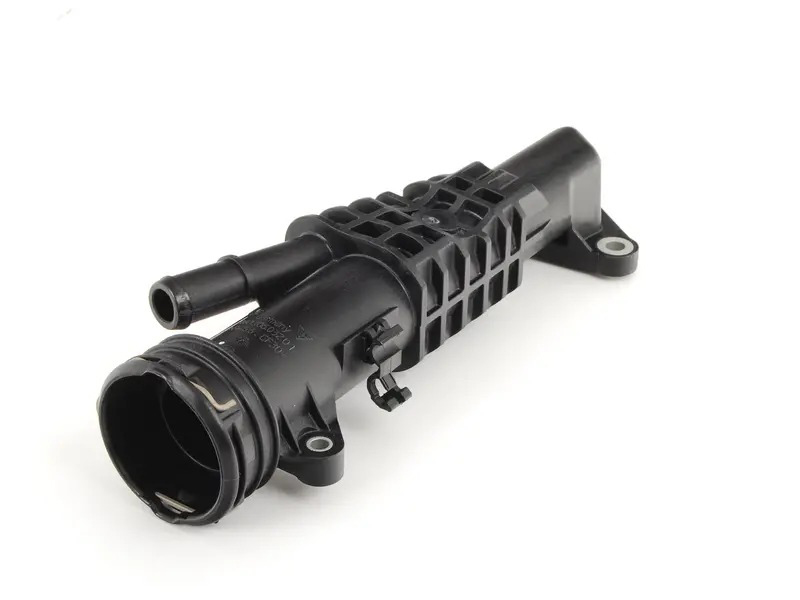
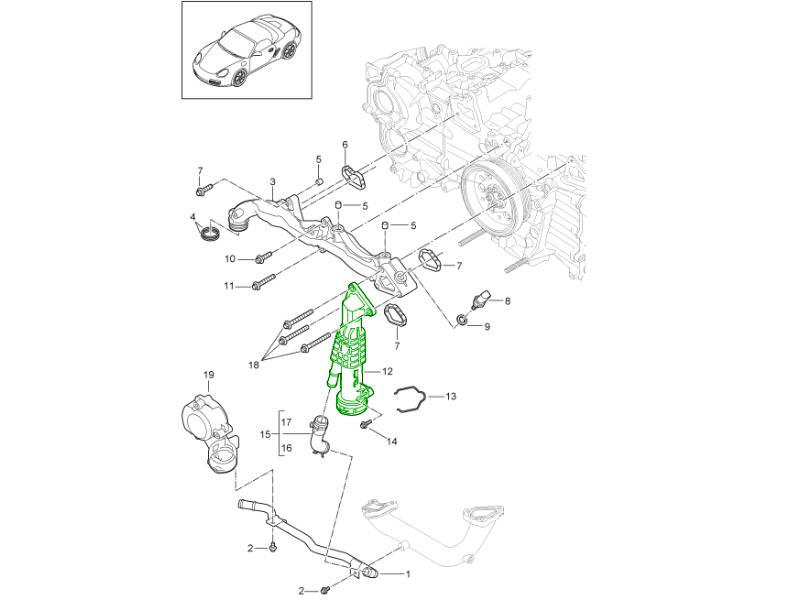
The Genuine Porsche Coolant Pipe Connection Adapter 9A110613201 is an original equipment replacement cooling system component designed for Porsche Boxster 987.2 and Cayman 987.2 models. Manufactured to Porsche's original specifications, this adapter provides a secure connection within the engine's coolant pipe assembly, helping maintain reliable coolant circulation and cooling system integrity.
Fits:
- Porsche Boxster 987 MKII 2.9L 2009-12
- Porsche Boxster S 987 MKII 3.4L 2009-12
- Porsche Cayman 2.9L 987C MKII 2009-12
- Porsche Cayman S / R 3.4L 987C MKII 2009-12
Diagram Ref No 12
Also referred to as a coolant connection piece or engine coolant outlet flange, this component forms part of the cooling system pipework and helps maintain a leak-resistant connection between associated cooling circuit components.
The adapter is exposed to engine heat, coolant pressure, vibration and repeated temperature changes during normal operation. Over time, the original component or its sealing surfaces may deteriorate, potentially resulting in coolant leaks or reduced cooling system reliability.
Ideal for replacing damaged, cracked, leaking or deteriorated original adapters, this genuine Porsche component provides a direct OE replacement for maintaining the cooling system's original configuration.
What This Product Does:
The coolant pipe connection adapter forms part of the engine cooling system, providing a connection point between the associated coolant pipework and cooling circuit components.
It helps maintain a secure, sealed passage for coolant while supporting the cooling system's ability to regulate engine temperature effectively.
Its key functions include:
- Coolant Pipe Connection: Provides a secure connection between designated coolant pipes and associated cooling system components.
- Coolant Circulation: Allows coolant to pass through the connection point, supporting continuous circulation within the cooling circuit.
- Leak Prevention: Helps maintain a sealed connection to reduce the risk of coolant escaping.
- Cooling System Pressure: Supports the integrity of the pressurised engine cooling system.
- Engine Temperature Regulation: Contributes to efficient engine cooling by maintaining a reliable coolant flow path.
- Secure Component Fitment: Helps keep the connected coolant pipework correctly positioned and secured.
- Thermal Durability: Designed for exposure to engine operating temperatures and repeated heating and cooling cycles.
- Original Equipment Compatibility: Maintains the factory-designed cooling system connection and installation arrangement.
Symptoms Of Wear Or Failure:
Over time, prolonged exposure to engine heat, coolant pressure and vibration can cause coolant pipe adapters and their associated seals to deteriorate.
Common signs include:
- Visible Coolant Leaks: Coolant escaping around the adapter or adjoining pipe connections may indicate a damaged component or failed seal.
- Low Coolant Warning: Loss of coolant through a leaking connection may trigger a dashboard warning.
- Frequent Coolant Top-Ups: Repeated coolant loss can indicate a leak around the adapter or another cooling system component.
- Cracked or Damaged Adapter Housing: Physical cracks, fractures or deterioration may compromise the connection's ability to remain sealed.
- Deteriorated Sealing Surfaces: Worn, damaged or contaminated sealing areas may allow coolant to escape.
- Coolant Residue Around Connections: Dried coolant deposits or staining near the adapter may indicate previous or ongoing leakage.
- Loose or Insecure Connection: Damaged retaining components or worn connections may allow unwanted movement within the assembly.
- Coolant Smell from the Engine Bay: Escaping coolant contacting warm engine components may produce a distinctive sweet smell.
- Engine Overheating: Significant coolant loss can reduce the cooling system's ability to regulate engine temperature effectively.
- Fluctuating Engine Temperature: Coolant loss or air entering the cooling circuit may contribute to irregular temperature readings.
- Steam from the Engine Compartment: A severe leak may allow coolant to contact hot engine components, producing visible steam.
Why Replacement Matters:
- Replacing a worn or leaking coolant pipe connection adapter is essential for maintaining the reliability and integrity of your Porsche's engine cooling system.
- The cooling system relies on secure, leak-resistant connections between its hoses, pipes and associated components. If a connection adapter becomes cracked, damaged or incorrectly sealed, coolant can escape, reducing the system's ability to maintain the correct operating pressure and coolant level.
- Even a minor coolant leak can become progressively worse, particularly as the cooling system undergoes repeated heating and cooling cycles. Continued coolant loss may eventually lead to engine overheating and damage to important engine components.
- A severely damaged connection adapter can also fail unexpectedly, potentially causing rapid coolant loss and an unplanned vehicle breakdown.
- Installing a genuine Porsche replacement adapter helps restore the original cooling system connection, ensuring the component fits correctly within the specified pipework arrangement.
- Replacing damaged adapters and inspecting associated seals, hoses and retaining components can help prevent recurring coolant leaks and reduce the risk of more expensive cooling system or engine repairs.
- For Porsche Boxster and Cayman owners, maintaining the cooling system is particularly important for ensuring consistent engine temperature regulation during everyday driving and demanding operating conditions.
- The Genuine Porsche Coolant Pipe Connection Adapter 9A110613201 provides an original equipment replacement solution, helping maintain secure coolant connections, reliable cooling performance and long-term engine protection.
Related reference numbers
Related, superseded, cross reference or alternative numbers for comparison.
9A110613201
The product you are viewing cross references to these numbers
- Porsche 955 Cayenne S 4.5L V8 2003-06
- Porsche 955 Cayenne Turbo 4.5L 2003-06
- Porsche 955 Cayenne Turbo S 4.5L 2006>>
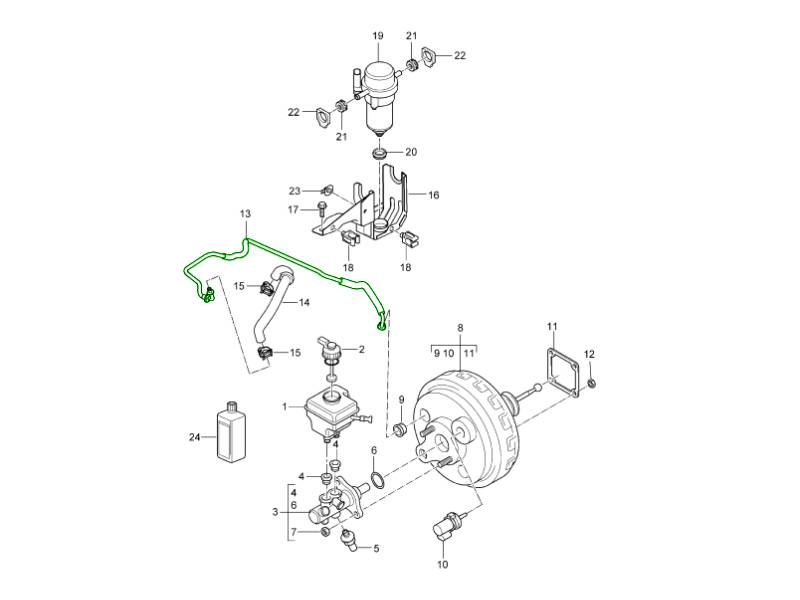
The Genuine Porsche Vacuum Line with Pressure Sensor (Part Number 95535557853) is an essential braking system component designed to maintain reliable vacuum assistance and pressure monitoring within the brake servo system of selected right-hand-drive Porsche Cayenne (955) models.
Fits:
- Porsche 955 Cayenne S 4.5L V8 2003-06
- Porsche 955 Cayenne Turbo 4.5L 2003-06
- Porsche 955 Cayenne Turbo S 4.5L 2006>>
Diagram Ref No 13
Manufactured to Porsche's original equipment specifications, this vacuum line provides a connection between the vehicle's vacuum supply system and the brake booster, helping ensure sufficient vacuum is available for power-assisted braking.
The integrated pressure sensor monitors the vacuum conditions within the braking assistance system, allowing the vehicle's electronic control system to detect the relevant pressure or vacuum level.
The brake booster uses vacuum assistance to reduce the physical effort required when pressing the brake pedal. This is particularly important during repeated braking, low-speed manoeuvring and emergency stopping situations.
The vacuum line must remain properly sealed to maintain effective brake servo operation. Any cracks, splits, loose connections or damaged fittings can allow air to enter the vacuum circuit, potentially reducing the available braking assistance.
Over time, the original vacuum line may deteriorate due to engine compartment heat, vibration, ageing and repeated temperature changes. The integrated pressure sensor or its electrical connections may also develop faults, resulting in incorrect vacuum readings or braking system warnings.
Replacing a defective vacuum line with a Genuine Porsche component helps restore the intended vacuum supply, support accurate pressure monitoring and maintain reliable brake servo assistance.
Ideal for brake booster repairs, vacuum leak diagnosis, braking system maintenance and replacement of damaged original components.
What This Product Does:
The vacuum line with integrated pressure sensor performs two important functions: supplying vacuum to the brake booster and monitoring vacuum conditions within the braking assistance circuit.
Its primary functions include:
- Supplies Vacuum to the Brake Booster: Provides a passage for vacuum from the relevant vacuum supply components to the brake servo.
- Supports Power-Assisted Braking: Helps the brake booster reduce the physical effort required to apply the brakes.
- Monitors Vacuum Conditions: The integrated pressure sensor provides electrical information about the vacuum level within the monitored circuit.
- Supports Brake System Diagnostics: Allows the relevant vehicle control system to identify certain abnormal vacuum conditions.
- Maintains a Sealed Vacuum Circuit: Helps prevent atmospheric air from entering the braking assistance system through unintended leaks.
- Maintains Consistent Brake Pedal Assistance: Supports the availability of vacuum assistance during normal braking operation.
- Supports Repeated Brake Applications: Helps maintain the required vacuum connection during repeated use of the brake pedal.
- Provides Correct RHD Routing: Designed for the specific brake booster and vacuum line arrangement used in applicable right-hand-drive vehicles.
- Supports Original Equipment Functionality: Maintains the factory vacuum line and pressure monitoring configuration.
- Protects Braking System Reliability: Helps preserve the correct operating conditions required for the vacuum-assisted braking system.
Symptoms Of Wear Or Failure:
The brake booster vacuum line operates in an environment exposed to engine heat, vibration, pressure changes and environmental contamination.
Over time, the hose, rigid pipe sections, seals, connectors or pressure sensor may deteriorate.
Common symptoms of a worn or faulty vacuum line with pressure sensor include:
- Hard or Stiff Brake Pedal: Reduced brake booster assistance may cause the brake pedal to require significantly more effort than normal.
- Increased Braking Effort: The driver may need to press the brake pedal harder to achieve the required braking force.
- Reduced Brake Servo Assistance: A leaking vacuum line may prevent the brake booster from receiving sufficient vacuum.
- Inconsistent Brake Pedal Feel: Brake assistance may become unpredictable or change during repeated braking.
- Hissing or Sucking Noises: A damaged or disconnected vacuum line may produce an audible air leak, particularly during brake pedal operation.
- Cracked or Split Vacuum Pipe: Visible damage may allow air to enter the vacuum circuit.
- Brittle or Hardened Material: Prolonged exposure to heat can weaken the vacuum line and its connecting sections.
- Loose or Damaged Connections: Worn seals, clips or fittings may prevent the vacuum line from remaining properly sealed.
- Brake Booster Warning Message: The vehicle may display a braking assistance warning when abnormal vacuum conditions are detected.
- Pressure Sensor Fault Codes: A defective pressure sensor or damaged electrical connection may generate diagnostic trouble codes.
- Intermittent Sensor Readings: Inaccurate or inconsistent vacuum monitoring may result from sensor deterioration or wiring problems.
- Damaged Electrical Connector: Broken retaining clips, corrosion or loose wiring may affect the sensor signal.
- Reduced Braking Assistance After Repeated Applications: Insufficient vacuum supply may become more noticeable during successive brake pedal applications.
- Engine Running Irregularities: Depending on the vacuum supply arrangement, a significant leak may also affect engine running characteristics.
Why Replacement Matters:
Replacing a damaged, leaking or faulty vacuum line with pressure sensor is important for maintaining the reliability and effectiveness of the power-assisted braking system.
Key Benefits of Replacement:
- Restores Brake Booster Vacuum Supply: Helps maintain the vacuum required for normal brake servo assistance.
- Supports Reliable Braking Performance: Restores the intended vacuum circuit connection when the original line is leaking or damaged.
- Reduces Excessive Brake Pedal Effort: Can restore normal power assistance where vacuum leakage has been identified as the cause.
- Maintains Pressure Monitoring: Provides the specified pressure sensor arrangement for monitoring vacuum conditions.
- Helps Resolve Vacuum-Related Faults: May correct braking assistance warnings or diagnostic faults caused by a confirmed line or sensor defect.
- Prevents Vacuum Leakage: Replaces damaged pipes, fittings and connections that compromise the sealed vacuum circuit.
- Supports Consistent Pedal Assistance: Helps maintain predictable brake booster operation.
- Maintains Braking System Safety: Reduces the risk of operating with insufficient vacuum assistance.
- Genuine Porsche Quality: Manufactured to the original equipment specifications for the applicable vehicle.
- Correct RHD Fitment: Designed for the right-hand-drive vacuum line routing and installation arrangement.
- Protects Associated Components: Maintains the intended vacuum supply connection without unsuitable modifications or improvised repairs.
- Ideal for Brake System Repairs: Suitable when replacing a damaged vacuum pipe or addressing a confirmed pressure sensor fault.
- Supports Long-Term Reliability: Restores the factory braking assistance and vacuum monitoring arrangement.
A damaged brake booster vacuum line should never be overlooked.
Even a relatively small vacuum leak can reduce the effectiveness of brake servo assistance, resulting in a harder brake pedal and increased physical effort when braking.
If the vacuum supply is severely compromised, the driver may need substantially more force to slow or stop the vehicle, potentially increasing stopping distance.
Faults within the integrated pressure sensor may also prevent correct monitoring of the braking assistance vacuum circuit.
Replacing the defective assembly with a Genuine Porsche component helps restore the original vacuum line configuration and supports safe, consistent braking operation.
Related reference numbers
Related, superseded, cross reference or alternative numbers for comparison.
95535557853
The product you are viewing cross references to these numbers
- Porsche 996 C2 3.6L 09/01-2005
- Porsche 996 C4 3.6L 09/01-2005
- Porsche 996 C4S 3.6L 09/01-2005
- Porsche 997 MK1 Carrera 2 3.6L 2005-08
- Porsche 997 MK1 Carrera 2S 3.8L 2005-08
- Porsche 997 MK1 Carrera 4 3.6L 2005-08
- Porsche 997 MK1 Carrera 4S 3.8L 2005-08
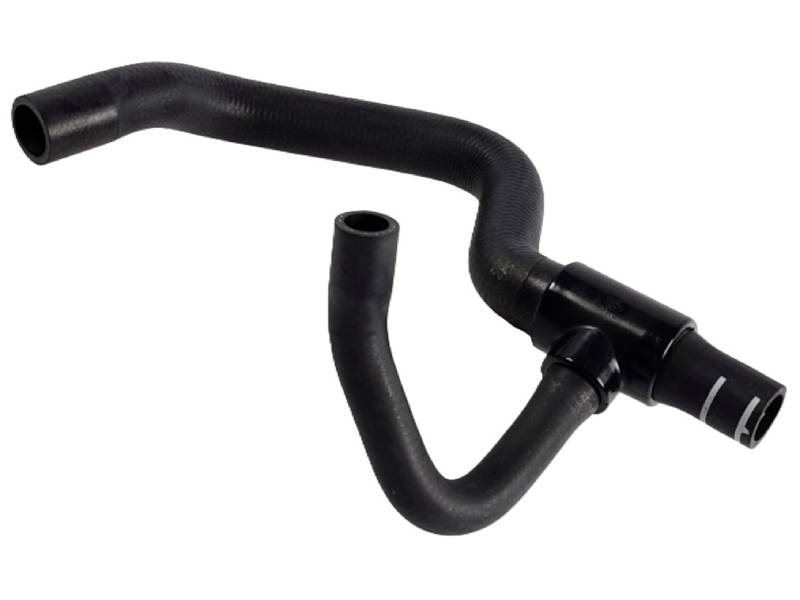
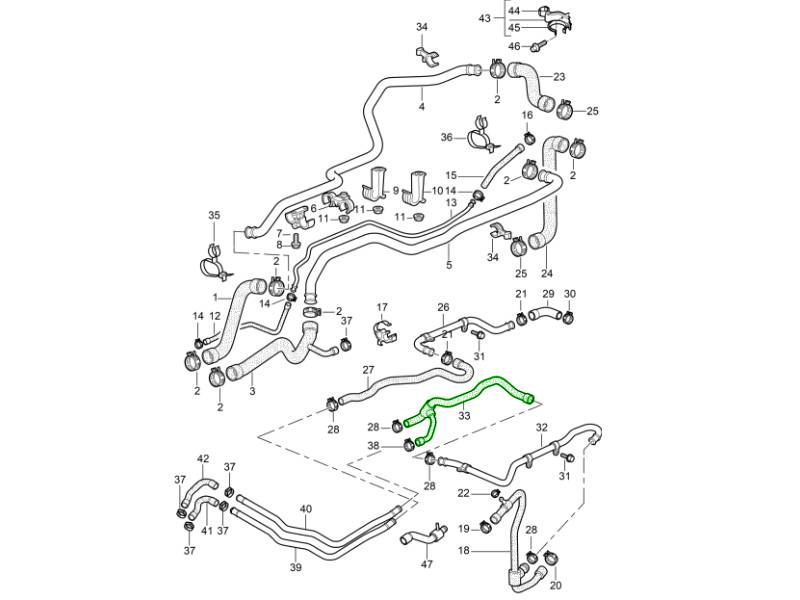
The Porsche Water Hose Return Line 99610682204 is a genuine Porsche replacement coolant hose used within the engine cooling circuit on selected Porsche 996 and 997 models.
Fits:
- Porsche 996 C2 3.6L 2002-2005
- Porsche 996 C4 3.6L 2002-2005
- Porsche 996 C4S 3.6L 2002-2005
- Porsche 997 MK1 Carrera 2 3.6L 2005-08
- Porsche 997 MK1 Carrera 2S 3.8L 2005-08
- Porsche 997 MK1 Carrera 4 3.6L 2005-08
- Porsche 997 MK1 Carrera 4S 3.8L 2005-08
Diagram Ref No 33
The hose forms part of the coolant return side of the system, carrying coolant back through the cooling circuit after it has passed through associated engine, radiator or heating-system components.
Maintaining this hose in good condition is essential because the Porsche cooling system operates under pressure and relies on a completely sealed circuit to maintain stable engine temperature.
This Genuine Porsche replacement provides the correct factory-style dimensions, connections and routing for the intended application.
What This Product Does:
The return hose carries coolant through the return side of the vehicle's liquid-cooling system.
Its main functions include:
- Carrying coolant through the return circuit
- Maintaining continuous coolant circulation
- Helping maintain correct cooling-system pressure
- Returning coolant toward the engine or associated cooling circuit
- Supporting stable engine operating temperature
- Preventing coolant loss when correctly sealed
- Maintaining the original Porsche coolant routing
- Connecting adjoining coolant pipes and cooling-system components
The hose works together with the supply hose, coolant pipes, water pump, thermostat and radiators to maintain controlled coolant circulation.
Symptoms Of Wear Or Failure:
Coolant hoses deteriorate over time because of heat, pressure, vibration and repeated thermal cycling.
Common symptoms include:
- Visible coolant leakage
- Wetness around the hose or connections
- Pink, white or crusty coolant residue
- Falling coolant level
- Frequent coolant top-ups
- Low coolant warning
- Sweet coolant smell
- Cracks in the hose surface
- Hardened or brittle rubber
- Swollen or unusually soft hose sections
- Bulging under pressure
- Damaged hose ends
- Leakage around clamps or joints
- Fluctuating coolant temperature
- Engine running hotter than normal
- Steam or coolant vapour after driving
- Engine overheating
A small leak may only appear when the engine is fully warm and the cooling system is pressurised.
Why Replacement Matters:
A deteriorated coolant return hose can fail gradually through seepage or suddenly through a split or rupture.
Loss of coolant can quickly compromise the engine's ability to control temperature.
Continued driving with a leaking hose can result in:
- Cooling-system pressure loss
- Reduced coolant circulation
- Air entering the cooling system
- Engine overheating
- Poor heater performance
- Coolant warning messages
- Roadside breakdown
- Serious engine damage if overheating is allowed to continue
Replacing a worn hose helps restore a sealed cooling circuit and reliable coolant circulation.
Related reference numbers
Related, superseded, cross reference or alternative numbers for comparison.
99610682204
The product you are viewing cross references to these numbers
- Porsche 997 MK1 TURBO 2007-09
- Porsche 997 MK1 GT3 / GT3 RS 2007-09
- Porsche 997 MK1 GT2 2007-09
- Porsche 997 MKII GT3 / GT3 RS 2010-11
- Porsche 997 MKII Turbo 2010-13
- Porsche 997 MKII GT2 RS 2011-13
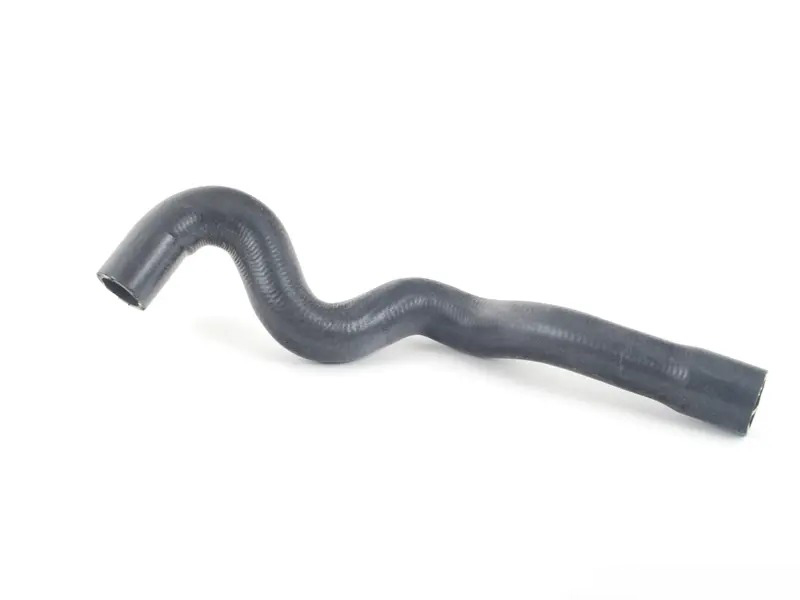
The Genuine Porsche Coolant Supply Hose 99710647772 is an original equipment replacement cooling system component designed for selected Porsche 911 (997) Turbo, GT2, GT2 RS, GT3 and GT3 RS models.
Fits:
- Porsche 997 MK1 TURBO 2007-09
- Porsche 997 MK1 GT3 / GT3 RS 2007-09
- Porsche 997 MK1 GT2 2007-09
- Porsche 997 MKII GT3 / GT3 RS 2010-11
- Porsche 997 MKII Turbo 2010-13
- Porsche 997 MKII GT2 RS 2011-13
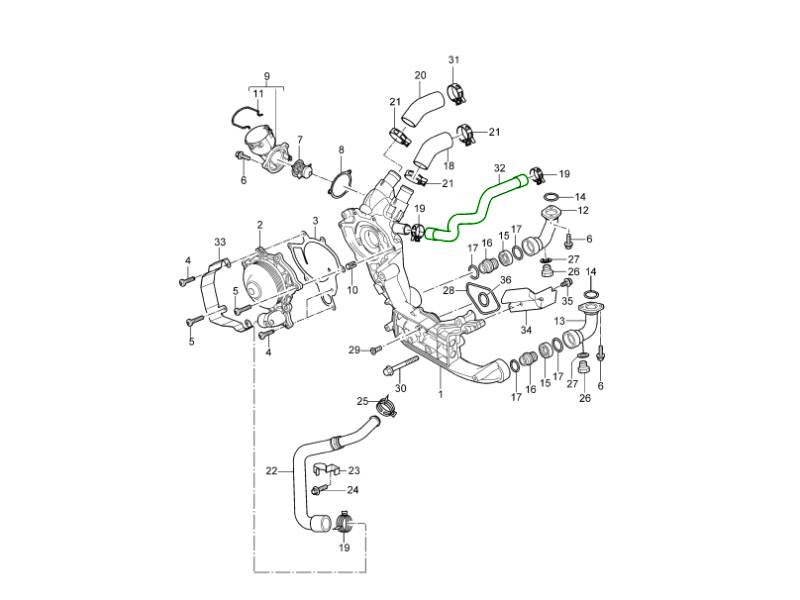
Diagram Ref No 32
Manufactured to Porsche's original specifications, this coolant hose connects the water pump housing to the coolant supply pipe, helping maintain reliable coolant circulation and effective engine temperature regulation.
The hose forms an essential part of the engine's liquid cooling system, providing a secure and flexible connection between cooling circuit components. It is designed to withstand the temperature changes, pressure fluctuations and vibration experienced during normal engine operation.
Over time, exposure to engine heat, coolant pressure and general ageing can cause the original hose to become hardened, swollen, cracked or weakened, potentially resulting in coolant leaks and reduced cooling system reliability.
The Genuine Porsche Coolant Supply Hose provides a direct original equipment replacement solution, helping restore the integrity of the cooling system while maintaining the correct hose routing and connection arrangement.
Ideal for routine cooling system maintenance, water pump repairs and engine refurbishment, this component helps protect the engine against coolant loss and overheating.
What This Product Does:
The coolant supply hose connects the engine's water pump housing to the coolant supply pipe, providing a sealed passage through which coolant circulates within the engine cooling system.
Its key functions include:
- Coolant Circulation: Allows coolant to flow between the water pump housing and the connected coolant supply pipe.
- Engine Temperature Regulation: Supports the cooling system's ability to maintain the engine within its intended operating temperature range.
- Secure Cooling System Connection: Provides a reliable connection between designated cooling system components.
- Leak Prevention: Helps maintain a sealed cooling circuit, reducing the risk of coolant escaping.
- Cooling System Pressure: Supports the integrity of the pressurised cooling system during normal operation.
- Thermal Resistance: Designed to withstand engine heat and repeated temperature fluctuations.
- Vibration Accommodation: Provides a flexible connection that accommodates normal engine vibration and movement.
- Overheating Prevention: Helps maintain sufficient coolant circulation to support effective engine cooling.
- Engine Protection: Reduces the risk of cooling-related damage by maintaining a dependable coolant flow path.
- Original Equipment Fitment: Maintains Porsche's specified hose dimensions, routing and connection arrangement.
Symptoms Of Wear Or Failure:
Over time, continuous exposure to engine heat, coolant pressure, vibration and ageing can cause coolant supply hoses to deteriorate.
Common signs include:
- Visible Coolant Leaks: Coolant dripping beneath the vehicle or collecting around the water pump housing may indicate a damaged or leaking hose.
- Low Coolant Warning: Coolant escaping from a worn hose may cause the reservoir level to fall, triggering a dashboard warning.
- Frequent Coolant Top-Ups: Repeatedly needing to refill the coolant reservoir may indicate a leak within the cooling system.
- Cracked or Split Hose Material: Visible cracks, splits or surface deterioration may indicate ageing or weakening of the hose.
- Swollen or Bulging Hose: Internal deterioration or abnormal cooling system pressure may cause the hose to expand or deform.
- Hardened or Brittle Rubber: Repeated exposure to high temperatures may reduce flexibility and increase the risk of cracking.
- Soft or Spongy Sections: Localised weakening of the hose structure can indicate internal deterioration.
- Coolant Residue Around Connections: Dried coolant deposits or staining around the hose ends may indicate previous or ongoing leakage.
- Coolant Smell from the Engine Bay: Escaping coolant may produce a distinctive sweet smell, particularly when contacting warm engine components.
- Engine Overheating: Significant coolant loss can reduce the cooling system's ability to regulate engine temperature.
- Fluctuating Engine Temperature: Coolant loss or air entering the cooling system may contribute to unstable temperature readings.
- Steam from the Engine Compartment: A severe coolant leak may allow coolant to contact hot engine components, producing visible steam.
- Loose or Damaged Hose Connections: Deteriorated clamps or damaged connection surfaces may allow coolant to escape.
Why Replacement Matters:
- Replacing a worn, leaking or damaged coolant supply hose is essential for maintaining the reliability, performance and long-term protection of your Porsche's engine cooling system.
- The engine cooling system relies on the continuous circulation of coolant through a sealed network of hoses, pipes and associated components. The coolant supply hose plays an important role by maintaining a secure connection between the water pump housing and the coolant supply pipe.
- As the original hose ages, repeated heating and cooling cycles can cause the material to lose flexibility, develop cracks or weaken around its connection points.
- Even a small coolant leak can gradually reduce the coolant level, limiting the system's ability to control engine temperature effectively.
- If the hose deteriorates further or fails suddenly under pressure, rapid coolant loss may occur, potentially resulting in engine overheating and an unexpected breakdown.
- Overheating can cause serious damage to internal engine components, including cylinder heads, gaskets and associated cooling system parts.
- A correctly fitted Genuine Porsche replacement hose helps restore the original cooling system connection, ensuring appropriate fitment, routing and sealing performance.
- Maintaining reliable engine cooling is particularly important for high-performance Porsche Turbo, GT2 and GT3 models, where the engine can experience substantial thermal loads during demanding driving conditions.
- Replacing deteriorated hoses during water pump servicing or major cooling system maintenance can also help prevent recurring leaks and reduce the likelihood of more expensive repairs.
- The genuine replacement maintains the original equipment configuration, making it suitable for Porsche owners who wish to preserve factory-standard component quality and fitment.
Related reference numbers
Related, superseded, cross reference or alternative numbers for comparison.
99710647772
The product you are viewing cross references to these numbers
- Porsche 970.1 Panamera V6 3.6L 2WD 2009-13
- Porsche 970.1 Panamera 4 V6 3.6L 4WD 2009-13
- Porsche 970.1 Panamera S V8 4.8L 2009-13
- Porsche 970.1 Panamera 4S V8 4.8L 2009-13
- Porsche 970.1 Panamera GTS V8 4.8L 2011-13
- Porsche 970.1 Panamera Turbo V8 4.8L 2009-13
- Porsche 970.1 Panamera Turbo S V8 4.8L 2009-13
- Porsche 970.1 Panamera Diesel V6 3.0L 2011-13
- Porsche 970.1 Panamera S Hybrid V6 3.0L 2011-13
- Porsche 970.2 Panamera V6 3.6L 2WD (310Hp) 2014-16
- Porsche 970.2 Panamera 4 V6 3.6L 4WD (310Hp) 2014-16
- Porsche 970.2 Panamera S V6 Turbo 3.0L 2WD (420Hp) 2014-16
- Porsche 970.2 Panamera S V6 Turbo 3.0L 2WD Executive 2014-16
- Porsche 970.2 Panamera 4S V6 Turbo 3.0L 4WD (420Hp) 2014-16
- Porsche 970.2 Panamera 4S V6 Turbo 3.0L 4WD Executive 2014-16
- Porsche 970.2 Panamera GTS V8 4.8L 4WD (440Hp) 2014-16
- Porsche 970.2 Panamera Turbo V8 4.8L (520Hp) 2014-16
- Porsche 970.2 Panamera Turbo V8 Executive 2014-16
- Porsche 970.2 Panamera Turbo S V8 4.8L 2014-16
- Porsche 970.2 Panamera Diesel V6 3.0L (250Hp) 2014-16
- Porsche 970.2 Panamera S E-Hybrid V6 3.0L (416Hp) 2014-16
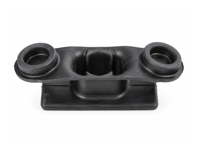
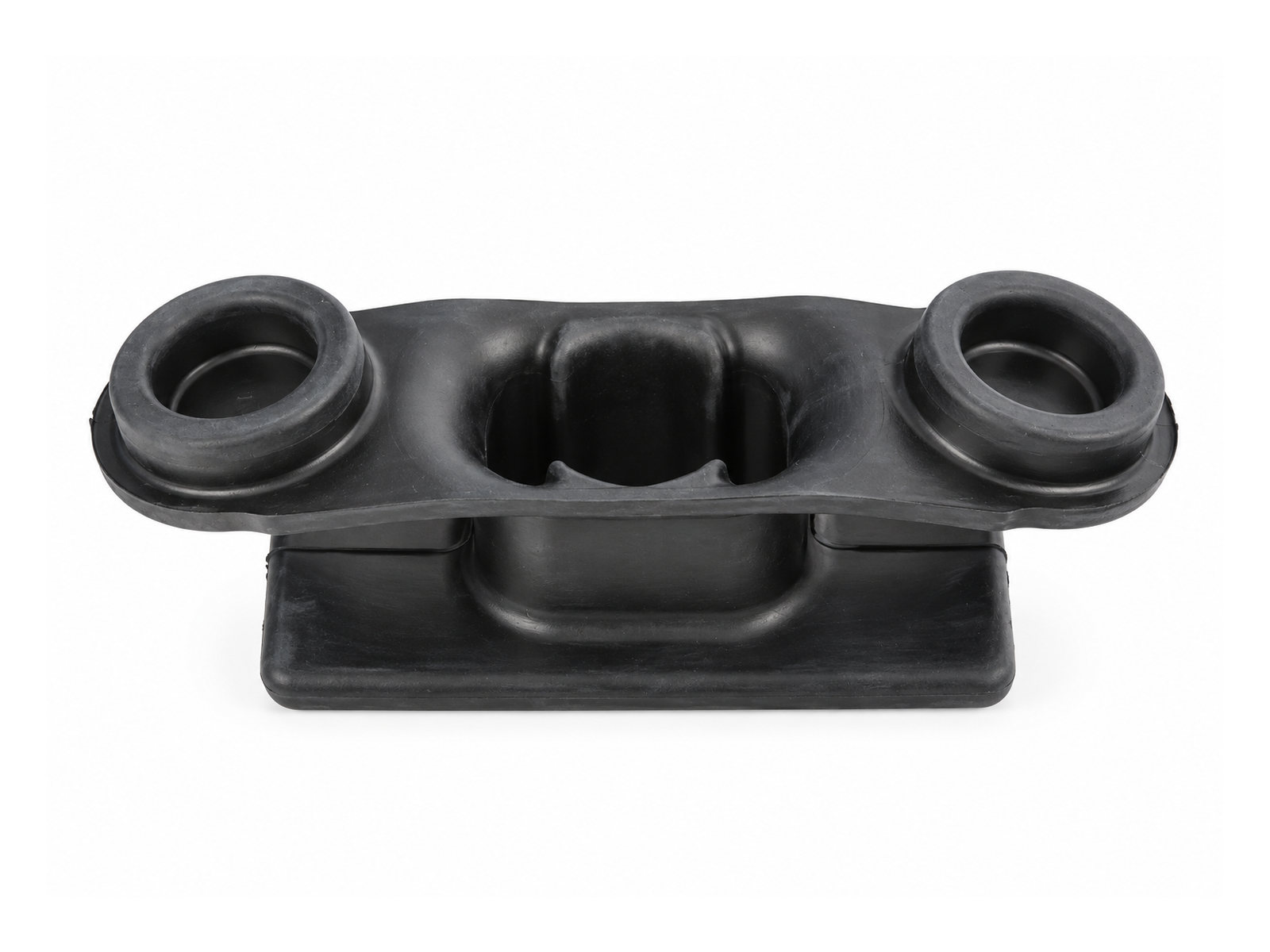
Genuine Porsche transmission carrier rubber stop for 970 Panamera models from 2010–16, covering the specified petrol, Hybrid and Diesel applications.
Fits
- Porsche 970.1 Panamera V6 3.6L 2WD 2009–13
- Porsche 970.1 Panamera 4 V6 3.6L 4WD 2009–13
- Porsche 970.1 Panamera S V8 4.8L 2009–13
- Porsche 970.1 Panamera 4S V8 4.8L 2009–13
- Porsche 970.1 Panamera GTS V8 4.8L 2011–13
- Porsche 970.1 Panamera Turbo V8 4.8L 2009–13
- Porsche 970.1 Panamera Turbo S V8 4.8L 2009–13
- Porsche 970.1 Panamera S Hybrid V6 3.0L 2011–13
- Porsche 970.1 Panamera Diesel V6 3.0L 2011–13
- Porsche 970.2 Panamera V6 3.6L 2WD 310Hp 2014–16
- Porsche 970.2 Panamera 4 V6 3.6L 4WD 310Hp 2014–16
- Porsche 970.2 Panamera S V6 Turbo 3.0L 2WD 420Hp 2014–16
- Porsche 970.2 Panamera S V6 Turbo 3.0L 2WD Executive 2014–16
- Porsche 970.2 Panamera 4S V6 Turbo 3.0L 4WD 420Hp 2014–16
- Porsche 970.2 Panamera 4S V6 Turbo 3.0L 4WD Executive 2014–16
- Porsche 970.2 Panamera GTS V8 4.8L 4WD 440Hp 2014–16
- Porsche 970.2 Panamera Turbo V8 4.8L 520Hp 2014–16
- Porsche 970.2 Panamera Turbo V8 Executive 2014–16
- Porsche 970.2 Panamera Turbo S V8 4.8L 2014–16
- Porsche 970.2 Panamera S E-Hybrid V6 3.0L 416Hp 2014–16
- Porsche 970.2 Panamera Diesel V6 3.0L 250Hp 2014–16
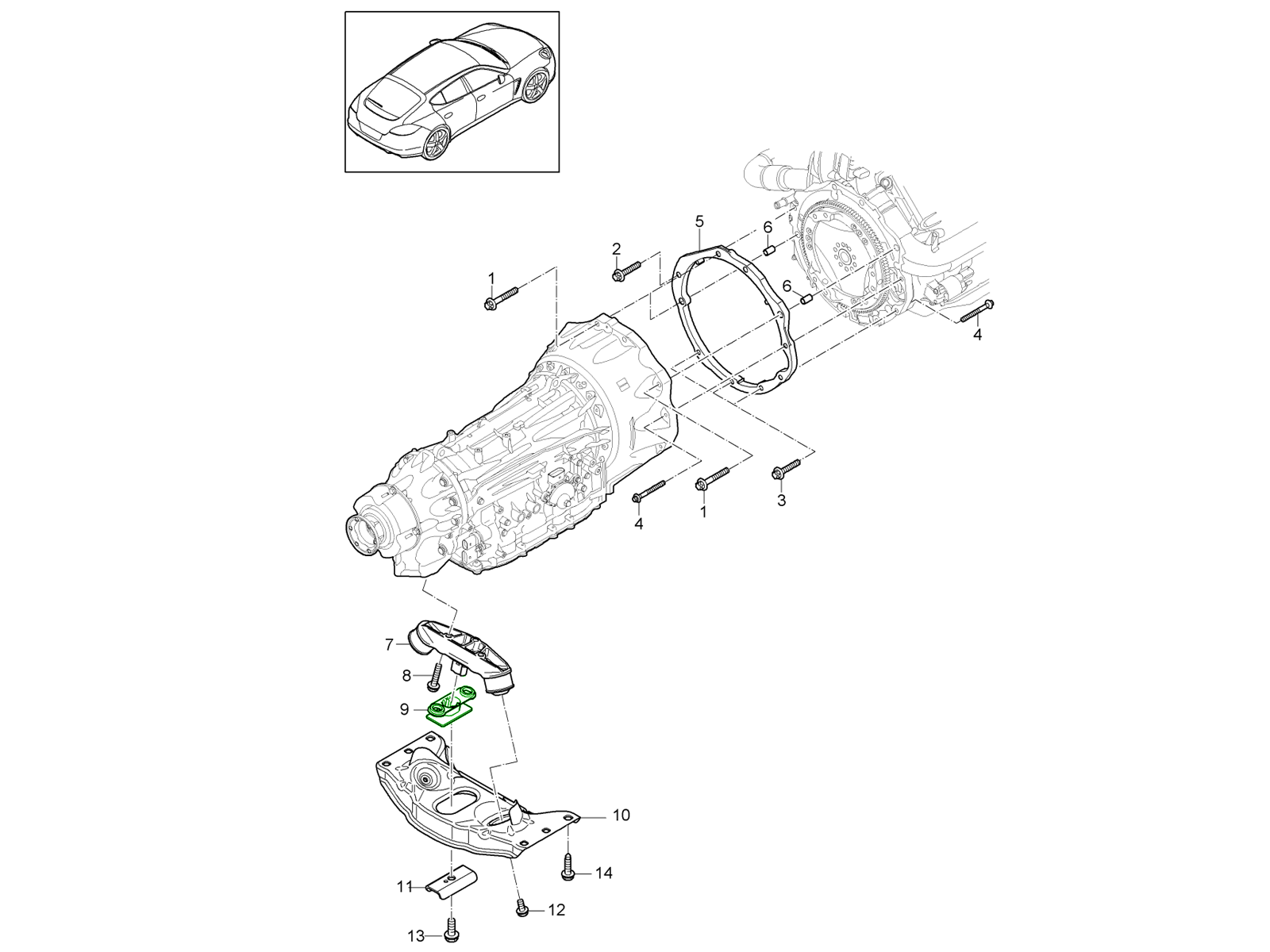
Diagram applications include Mounting parts for engine and transmission / Transmission carrier (Model: C7000,C7005, C7030,C7035, C7050,G7000, C7001,C7031, C7051) Panamera 970 (G1) 2010-16; Mounting parts for engine and transmission / Transmission carrier (Model: A7000) Panamera 970 (G1) 3.0L HYBRID 2012-16; Mounting parts for engine and transmission / Transmission carrier (Model: A7010,A7011) Panamera 970 (G1) 3.0L DIESEL 2012-16.
Check fitment for your specific vehicle (model, year, engine) before ordering.
What This Product Does
This rubber component sits within the mounting hardware for the engine and transmission carrier. Its compliant construction creates a buffer at the designated contact point, separating associated carrier parts and absorbing limited movement within the original assembly.
Functions
- Acts as a resilient contact point in the carrier assembly
- Separates neighbouring transmission mounting components
- Reduces direct metal-to-metal contact at the designated location
- Maintains the factory arrangement of the carrier hardware
Technical Details
- Part number: 97037513702
- Manufacturer: Porsche
- Component description: rubber stop or rubber buffer
- Assembly location: engine and transmission mounting system
- Diagram quantity: 1 per listed assembly
- Transmission references: C7000, C7005, C7030, C7035, C7050, G7000, C7001, C7031, C7051, A7000, A7010 and A7011
Symptoms of Fault
- Cracks, splits or hardening in the rubber
- A compressed, distorted or damaged contact surface
- Knocking near the carrier as drivetrain load changes
- More vibration around the transmission mounting area
- Deterioration discovered while servicing adjacent mounts
Why Replacement Matters
Age, heat and repeated drivetrain movement can reduce the flexibility of the buffer. Once deformed or perished, it may not maintain the intended clearance between the surrounding parts. Renewal during transmission carrier work restores the specified component arrangement and provides an opportunity to examine the carrier, console, adjacent stop and fasteners before reassembly.
FAQs
- Where is this rubber stop used?
It is listed in the engine and transmission mounting diagrams around the transmission carrier. - Is this supplied as a single component?
Yes. The applicable exploded diagrams specify a quantity of one for each listed assembly. - Should neighbouring parts also be checked?
Inspect the transmission carrier, console, separate stop and mounting hardware for deterioration, damage or looseness. - How can suitability be confirmed?
Compare part number 97037513702 and the applicable transmission code with the vehicle details. VIN confirmation is advisable where specifications vary.
Related reference numbers
Related, superseded, cross reference or alternative numbers for comparison.
97037513702
The product you are viewing cross references to these numbers
.jpg?width=197 "Water Line Supply, Coolant Pipe. Porsche 987 Boxster / Cayman Tiptronic 2007-08 - 98630707622, 98630707623, 98630707621")
.jpg)
- Porsche Boxster 987 2.7L 2005-08/08
- Porsche Boxster 987 S 3.2/3.4L 2005-08/08
- Porsche Cayman 2.7L 987C 2006-08
- Porsche Cayman S 3.4L 987C 2005-08
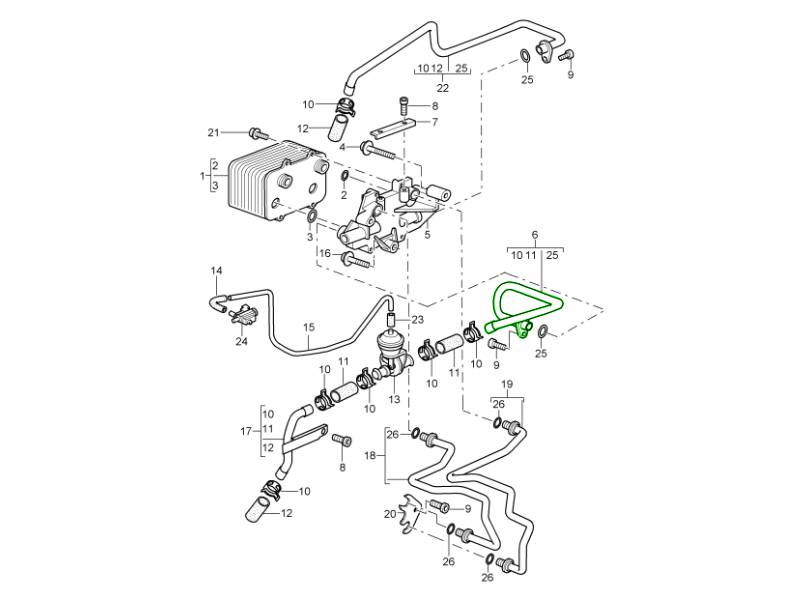
The Porsche Water Line Supply, Coolant Pipe 98630707622 is a genuine Porsche coolant supply line used within the Tiptronic automatic-transmission cooling circuit on selected Porsche Boxster and Cayman applications.
Fits:
- Porsche Boxster 987 2.7L 2007/08
- Porsche Boxster 987 S 3.2/3.4L 2007/08
- Porsche Cayman 2.7L 987C 2007-08
- Porsche Cayman S 3.4L 987C 2007-08
Diagram Ref No 6
The pipe carries engine coolant to the automatic transmission fluid cooler, where coolant helps regulate the operating temperature of the transmission oil.
Maintaining this pipe in good condition is important because the Tiptronic transmission relies on effective thermal management to keep transmission-fluid temperatures within the correct operating range.
As a Genuine Porsche component, the pipe provides the correct factory dimensions, routing and connections for the intended installation.
What This Product Does:
The coolant supply line forms part of the water-to-oil cooling circuit for the Tiptronic transmission.
Its primary functions include:
- Carrying engine coolant to the ATF cooler
- Supporting regulation of automatic-transmission fluid temperature
- Maintaining coolant circulation through the transmission cooler
- Helping prevent excessive transmission-fluid temperatures
- Maintaining a sealed cooling circuit
- Supporting correct Tiptronic transmission operation
- Providing the original factory coolant routing
- Preventing coolant loss when correctly installed and sealed
The pipe works alongside the ATF cooler, coolant return line, transmission oil supply and return lines, hoses and associated valves.
Symptoms Of Wear Or Failure:
Coolant pipes can deteriorate through age, corrosion, vibration and repeated heating and cooling cycles.
Common signs of a failing coolant supply pipe include:
- Visible coolant leakage
- Wetness around the pipe or connections
- Pink or white dried coolant deposits
- Falling engine coolant level
- Frequent need to top up coolant
- Low coolant warning
- Sweet coolant smell
- Corrosion or pitting on the pipe
- Damaged pipe connections
- Leakage around seals or hose joints
- Distorted or bent pipework
- Loss of cooling-system pressure
- Higher transmission operating temperatures
- Transmission overheating warnings in severe cases
Small leaks may only become visible once the vehicle is fully warm and the cooling system is pressurised.
Why Replacement Matters:
A leaking coolant supply line can affect both the engine cooling system and the transmission cooling circuit.
Coolant loss can reduce system pressure and circulation, while insufficient coolant flow through the ATF cooler can reduce its ability to control transmission-fluid temperature.
Continued operation with a damaged line can contribute to:
- Coolant loss
- Cooling-system pressure loss
- Reduced ATF cooling efficiency
- Elevated transmission-fluid temperature
- Accelerated transmission-fluid deterioration
- Increased wear within the automatic transmission
- Engine overheating if coolant loss becomes significant
- Roadside breakdown
Replacing the damaged pipe helps restore a sealed cooling circuit and reliable coolant flow through the transmission cooler.
Related reference numbers
Related, superseded, cross reference or alternative numbers for comparison.
98630707623
The product you are viewing cross references to these numbers
.jpg?width=197 "Air Suspension Compressor Intake / Suction Pipe. Porsche 955 / 957 Cayenne 2003-10 - 95535804520")
.jpg)
- Porsche 955 Cayenne S 4.5L V8 2003-06
- Porsche 955 Cayenne Turbo 4.5L 2003-06
- Porsche 955 Cayenne Turbo S 4.5L 2006>>
- Porsche 957 Cayenne 3.0L Diesel 2007-10
- Porsche 957 Cayenne S / GTS 4.8L 2007-10
- Porsche 957 Cayenne Turbo / Turbo S 4.8L 2007-10
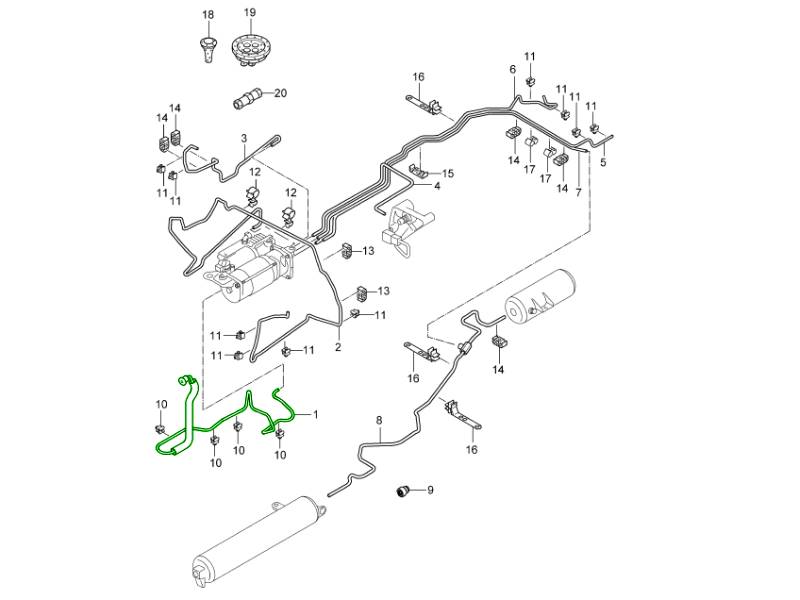
The Genuine Porsche Air Suspension Compressor Intake / Suction Pipe (95535804520) is an original equipment replacement component designed for selected Porsche Cayenne 955 and 957 models equipped with the factory air suspension system.
Fits:
- Porsche 955 Cayenne S 4.5L V8 2003-06
- Porsche 955 Cayenne Turbo 4.5L 2003-06
- Porsche 955 Cayenne Turbo S 4.5L 2006>>
- Porsche 957 Cayenne 3.0L Diesel 2007-10
- Porsche 957 Cayenne S / GTS 4.8L 2007-10
- Porsche 957 Cayenne Turbo / Turbo S 4.8L 2007-10
1BK - Air Suspension With Leveling System And Height Adjustment (PASM)
Diagram Ref No 1
This pipe forms part of the compressor's air intake arrangement, providing a dedicated passage for incoming air between the air cleaner and the air suspension compressor.
The Porsche Cayenne's optional air suspension system uses compressed air to control vehicle ride height and maintain the appropriate suspension level under varying driving and loading conditions.
The air suspension compressor is responsible for generating the compressed air required by the system. To perform this function, it must draw in air through its designated intake arrangement.
The compressor suction pipe helps direct incoming air from the air cleaner towards the compressor inlet, supporting the supply of suitably filtered air.
Although relatively simple in construction, this component plays an important part in protecting the compressor from unwanted contamination and maintaining the integrity of the original air intake routing.
The compressor operates under demanding conditions, particularly when the vehicle is adjusting its ride height or compensating for changes in load.
If the intake pipe becomes cracked, disconnected, restricted or damaged, the compressor may no longer receive air through the intended filtered pathway.
Depending on the nature of the fault, this can increase the risk of dirt and moisture entering the compressor or restrict its intake airflow.
Over time, contamination and abnormal operating conditions may contribute to unnecessary compressor wear and reduced air suspension reliability.
The Genuine Porsche replacement suction pipe 95535804520 is designed to restore the original intake connection on compatible Cayenne models.
Manufactured to the original Porsche specification, it provides the intended fitment and routing for the specified air suspension configuration.
It is particularly useful during air suspension compressor replacement, repairs to damaged intake pipework and preventive maintenance where the original suction line has deteriorated.
What This Product Does:
The air suspension compressor suction pipe connects the compressor's air intake arrangement to the corresponding air cleaner.
Its primary functions include:
- Supplies Intake Air to the Compressor: Provides the intended passage through which the compressor draws air.
- Connects the Air Cleaner and Compressor: Maintains the original air intake route.
- Helps Prevent Contamination: Supports the delivery of filtered air to the compressor.
- Maintains Intake System Integrity: Helps prevent the compressor from drawing air through an unintended opening.
- Supports Compressor Efficiency: Allows the compressor to receive air through the correctly specified intake arrangement.
- Helps Protect Internal Compressor Components: Reduces the risk of contamination associated with a damaged or disconnected suction pipe.
- Maintains Original Routing: Keeps the compressor intake connected and positioned according to Porsche's design.
- Supports Air Suspension Reliability: Helps maintain the air supply arrangement needed for the compressor to function correctly.
- Provides an Original Equipment Replacement: Restores the correct intake component without modifying the suspension system.
Symptoms Of Wear Or Failure:
The air suspension compressor suction pipe is not normally replaced at a fixed service interval.
However, it can deteriorate through age, vibration, environmental exposure or mechanical damage.
Common symptoms include:
- Visible cracks or splits.
- Damaged pipe sections.
- Loose or separated connections.
- Dirt accumulation around a damaged opening.
- The compressor drawing air through an unintended gap.
- Pipe disconnected from the air cleaner or compressor.
- Visible loose pipework.
- Incorrect intake routing.
- Unusual compressor intake noise.
- Increased exposure of the compressor inlet to contamination.
- Reduced airflow into the compressor.
- Compressor struggling to achieve the expected performance.
- Slower suspension adjustment where intake restriction is severe.
- Unusual compressor operating noise.
- Abnormal compressor temperature or operating behaviour.
Why Replacement Matters:
Replacing a worn or damaged air suspension compressor intake pipe helps maintain the correct air supply to the compressor.
Although it is not a pressurised suspension component, its condition is important because the compressor relies on an appropriate intake pathway.
- Restores the Original Air Intake Route: Reconnects the air cleaner and compressor correctly.
- Helps Prevent Dirt Ingress: Reduces the risk of unfiltered air entering the compressor through a damaged pipe.
- Supports Compressor Reliability: Helps maintain suitable compressor intake conditions.
- Restores Secure Connections: Replaces cracked, loose or damaged intake pipework.
- Helps Maintain Airflow: Removes restrictions caused by damaged or collapsed pipe sections.
- Reduces Unwanted Intake Noise: Can correct noise caused by an incorrectly connected suction pipe.
- Maintains Factory Fitment: Preserves the original Porsche air suspension configuration.
- Supports Long-Term Suspension Maintenance: Helps protect the compressor during normal operation.
- Useful During Compressor Replacement: Allows damaged intake pipework to be renewed when servicing the compressor.
- Genuine Porsche Component: Provides the original equipment part specified for compatible vehicles.
Related reference numbers
Related, superseded, cross reference or alternative numbers for comparison.
95535804520
The product you are viewing cross references to these numbers
- Porsche 996 GT3 MKI 1999-02
- Porsche 996 GT3 MKII 2003>>
- Porsche 996 GT3 RS 2003-04
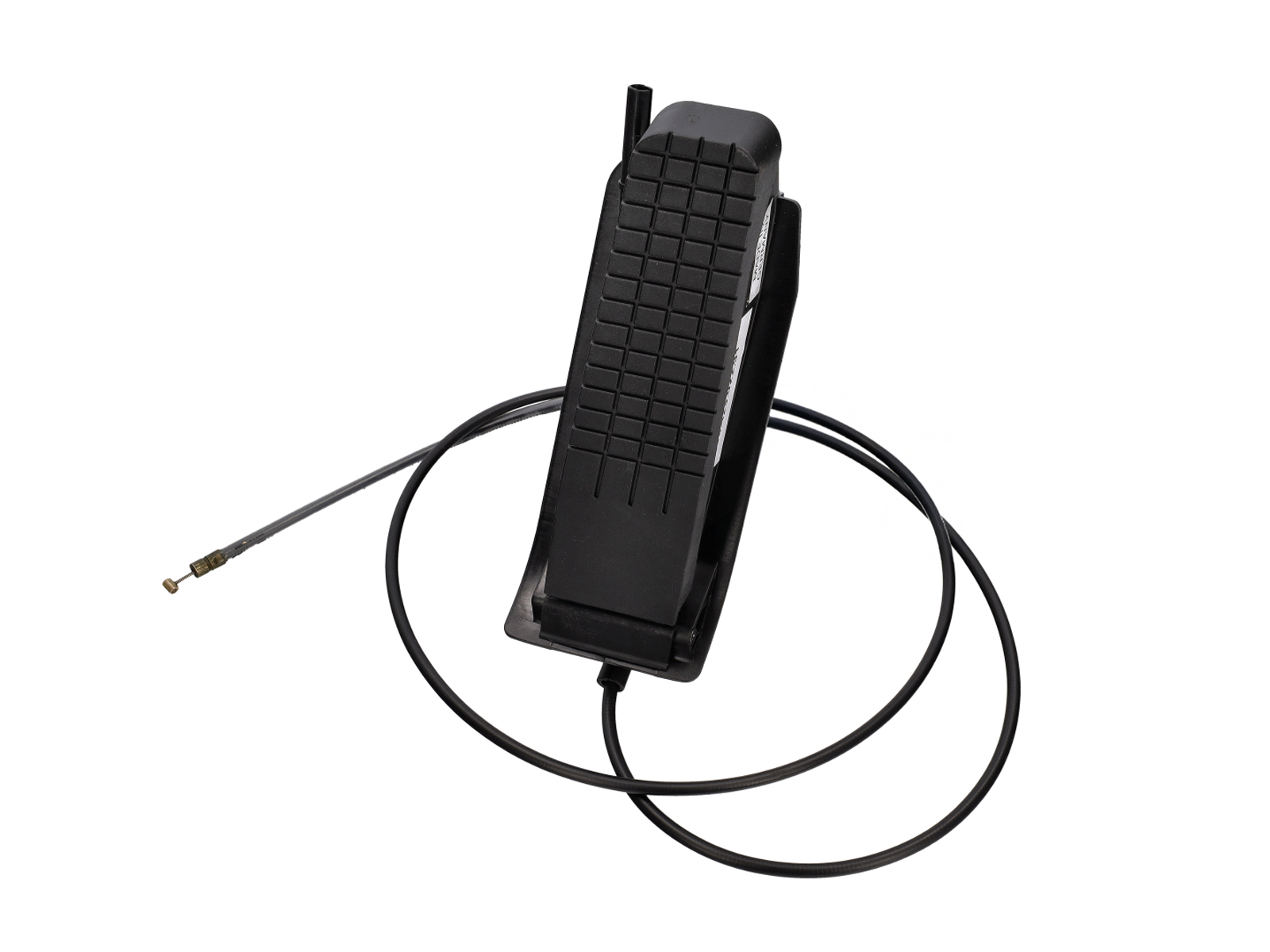
Genuine Porsche accelerator control, also described as a throttle control, for right-hand-drive 996 GT3 MkI models. This component forms part of the cable-operated accelerator assembly.
Fits
- 996 GT3 MkI 1999–02
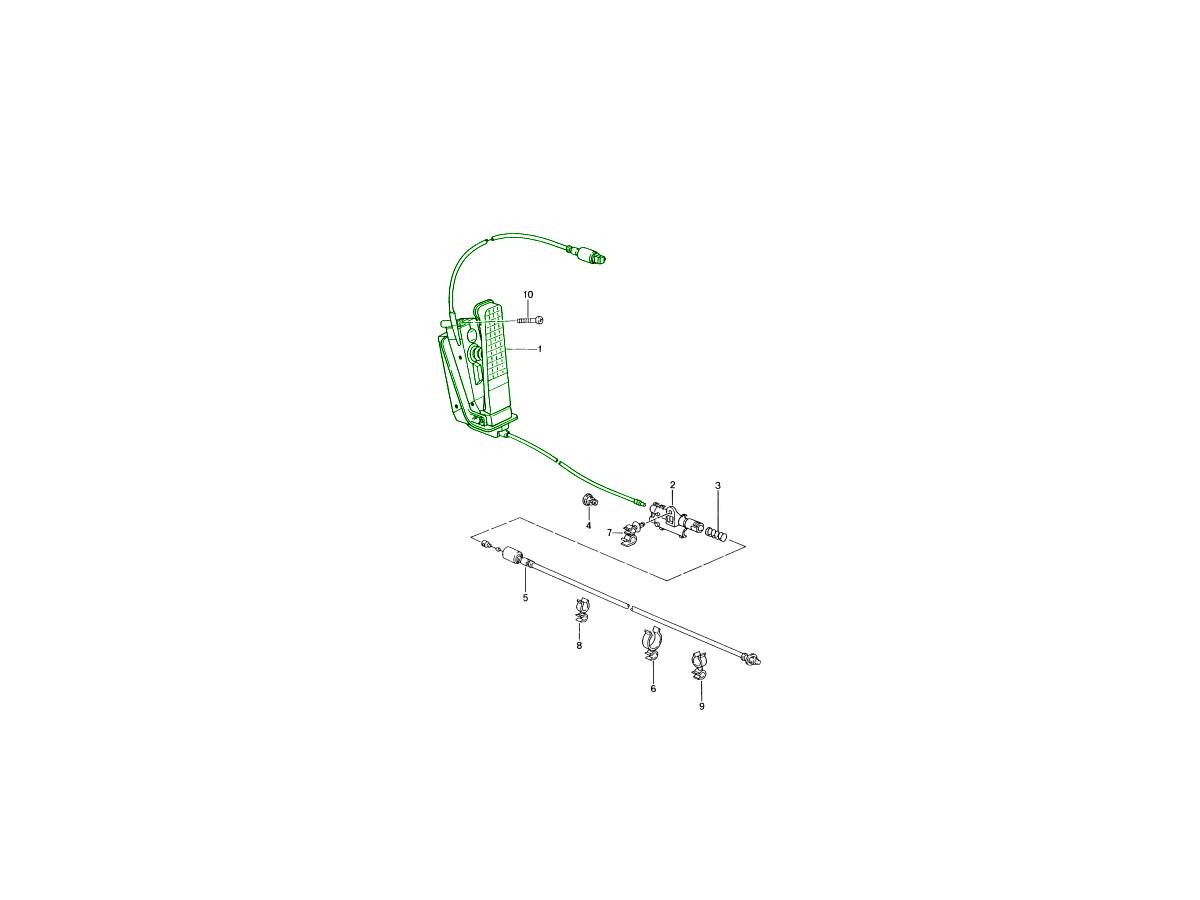
Diagram: pedals accelerator control 996 GT3-1 1999-02
What This Product Does
The accelerator control transfers input from the accelerator pedal to the mechanical throttle cable. It operates with the housing, return spring, cable, grommet and associated mounting components to provide the required pedal movement.
Functions
- Transfers accelerator-pedal input into the cable mechanism
- Provides a pivoting connection within the pedal assembly
- Supports consistent movement through the pedal's operating travel
- Works with the separate return spring and accelerator cable
Technical Details
- Porsche part number: 99642302291
- Manufacturer: Genuine Porsche
- Catalogue description: accelerator control
- Alternative description: throttle control
- Diagram remark: /RL -02; quantity shown: 1
- Published component weight: approximately 0.576 kg
Symptoms of Fault
- Accelerator pedal feels stiff, uneven or notchy
- Pedal movement is slow to return after release
- Excessive lateral play develops around the pivot
- Squeaking or friction is noticeable during operation
- Mounting or pivot areas show wear, cracking or damage
- Throttle travel is restricted by binding in the linkage
Why Replacement Matters
Wear in the accelerator control may cause resistance, unwanted movement or inconsistent pedal travel within the mechanical throttle system. Fitting the correct component helps restore the intended geometry and operation of the pedal-side assembly. During installation, inspect the accelerator cable, return spring, housing, grommet, pivots and mounting points for wear, contamination or restricted movement.
FAQs
- Is this the accelerator cable?
No. The accelerator control and cables are listed as separate components in the exploded assembly. - What does the /RL remark indicate?
It denotes the right-hand-drive application in the supplied catalogue information. - Does this fit every Porsche 996?
No. The supplied application is for the listed 996 GT3 MkI, GT3 MkII and GT3 RS variants. Confirm the drive side and production year. - What else should be examined during fitting?
Inspect the cable, spring, housing, grommet, pivots and securing points for deterioration or binding. - How should compatibility be checked?
Confirm the model, year, right-hand-drive configuration and mechanical accelerator specification. A VIN check is advisable where catalogue production cut-offs apply.
Check fitment for your specific vehicle (model, year, engine) before ordering.
Related reference numbers
Related, superseded, cross reference or alternative numbers for comparison.
99642302291
The product you are viewing cross references to these numbers
- Porsche 911 1965-1968 2.0L / 912 SWB (F)
- Porsche 911 1968-1973 2.2L / 2.4L / 2.7L RS LWB (F)
- Porsche 911 1974-1977 2.7L / 1976-77 3.0 Carrera
- Porsche 911 1978-1983 3.0L / SC
- Porsche 911 1984-1986 3.2L
- Porsche 911 1987-1989 3.2L G50
- Porsche 911 1975-1977 3.0L Turbo (930)
- Porsche 911 1978-1989 3.3L Turbo (930)
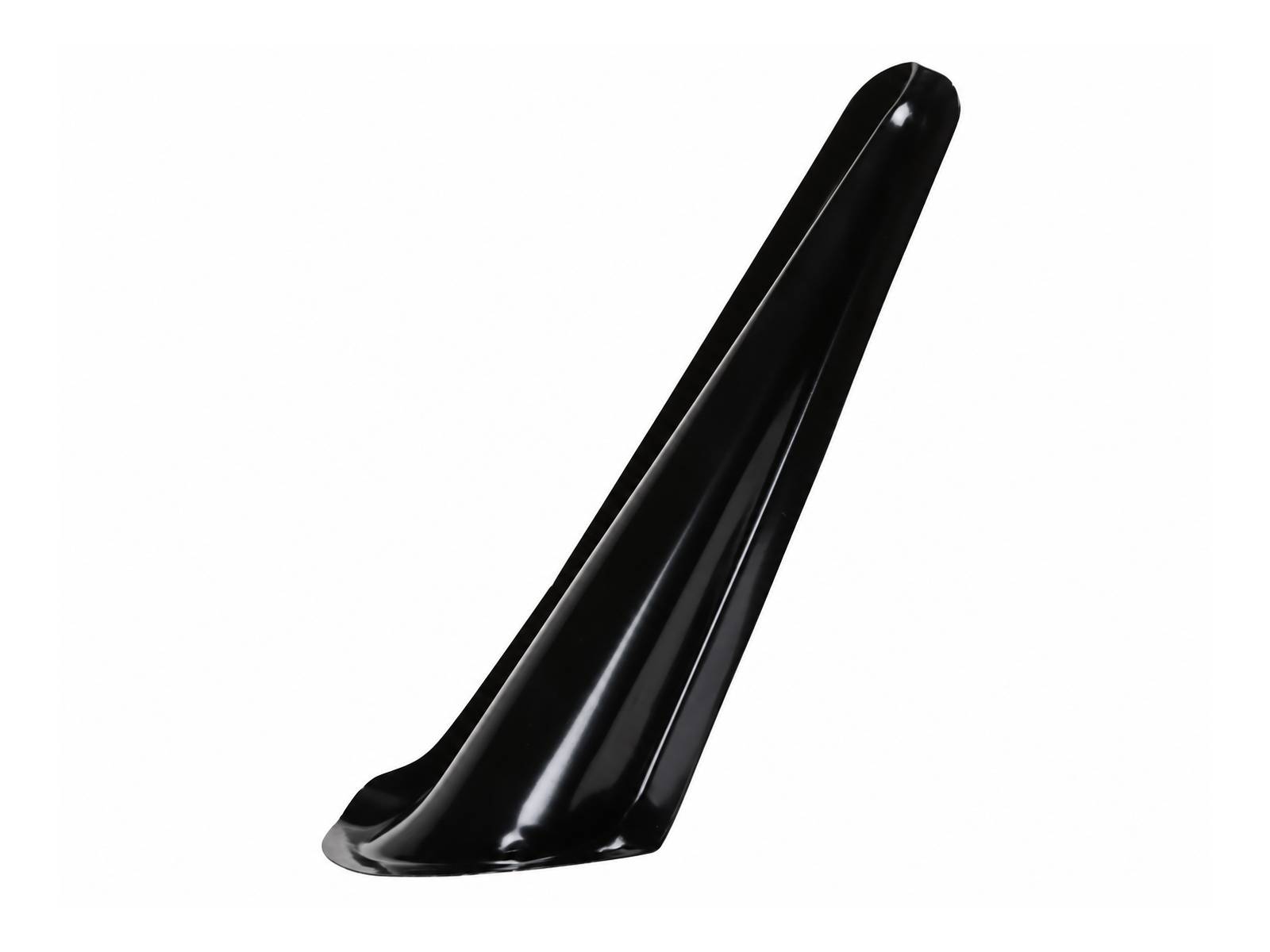
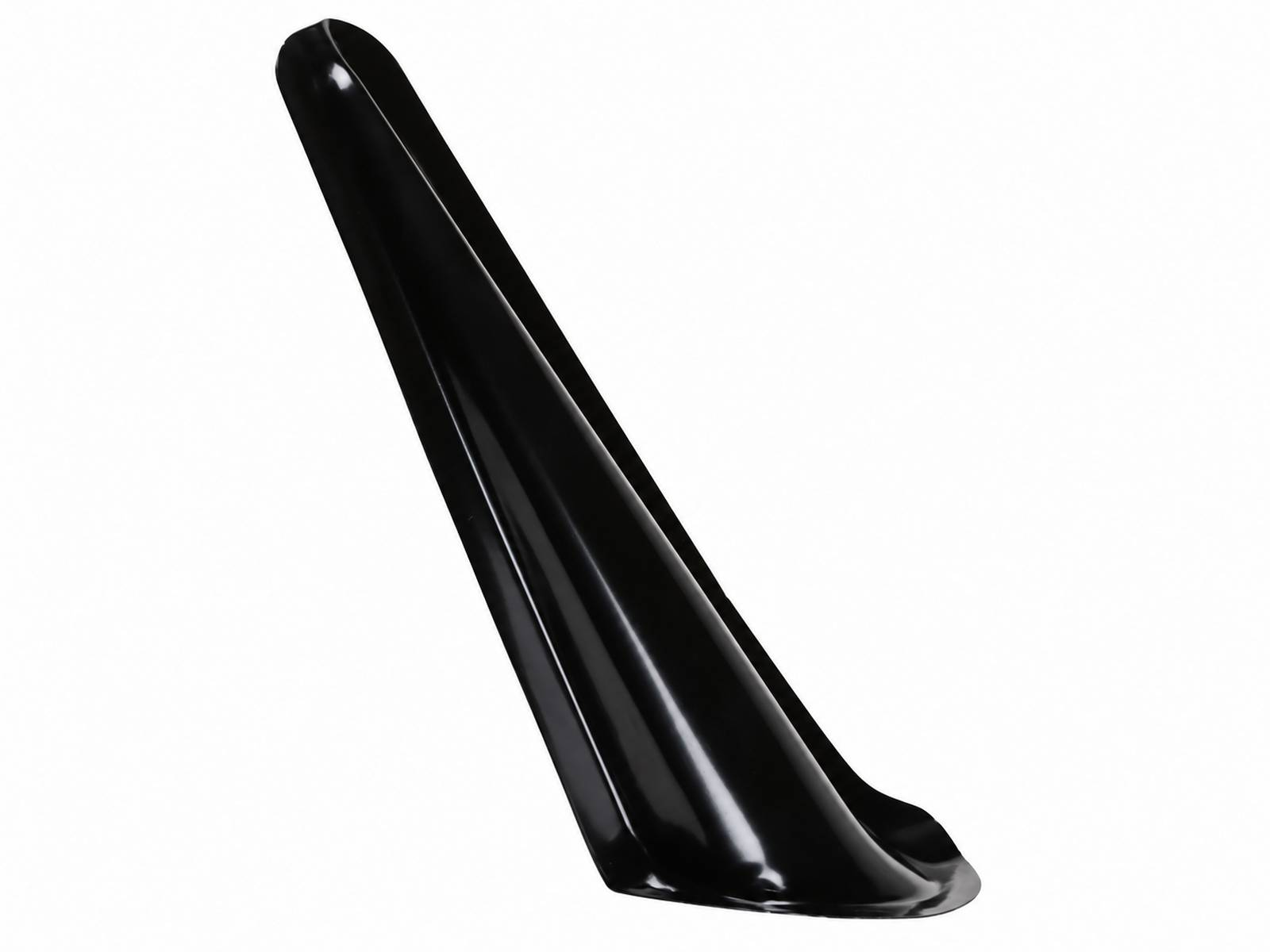
Support bracket by Porsche is specified for listed Porsche 911 and 912 Coupe applications from 1965–89.
Fits
- 911 1965–1968 2.0L / 912 SWB (F)
- 911 1968–1973 2.2L / 2.4L / 2.7L RS LWB (F)
- 911 1974–1977 2.7L / 1976–77 3.0 Carrera
- 911 1975–1977 3.0L Turbo (930)
- 911 1978–1983 3.0L / SC
- 911 1978–1989 3.3L Turbo (930)
- 911 1984–1986 3.2L
- 911 1987–1989 3.2L G50
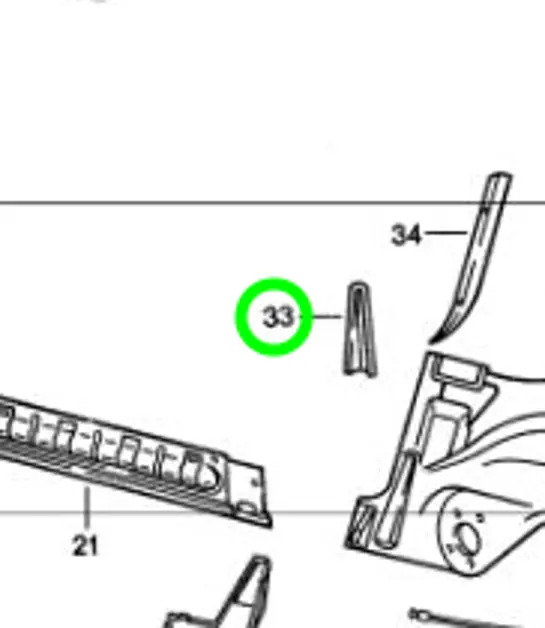
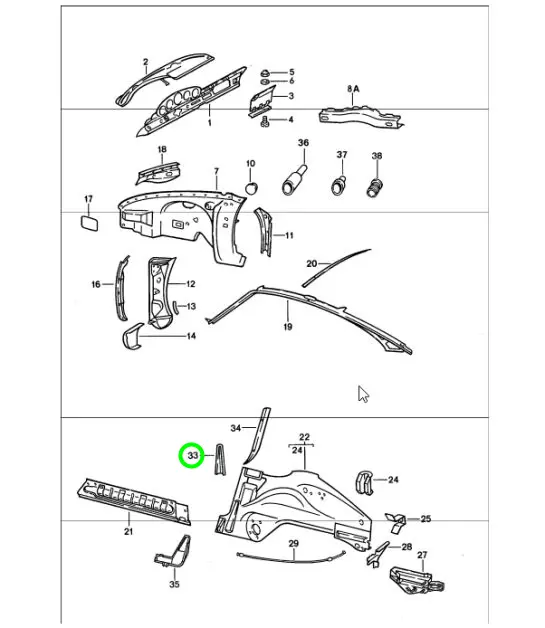
Diagram Ref No 33
What This Product Does
The bracket supports the associated body assembly in the areas identified by the Porsche exploded diagrams. It is intended for replacing original metal that has become corroded, distorted or unsuitable for reuse during chassis and body restoration.
Functions
- Provides a support point within the relevant body assembly
- Assists with maintaining the intended location of adjoining panels
- Replaces damaged or weakened original bracket metal
- Supports repairs to the middle or rear body structure
- Allows the surrounding assembly to be restored to the original arrangement
Technical Details
- Porsche part number: 91150182300GRV / 91150182400GRV
- Catalogue description: bracket, support
- Finish: primed
- Body style identified in applicable interior panelling diagrams: Coupe
- Quantity specified in each listed exploded-diagram application: 1
Symptoms of Fault
- Corrosion, perforation or flaking metal around the bracket
- Cracks or weakness close to welded joints
- Deformation following impact damage or incorrect lifting
- Misalignment of connected bodywork or interior panels
- Deteriorated patch repairs from earlier restoration work
- Damage uncovered while repairing the sills, wheel housing or rear frame
Why Replacement Matters
Renewing a deteriorated support bracket enables rusted, distorted or previously repaired material to be removed and replaced with a correctly positioned component. Before installation, inspect the adjoining panels, seams and attachment areas for hidden corrosion. Trial fitting and careful alignment are recommended before the bracket is permanently secured, as its position may affect the fit of neighbouring body and interior components.
Check fitment for your specific vehicle (model, year, engine) before ordering.
Related reference numbers
Related, superseded, cross reference or alternative numbers for comparison.
91150182
The product you are viewing cross references to these numbers

- Porsche 996 TURBO 2000-05
- Porsche 996 GT2 2001-05
- Porsche 996 GT3 MKI 1999-02
- Porsche 996 GT3 MKII 2003>>
- Porsche 996 GT3 RS 2003-04
- Porsche 997 MK1 TURBO 2007-09
- Porsche 997 MK1 GT3 / GT3 RS 2007-09
- Porsche 997 MK1 GT2 2007-09
- Porsche 997 MKII GT3 / GT3 RS 2010-11
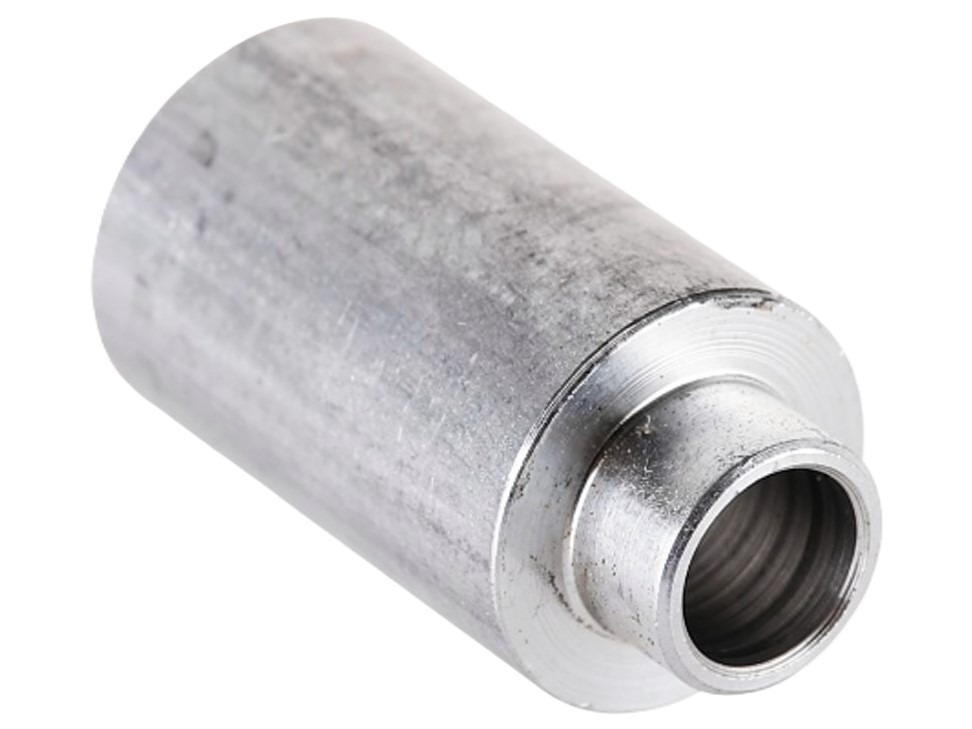
A/C Compressor Spacer Sleeve.
The Genuine Porsche A/C Compressor Spacer Sleeve 99612610271 is a precision mounting spacer used when securing the air-conditioning compressor to the engine on selected Porsche 996 and 997 high-performance models.
Fits:
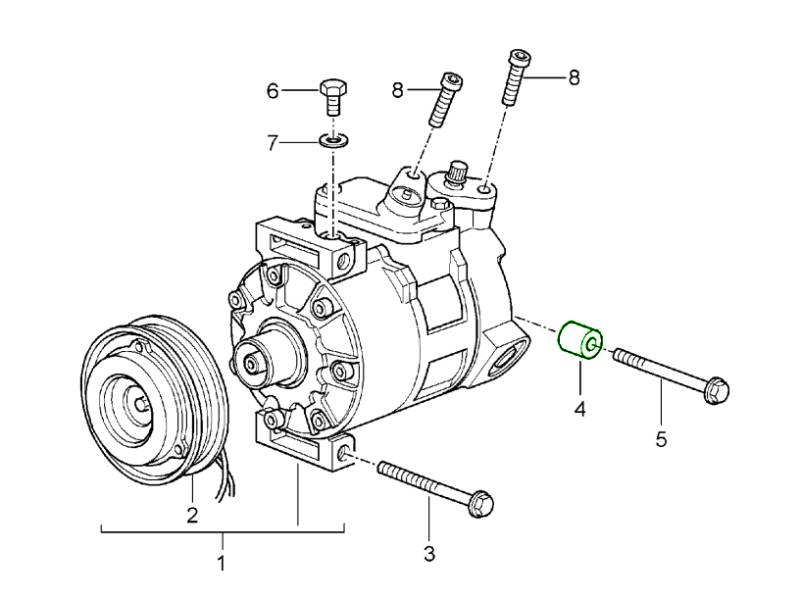
Diagram Ref No 4
Installed between the relevant compressor mounting surfaces, the spacer establishes the correct distance required for the compressor mounting bolt and keeps the compressor correctly positioned within its support arrangement.
Although it is a small component, accurate compressor positioning is important.
The A/C compressor is mechanically driven by the engine's accessory belt and must sit securely and squarely in relation to its mounting points and drive pulley.
A missing, damaged, distorted or incorrect spacer can prevent the compressor from being clamped correctly. This may contribute to compressor movement, mounting stress, accessory-belt alignment problems, abnormal noise or damage to the compressor mounting hardware.
Replacing a missing or damaged spacer restores the correct factory mounting geometry and allows the compressor to be secured as Porsche intended.
What This Product Does:
The A/C Compressor Spacer Sleeve establishes the correct spacing within the compressor mounting assembly.
Its main functions are to:
- Maintain the specified distance between compressor mounting points.
- Support correct compressor positioning.
- Provide the correct spacing for the compressor mounting bolt.
- Help keep the compressor square to its mounting bracket.
- Support correct accessory-belt and pulley alignment.
- Prevent inappropriate compression or distortion of the mounting assembly.
- Help distribute mounting loads correctly.
- Replace a missing, damaged or incorrect original spacer.
- Restore the factory compressor installation.
Symptoms Of Wear Or Failure:
Because the spacer has no moving parts, failure generally appears as physical damage or symptoms caused by incorrect compressor mounting.
Possible signs include:
- Spacer missing after previous compressor work.
- Sleeve visibly crushed or distorted.
- Corrosion or mechanical damage.
- Compressor not sitting squarely.
- Compressor movement at the mounting point.
- Mounting bolt difficult to tighten correctly.
- Abnormal gap between compressor and bracket.
- Accessory belt running out of alignment.
- Belt edge wear.
- Belt squeal.
- Chirping or rubbing noise.
- Compressor vibration.
- Cracked or stressed compressor mounting lug.
- Repeated loosening of compressor mounting hardware.
Why Replacement Matters:
Replacing a missing or damaged A/C Compressor Spacer Sleeve helps restore:
- Correct compressor mounting geometry.
- Secure compressor installation.
- Proper mounting-bolt clamping.
- Correct pulley alignment.
- Reliable accessory-belt tracking.
- Reduced mounting stress.
- Factory-standard installation.
Related reference numbers
Related, superseded, cross reference or alternative numbers for comparison.
99612610271
The product you are viewing cross references to these numbers
- Porsche 955 Cayenne 3.2L V6 2003-06
- Porsche 955 Cayenne S 4.5L V8 2003-06
- Porsche 955 Cayenne Turbo 4.5L 2003-06
- Porsche 955 Cayenne Turbo S 4.5L 2006>>
- Porsche 957 Cayenne 3.0L Diesel 2007-10
- Porsche 957 Cayenne 3.6L 2007-10
- Porsche 957 Cayenne S / GTS 4.8L 2007-10
- Porsche 957 Cayenne Turbo / Turbo S 4.8L 2007-10
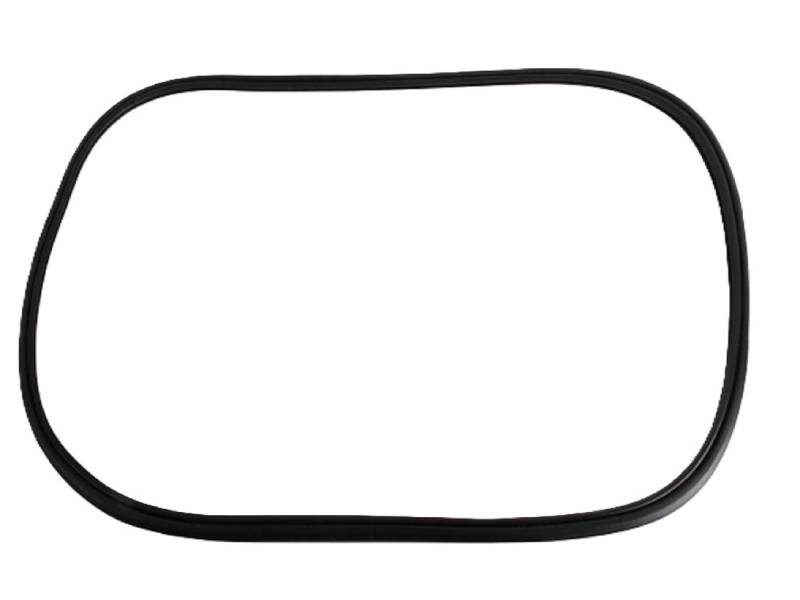
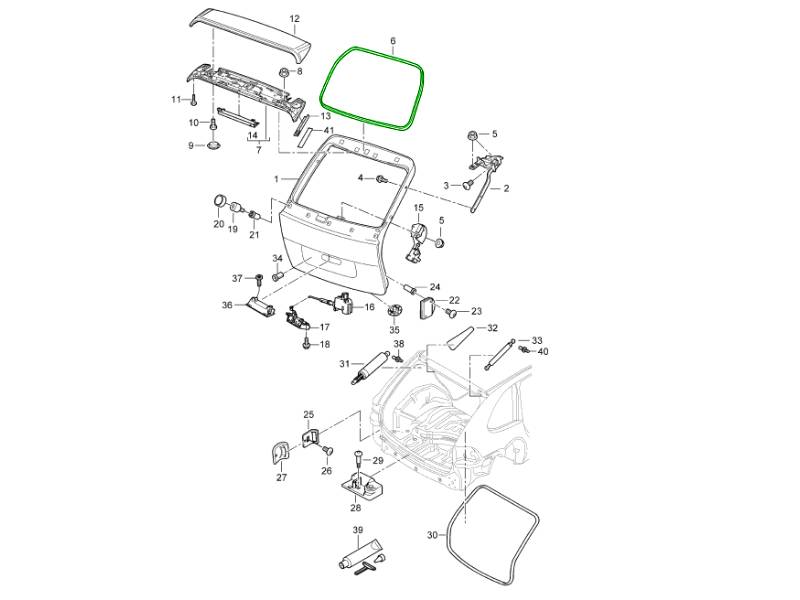
The Genuine Porsche Rear Window Glass Seal 95551252102 is the original perimeter weather seal for the opening rear window fitted within the tailgate of first-generation Porsche Cayenne models.
Fits:
- Porsche 955 Cayenne 3.2L V6 2003-06
- Porsche 955 Cayenne S 4.5L V8 2003-06
- Porsche 955 Cayenne Turbo 4.5L 2003-06
- Porsche 955 Cayenne Turbo S 4.5L 2006>>
- Porsche 957 Cayenne 3.0L Diesel 2007-10
- Porsche 957 Cayenne 3.6L 2007-10
- Porsche 957 Cayenne S / GTS 4.8L 2007-10
- Porsche 957 Cayenne Turbo / Turbo S 4.8L 2007-10
Diagram Ref No 6
The Cayenne's rear window can be opened independently from the main rear tailgate. This seal surrounds that opening and forms the weather-resistant interface between the rear glass assembly and the tailgate structure when the window is closed.
Its purpose is to help prevent rainwater, dust, road contamination and wind from entering the luggage compartment while also cushioning the rear glass and helping it sit securely against the tailgate.
Over time, the original rubber seal can harden, flatten, crack or shrink due to age, UV exposure, heat, cold and repeated compression every time the rear window is closed.
Once the seal loses its flexibility, it may no longer maintain consistent contact around the glass. This can result in water ingress, wind noise, rattling or visible gaps around the rear window.
Replacing a deteriorated seal helps restore weather protection, reduce noise and protect the luggage compartment and tailgate structure from moisture.
What This Product Does:
The Rear Window Glass Seal forms the perimeter seal around the separately opening rear glass.
Its main functions are to:
- Help prevent rainwater entering around the rear window.
- Reduce wind noise.
- Prevent dust and road dirt entering the luggage compartment.
- Cushion the rear glass when closed.
- Help maintain stable rear-window positioning.
- Reduce rattles and vibration.
- Protect the tailgate interior from moisture.
- Maintain the original factory appearance of the rear-window opening.
- Work with the rear-window latch and buffer system to provide secure closure.
Symptoms Of Wear Or Failure:
Common symptoms include:
- Water entering around the rear glass.
- Damp luggage-compartment trim.
- Wet carpet in the rear load area.
- Water marks around the tailgate.
- Increased wind noise.
- Whistling at speed.
- Rear glass rattling when closed.
- Visible cracks in the seal.
- Hardened or brittle rubber.
- Flattened sealing surface.
- Seal shrinkage.
- Visible gaps around the glass.
- Sections pulling away from the mounting area.
- Dust or dirt entering around the window.
- Musty smell inside the luggage compartment.
Why Replacement Matters:
Replacing a worn Rear Window Glass Seal helps restore:
- Weather resistance.
- Reduced water ingress.
- Reduced wind noise.
- Proper glass support.
- Reduced rattling.
- Better luggage-compartment protection.
- Improved cabin refinement.
- Correct factory appearance.
Related reference numbers
Related, superseded, cross reference or alternative numbers for comparison.
95551252102
The product you are viewing cross references to these numbers
- Porsche Boxster 986 2.5L 1997-99
- Porsche Boxster 986 2.7L 1999-02
- Porsche Boxster S 986 3.2L 1999-02
- Porsche Boxster 986 2.7L 2003-04
- Porsche Boxster S 986 3.2L 2003-04
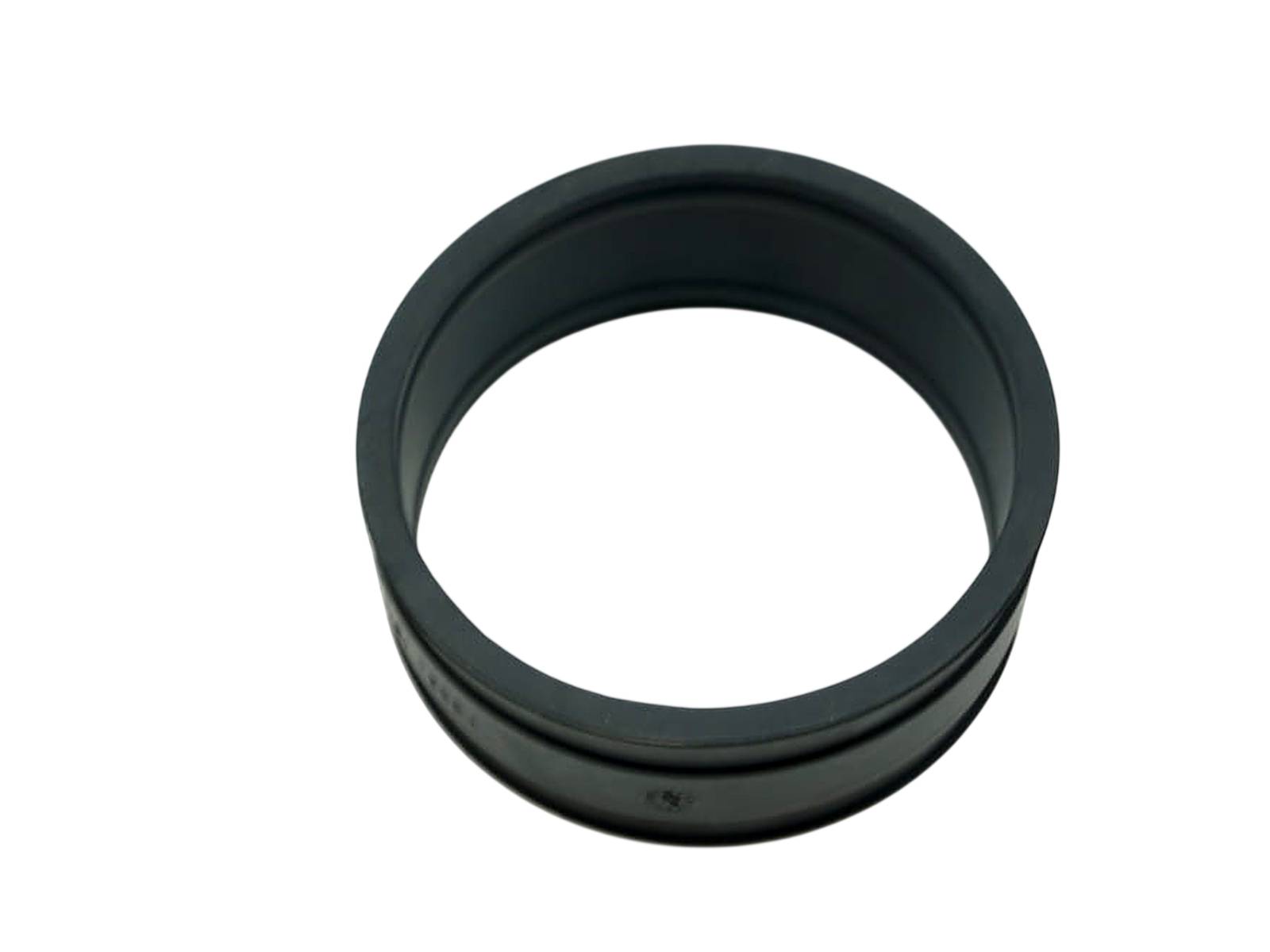
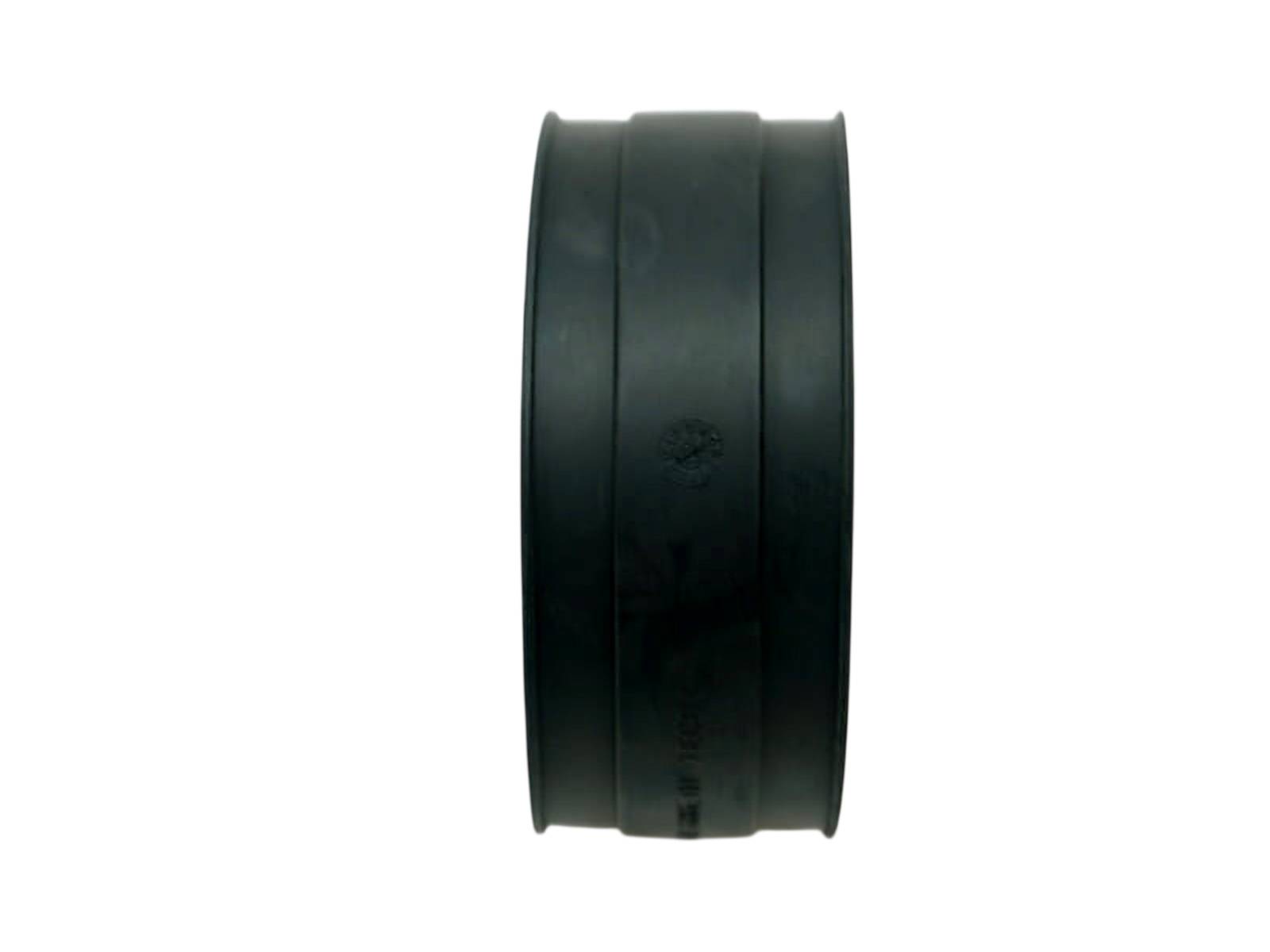
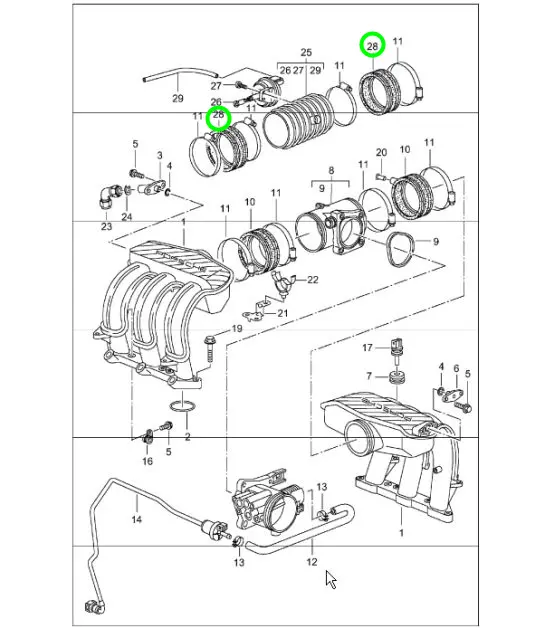
Rubber Sleeve
Sold each - 2 required per car
Fits
- Porsche Boxster 986 2.5L 1997–99
- Porsche Boxster 986 2.7L 1999–02
- Porsche Boxster S 986 3.2L 1999–02
- Porsche Boxster 986 2.7L 2003–04
- Porsche Boxster S 986 3.2L 2003–04
Diagram Ref No 28
What This Product Does
The sleeve creates a flexible junction in the intake distributor assembly. It allows limited movement between connected parts while supporting the sealed passage of intake air.
Functions
- Joins components within the intake distributor
- Maintains a sealed intake connection
- Allows for normal vibration and engine movement
- Helps prevent unwanted air from entering at the joint
Technical Details
- Part type: rubber sleeve
- Manufacturer: Porsche
- Part number: 99611068601
- Assembly location: intake distributor
- Diagram engine identifiers: M96.21/22 and M96.23/24
- Quantity indicated by the diagram: 2
Symptoms of Fault
- Cracks or splits that become visible when the sleeve is flexed
- Rubber that has hardened or become distorted with age
- A hissing sound around the intake system
- Unstable or rough engine idle
- Hesitation when accelerating
- Lean-mixture or airflow-related diagnostic faults
- Air leakage found during smoke testing
Why Replacement Matters
Repeated heat cycles, oil vapour and vibration can gradually deteriorate an intake sleeve. Replacing a leaking or damaged component helps re-establish the sealed connection needed by the intake distributor. The surrounding clamps, joints and adjacent rubber parts should also be examined while the assembly is accessible.
FAQs
- How can the sleeve be inspected?
Check its surface while gently flexing the rubber, as fine splits may only open under movement. A smoke test can be used to identify less obvious intake leaks. - Can a damaged sleeve cause poor running?
A leak at an intake joint may introduce unmetered air, which can contribute to an uneven idle, hesitation or mixture-related fault codes. - How many sleeves does the diagram specify?
The intake distributor diagram indicates a quantity of two for part 99611068601.
Check fitment for your specific vehicle (model, year, engine) before ordering.
Related reference numbers
Related, superseded, cross reference or alternative numbers for comparison.
99611068601
The product you are viewing cross references to these numbers
- Porsche Boxster 987 2.7L 2005-08/08
- Porsche Boxster 987 S 3.2/3.4L 2005-08/08
- Porsche Boxster 987 MKII 2.9L 2009-12
- Porsche Boxster S 987 MKII 3.4L 2009-12
- Porsche 997 MK1 Carrera 2 3.6L 2005-08
- Porsche 997 MK1 Carrera 2S 3.8L 2005-08
- Porsche 997 MK1 Carrera 4 3.6L 2005-08
- Porsche 997 MK1 Carrera 4S 3.8L 2005-08
- Porsche 997 MK1 TURBO 2007-09
- Porsche 997 MK1 GT3 / GT3 RS 2007-09
- Porsche 997 MK1 GT2 2007-09
- Porsche 997 MKII Carrera C2 3.6L 2009-12
- Porsche 997 MKII Carrera C4 3.6L 2009-12
- Porsche 997 MKII Carrera C2S 3.8L 2009-12
- Porsche 997 MKII Carrera C4S 3.8L 2009-12
- Porsche 997 MKII GT3 / GT3 RS 2010-11
- Porsche 997 MKII Turbo 2010-13
- Porsche 997 MKII GT2 RS 2011-13
- Porsche Cayman 2.7L 987C 2006-08
- Porsche Cayman S 3.4L 987C 2005-08
- Porsche Cayman 2.9L 987C MKII 2009-12
- Porsche Cayman S / R 3.4L 987C MKII 2009-12
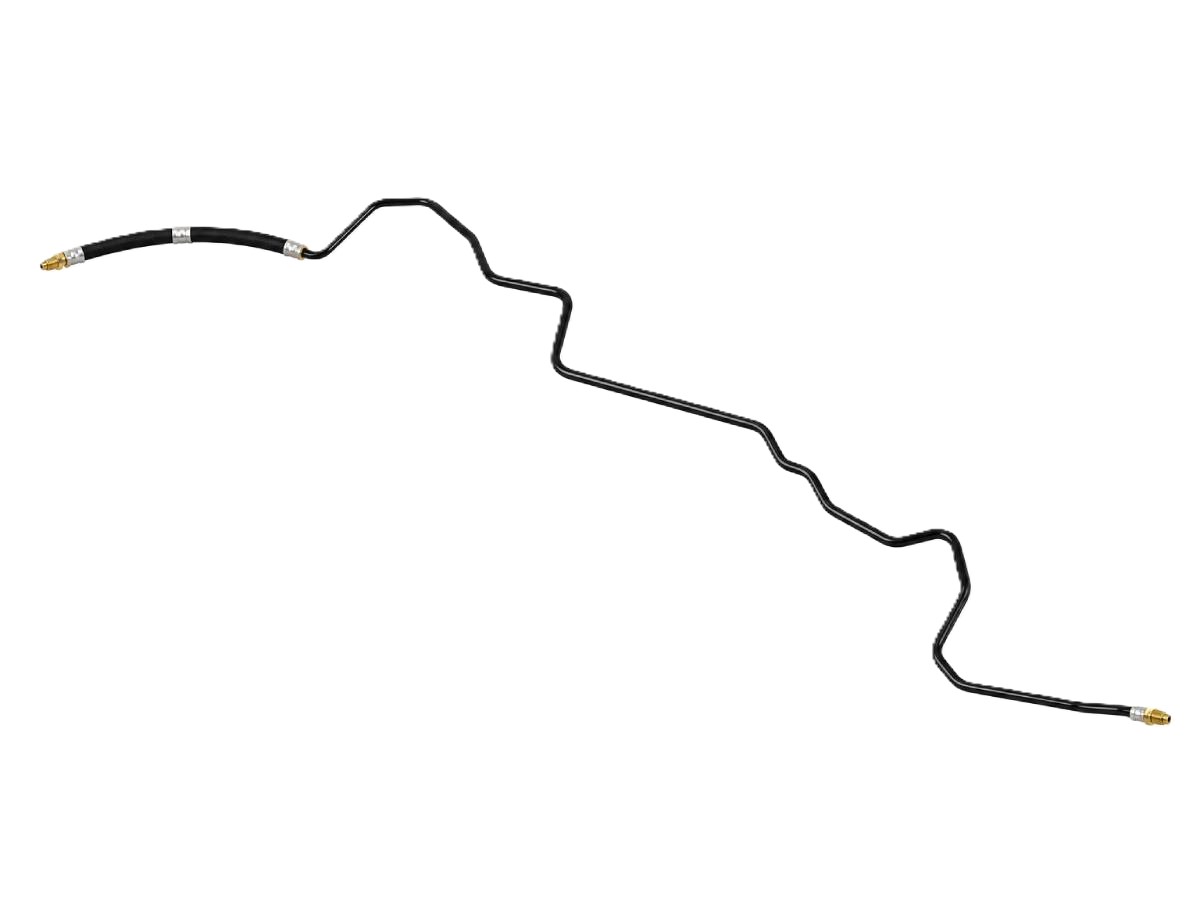
The Genuine Porsche Brake Booster Vacuum Line is an important part of the vacuum-assisted braking system used on selected Porsche 911 (997) models.
Fits:
- Porsche Boxster 987 2.7L 2005-08/08
- Porsche Boxster 987 S 3.2/3.4L 2005-08/08
- Porsche Boxster 987 MKII 2.9L 2009-12
- Porsche Boxster S 987 MKII 3.4L 2009-12
- Porsche 997 MK1 Carrera 2 3.6L 2005-08
- Porsche 997 MK1 Carrera 2S 3.8L 2005-08
- Porsche 997 MK1 Carrera 4 3.6L 2005-08
- Porsche 997 MK1 Carrera 4S 3.8L 2005-08
- Porsche 997 MK1 TURBO 2007-09
- Porsche 997 MK1 GT3 / GT3 RS 2007-09
- Porsche 997 MK1 GT2 2007-09
- Porsche 997 MKII Carrera C2 3.6L 2009-12
- Porsche 997 MKII Carrera C4 3.6L 2009-12
- Porsche 997 MKII Carrera C2S 3.8L 2009-12
- Porsche 997 MKII Carrera C4S 3.8L 2009-12
- Porsche 997 MKII GT3 / GT3 RS 2010-11
- Porsche 997 MKII Turbo 2010-13
- Porsche 997 MKII GT2 RS 2011-13
- Porsche Cayman 2.7L 987C 2006-08
- Porsche Cayman S 3.4L 987C 2005-08
- Porsche Cayman 2.9L 987C MKII 2009-12
- Porsche Cayman S / R 3.4L 987C MKII 2009-12
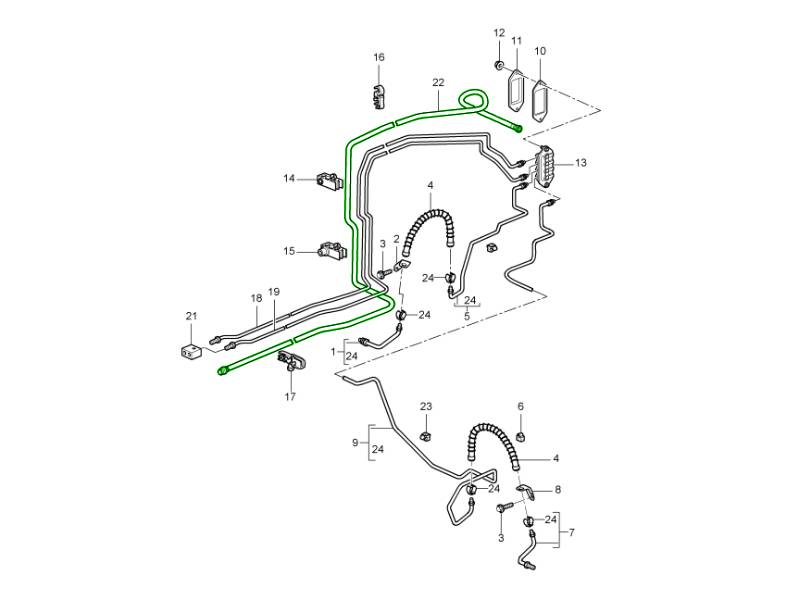
Diagram Ref No 22
The line carries vacuum through the vehicle to the brake servo / brake booster. This vacuum assistance reduces the amount of pedal effort required from the driver when applying the brakes, allowing the braking system to deliver strong and progressive braking with a normal pedal feel.
Because the line must remain airtight, cracks, damaged connections or leaks can reduce the amount of vacuum available to the brake booster. This can lead to a noticeably harder brake pedal and reduced power assistance, even though the hydraulic brakes may still operate mechanically.
What This Product Does:
- Carries vacuum to the brake booster.
- Supports power-assisted brake operation.
- Reduces the amount of pedal force required during braking.
- Helps maintain a consistent and predictable brake pedal feel.
- Forms part of the sealed brake-servo vacuum circuit.
- Transfers vacuum through the central/underbody section of the vehicle.
- Helps the brake booster provide additional braking assistance.
- Replaces a cracked, damaged, leaking or deteriorated original vacuum line.
- Restores vacuum-system integrity when a leak has been identified.
Porsche parts diagrams list 99735557101 directly within the brake-line and underbody vacuum system, identifying it as the central vacuum line in the brake system.
Symptoms Of Wear Or Failure:
Possible symptoms include:
- Brake pedal becoming unusually hard.
- Increased pedal effort required to slow the vehicle.
- Reduced brake-servo assistance.
- Brakes feeling normal initially but becoming harder after repeated pedal applications.
- Hissing noise when the brake pedal is pressed.
- Hissing or air-leak noise from underneath the vehicle.
- Vacuum-related noises after the engine is switched off.
- Inconsistent brake pedal assistance.
- Cracks or splits in the vacuum line.
- Damaged or loose line connections.
- Physical damage caused by road debris or underbody impact.
- Deteriorated seals or connecting pieces.
- Brake booster failing to retain vacuum.
- Vacuum-system faults found during diagnostic testing.
A hard brake pedal does not automatically mean the vacuum line itself has failed. The brake booster, vacuum pump, non-return valve, connections and other vacuum hoses should also be checked during diagnosis.
Why Replacement Matters:
The brake booster relies on vacuum to provide power assistance.
If the vacuum line develops a leak, the booster may receive insufficient vacuum to assist braking correctly. The hydraulic braking system can still apply the brakes, but substantially greater pedal force may be required.
Replacing a leaking or damaged vacuum line helps restore:
- Correct brake booster vacuum.
- Normal brake pedal effort.
- Consistent braking assistance.
- Predictable brake pedal feel.
- A sealed vacuum circuit.
- Reliable brake-servo operation.
Because this component directly affects brake assistance, confirmed vacuum leaks should be addressed promptly.
Related reference numbers
Related, superseded, cross reference or alternative numbers for comparison.
99735557101
The product you are viewing cross references to these numbers